Frozen shoulder: when the joint capsule itself locks down.
It comes on slowly, steals your range one degree at a time, and makes reaching behind you feel impossible. A clear look at adhesive capsulitis — and why patience plus the right work wins.
Related guide Shoulder pain

Frozen shoulder (adhesive capsulitis) is when the capsule around the shoulder joint thickens and shrinks, blocking movement in every direction, even when someone else moves your arm for you. Left alone it runs through freezing, frozen and thawing phases over roughly one to three years; gentle, phase-matched care with joint mobilization, soft-tissue work and progressive loaded mobility can shorten that and preserve range.
Reaching for a seatbelt. Fastening a bra. Pulling on a jacket. With frozen shoulder, the everyday movements you never used to think about become small, sharp negotiations with pain — and then, eventually, with a shoulder that simply won't go there at all. It is one of the more frustrating conditions in musculoskeletal care, because it comes on gradually and follows its own stubborn timeline.
Anatomy made simple
Your shoulder is a ball-and-socket joint wrapped in a sleeve of connective tissue called the joint capsule. In a healthy shoulder, that capsule is loose and flexible, with plenty of slack to let your arm rotate freely in every direction.
In frozen shoulder — known clinically as adhesive capsulitis — that capsule thickens, inflames and contracts. The diagram above shows it plainly: on the normal side the capsule is roomy and pliable; on the frozen side it is red, swollen and shrunken, with bands of scar-like tissue gluing the joint down.
As the capsule tightens, it physically blocks the joint from moving. This is the crucial distinction: frozen shoulder is not a muscle that is merely tight or a tendon that is torn — it is the capsule itself shrinking around the joint. The American Academy of Orthopaedic Surgeons describes the three classic phases it moves through: freezing, frozen and thawing.
How it connects to the Pain Locator
On the Pain Locator, frozen shoulder sits at the shoulder — but its presentation is distinct from the rotator-cuff and impingement problems it is so often confused with. The hallmarks are:
- Deep, aching anterior shoulder pain — often worst at night and hard to pinpoint
- Severe loss of motion in every direction — both when you move it and when someone else moves it for you
- Capsule inflammation driving a stiffness that feels like a true mechanical block, not just weakness
That last point is how we tell it apart in clinic. With a rotator cuff problem, someone else can often move your arm through a range you can't reach on your own. With frozen shoulder, the capsule won't allow that range no matter who is moving it — the restriction is the same whether the movement is active or passive.
Frozen shoulder most often affects adults between 40 and 60, more commonly women, and has a strong link with diabetes and thyroid conditions — which is why a careful history matters as much as the physical exam.
The evidence-based approach
Frozen shoulder has a reputation for resolving on its own — and over a long enough timeline, many cases do. But left alone, that timeline can stretch one to three years, with months of unnecessary pain and lost function. The right care doesn't just wait it out; it keeps the joint as mobile as possible through each phase and speeds the return of range.
At The Spine Studio, a frozen shoulder plan typically includes:
- Graded joint mobilization and adjustments to the shoulder, shoulder blade and upper back — restoring movement at every joint that feeds the shoulder complex
- Pin & Stretch and soft-tissue work on the surrounding muscles that guard and stiffen in response to the capsule
- Acupuncture to calm the pain and inflammation that make the early freezing phase so miserable
- Progressive loaded mobility — the home-exercise backbone that gradually rebuilds range as the capsule settles
Three things you can do at home
Gentle, frequent and patient beats aggressive — forcing hard through pain can flare the capsule and set you back. Warm the shoulder first: a heating pad or a warm shower before you move makes the capsule more pliable and the stretches more productive.
Pendulum Swings
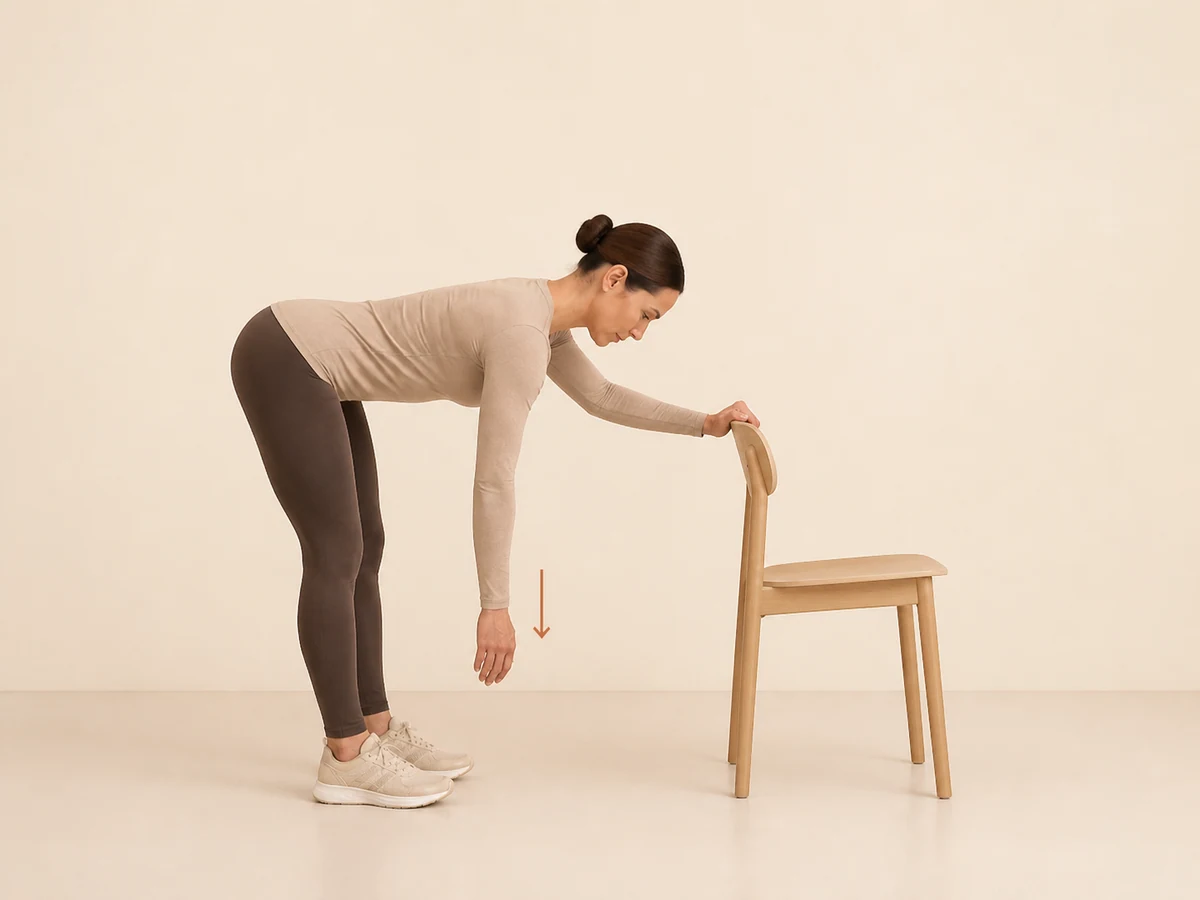
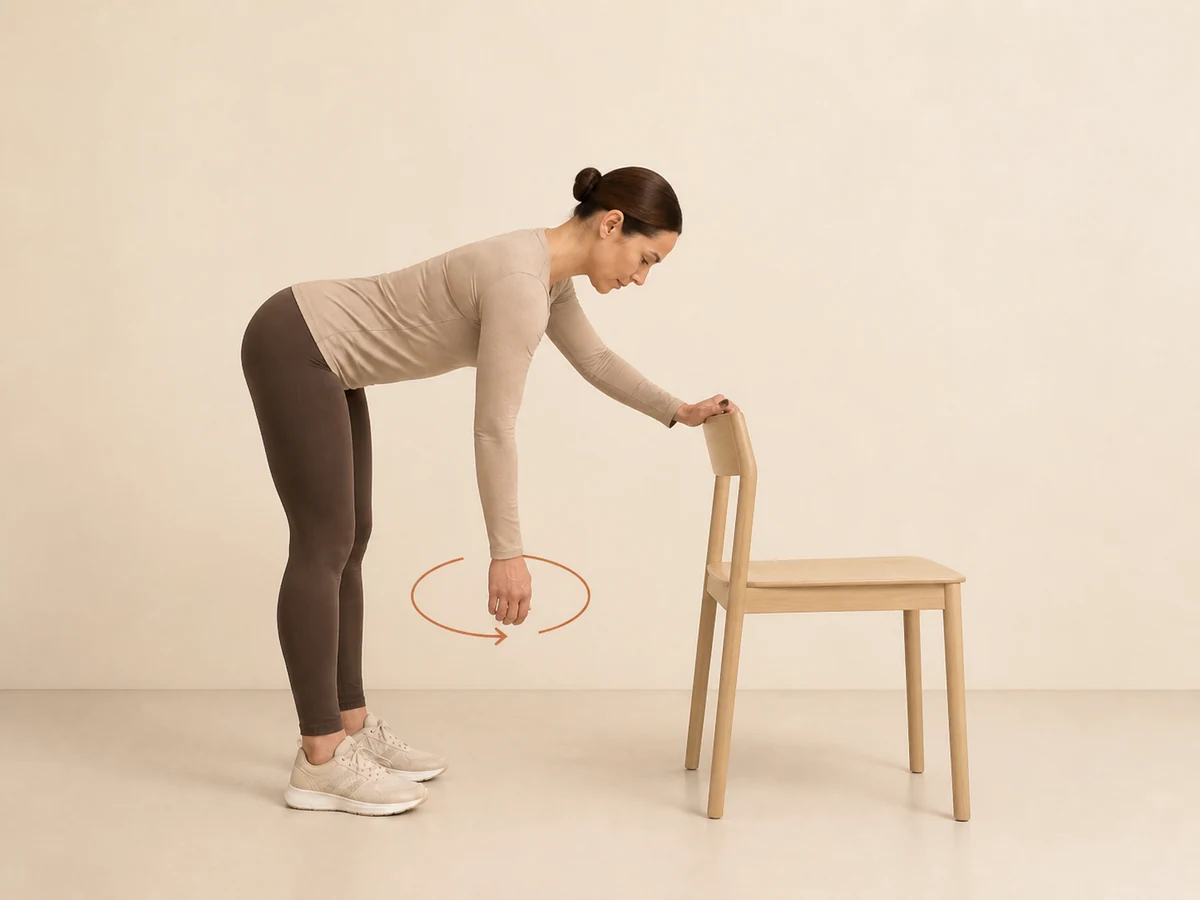
Lean over with your good hand on a chair or table and let the affected arm hang. Make small circles using gravity rather than muscle — it loosens the joint without forcing it.
Small circles, 1–2 minWall Walks
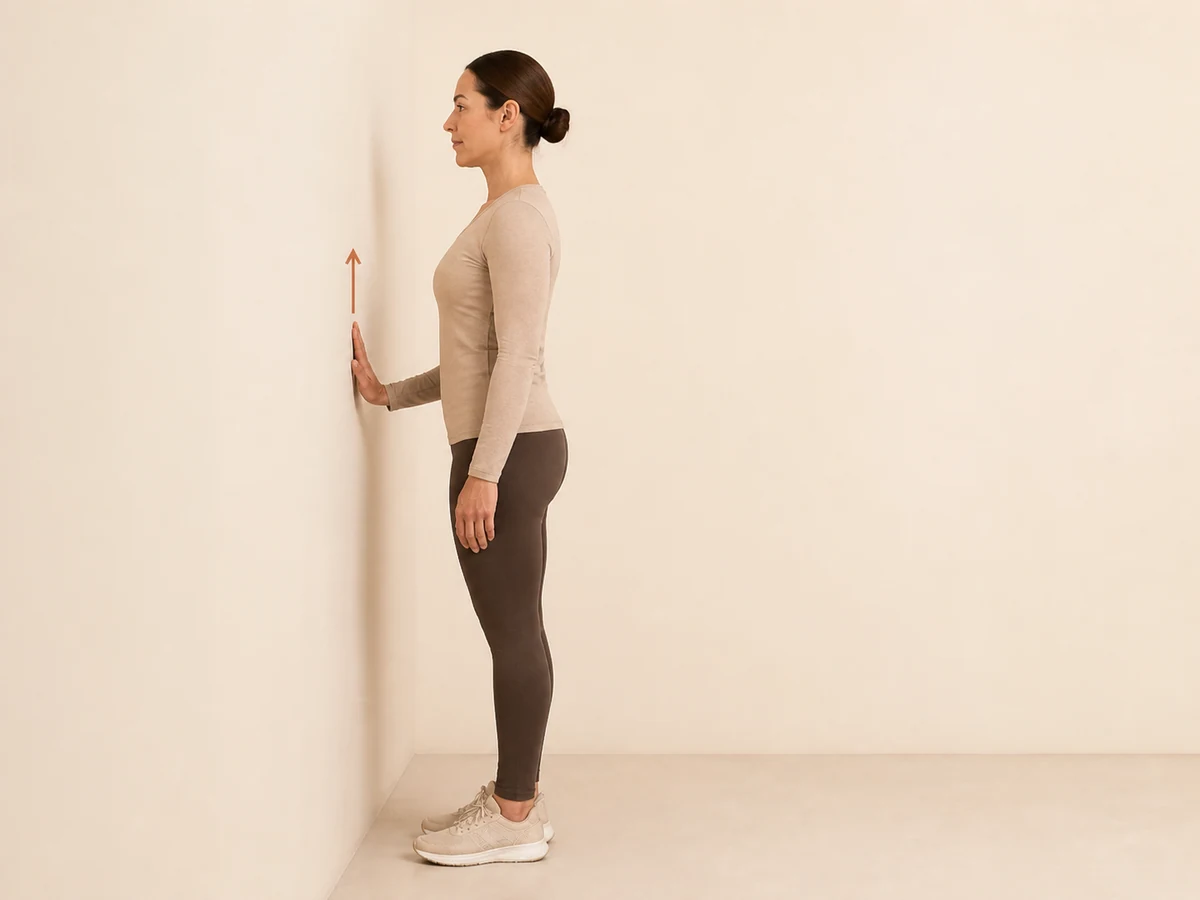
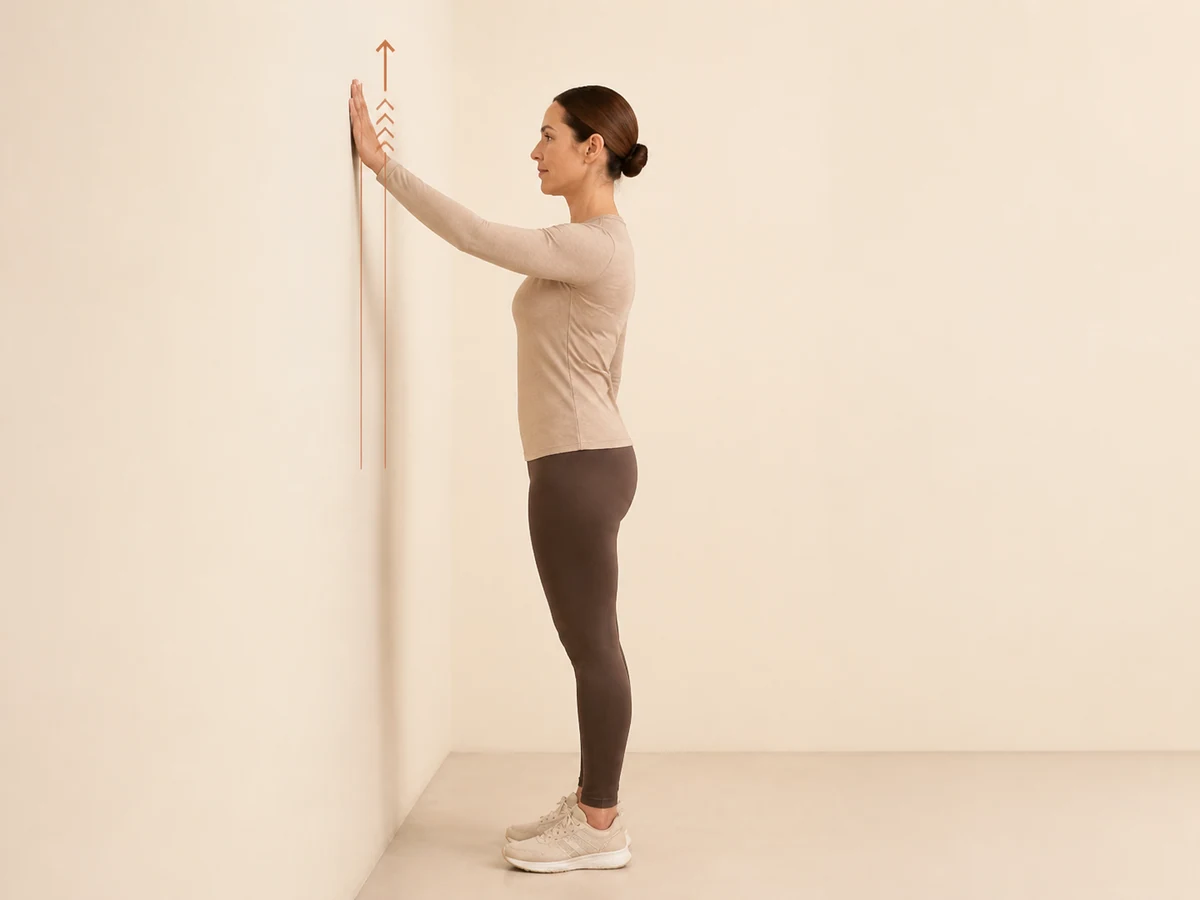
Face a wall, fingertips on it at about waist height, and walk your fingers up as far as is comfortable. Hold, and creep a little higher over days and weeks.
Hold at your limitTable Slides
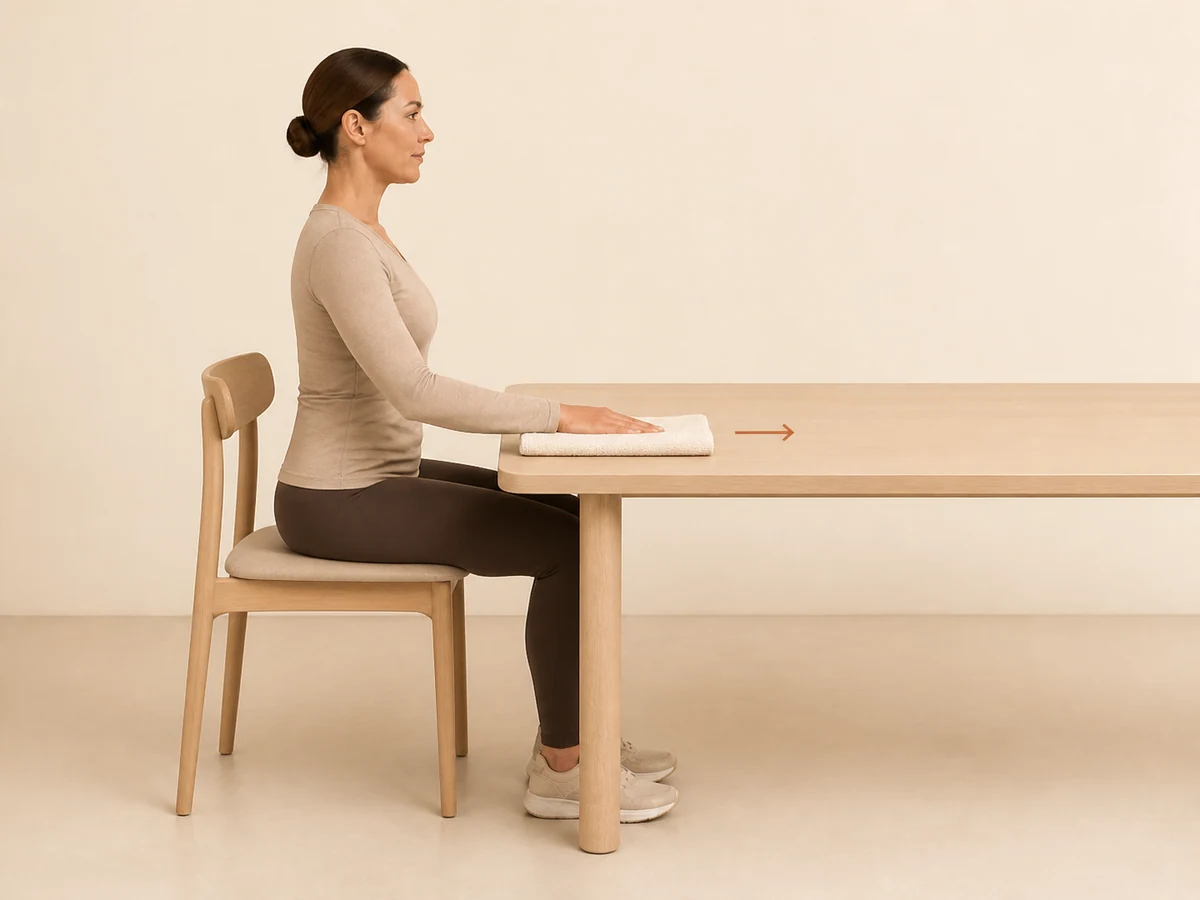

Sit at a table with a towel under your hand. Keeping the arm relaxed, slide the hand forward along the table, bowing gently from the trunk so the shoulder flexes a little further. No forcing.
8–10 slow slidesThe earlier frozen shoulder is addressed, the more range you preserve through the freezing phase. If reaching overhead or behind your back is getting harder month over month, let's assess it before it stiffens further.
What causes a frozen shoulder?
Often there's no obvious trigger at all — the shoulder simply seizes up on its own over weeks, which is the version that frustrates people most ("primary" frozen shoulder). The other version follows a stretch of not moving the arm: after an injury, a surgery, or time in a sling, the capsule tightens down from disuse. The strongest risk factors are diabetes and thyroid conditions, which is why a careful history matters. If you can't lift your arm and can't remember hurting it, frozen shoulder is high on the list.
When is a stiff, painful shoulder worth getting checked?
It is worth an assessment if the shoulder pain wakes you most nights. The same goes if three or four weeks of the gentle home moves haven't made daily tasks any easier, or if the stiffness started after an injury, a surgery or time in a sling and isn't loosening. If you have diabetes or a thyroid condition and the shoulder has started to tighten, get it checked early.
If the shoulder gave a pop during a lift or a fall and you suddenly can't raise the arm, that should be seen by a physician within a day or two. Get urgent medical care if, after a fall, the shoulder looks out of place or the hand goes cold, pale or numb, if the shoulder turns hot, red and swollen with a fever, or if shoulder pain comes with chest pressure, shortness of breath or sweating.
What a visit for frozen shoulder looks like
A first visit is a 40-minute assessment. Dr. Andersen asks how the shoulder started and how it affects your sleep, and about diabetes, thyroid problems and any recent injury or surgery. The exam compares how far your arm moves on its own with how far it moves when Dr. Andersen moves it, tests the rotator cuff, and checks your neck, shoulder blade and upper back. Hands-on treatment can start the same visit, at an intensity that suits how irritable the shoulder is, and you leave with a plan.
How long does frozen shoulder last?
Left entirely alone, it moves through three phases — freezing (the painful phase, worst at night), frozen (stiff but less painful), and thawing (range slowly returns) — and the whole arc can stretch anywhere from one to three years. That's the case for treatment, not against it: keeping the joint as mobile as possible through each phase, calming the early inflammation, and loading the capsule as it settles all shorten that timeline and preserve range you'd otherwise lose. Waiting it out works eventually; it just costs you months of a shoulder that won't move.
If your shoulder is stiffening up, the hands-on and rehab services at our Cottleville clinic are built for exactly this — an assessment finds which phase you're in.
Don't wait out a frozen shoulder alone.
Frequently asked questions
- How long does frozen shoulder last?
- Left alone, frozen shoulder can run 1 to 3 years through its freezing, frozen and thawing phases. Good treatment doesn't skip the phases, but it can reduce pain and preserve as much motion as possible so you come out the other side faster and stiffer for less time.
- What is the fastest way to fix frozen shoulder?
- There's no instant fix, but the fastest progress comes from matching treatment to the phase you're in — calming pain early, then progressively restoring range as it allows. Aggressive stretching during the painful freezing phase usually backfires.
- Can a chiropractor help with frozen shoulder?
- Yes — with hands-on soft-tissue work, joint mobilization and a staged range-of-motion and strengthening plan tuned to your phase. We also flag the cases that need imaging or a referral rather than conservative care.
- How long does a frozen shoulder take to go away?
- Left completely alone, frozen shoulder moves through freezing, frozen and thawing phases over roughly one to three years. Active care — keeping the joint mobile through each phase, calming the early inflammation, and progressively loading the capsule as it settles — shortens that timeline and preserves range you'd otherwise lose. Waiting it out works eventually, but it costs you months of a shoulder that won't move.