Tech neck exercises: a 5-minute daily routine for a stiff neck.
Research hasn't tied tech neck posture to neck pain, but a stiff screen-day neck is real. Here's the short daily routine we give patients, and how often to do it.
Related guide Neck pain & tech neck

A five-minute daily routine for a stiff screen-day neck: chin tucks, thoracic extensions over a chair, a doorway pec stretch and wall angels, once or twice a day. The aim is movement and capacity rather than forcing a 'correct' posture — a 2023 review found no scientific evidence linking tech neck posture with neck pain.
When long screen days leave your neck stiff, a new chair or a sticky-note reminder to sit up straight rarely changes much. A short set of movements, done most days, gives the neck and upper back the variety and load that long, still days leave out. Five focused minutes most days is also far easier to keep up than one long session a week.
This is the routine we give patients at The Spine Studio for a stiff screen-day neck. It pairs with, and goes deeper than, the quick drills in our guide to fixing tech neck, which also covers what the research says and how long the whole process takes.
One thing worth knowing first: a 2023 review of the tech neck research found no scientific evidence linking the posture with neck pain, and its authors advise against calling any posture "incorrect." So these exercises are not about forcing your head into a correct position. They are about moving well and building capacity.
Tech neck exercises: a 5-minute daily routine
The routine mixes easy mobility with a little strength work for the neck and upper back. Do these in order, once or twice a day:
Chin Tuck


Stand against a wall, heels an inch out. Draw your chin straight back until the back of your head touches the wall, without tipping your chin up. It works the deep muscles at the front of the neck and moves it through a range screen days rarely use.
10 reps/Hold 5sThoracic Extension Over a Chair
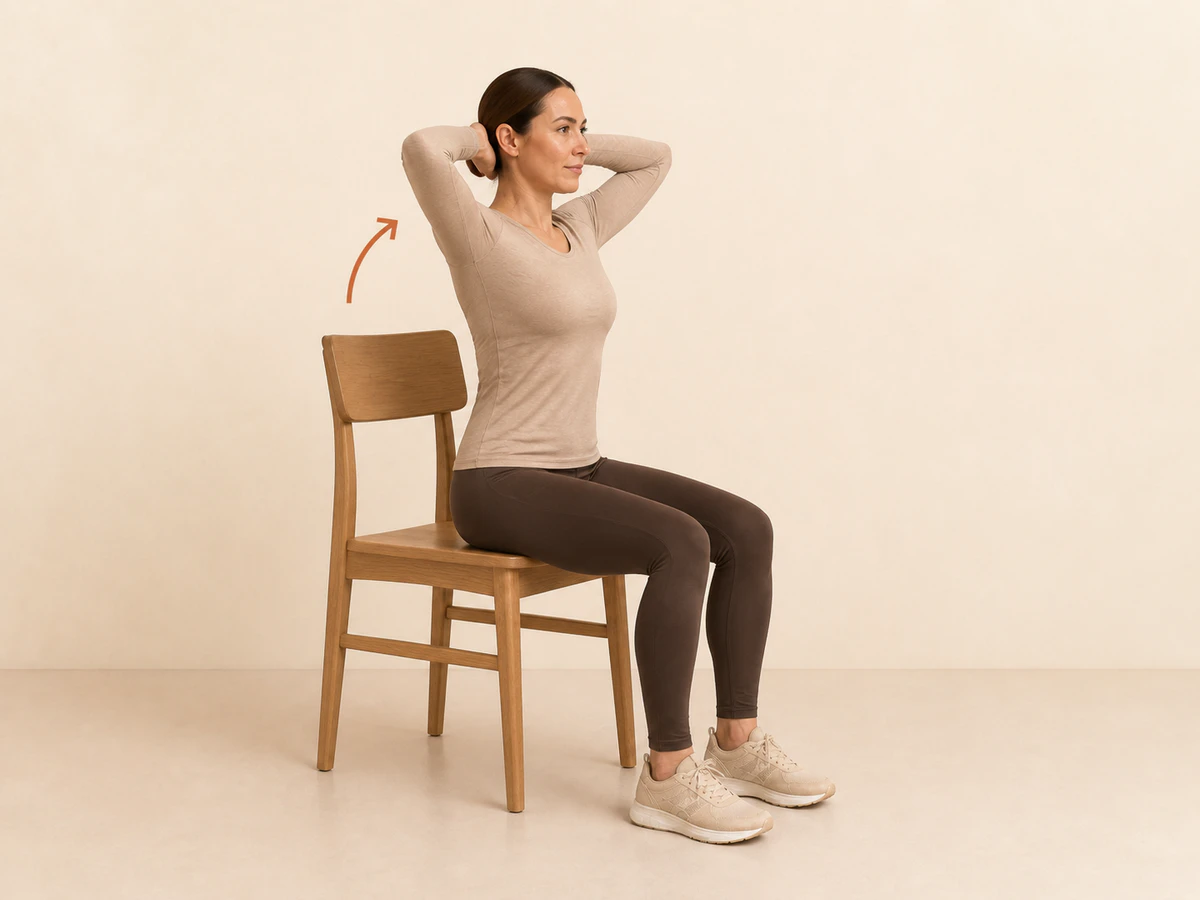
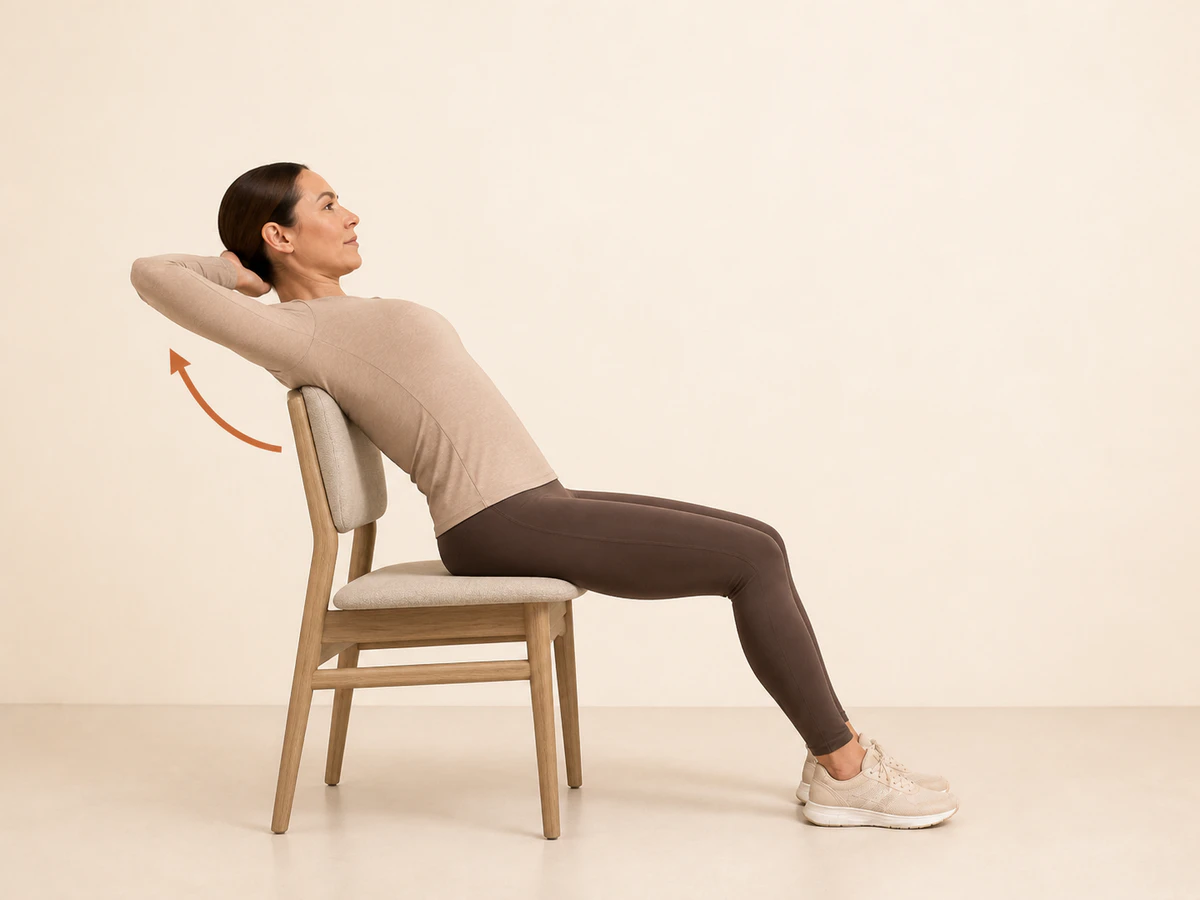
Sit tall, hands behind your head, and arch your upper back gently over the top edge of the chair, opening your chest toward the ceiling. Breathe in as you extend. A mid-back that moves more often tends to leave the neck feeling freer.
8 slow repsDoorway Pec Stretch
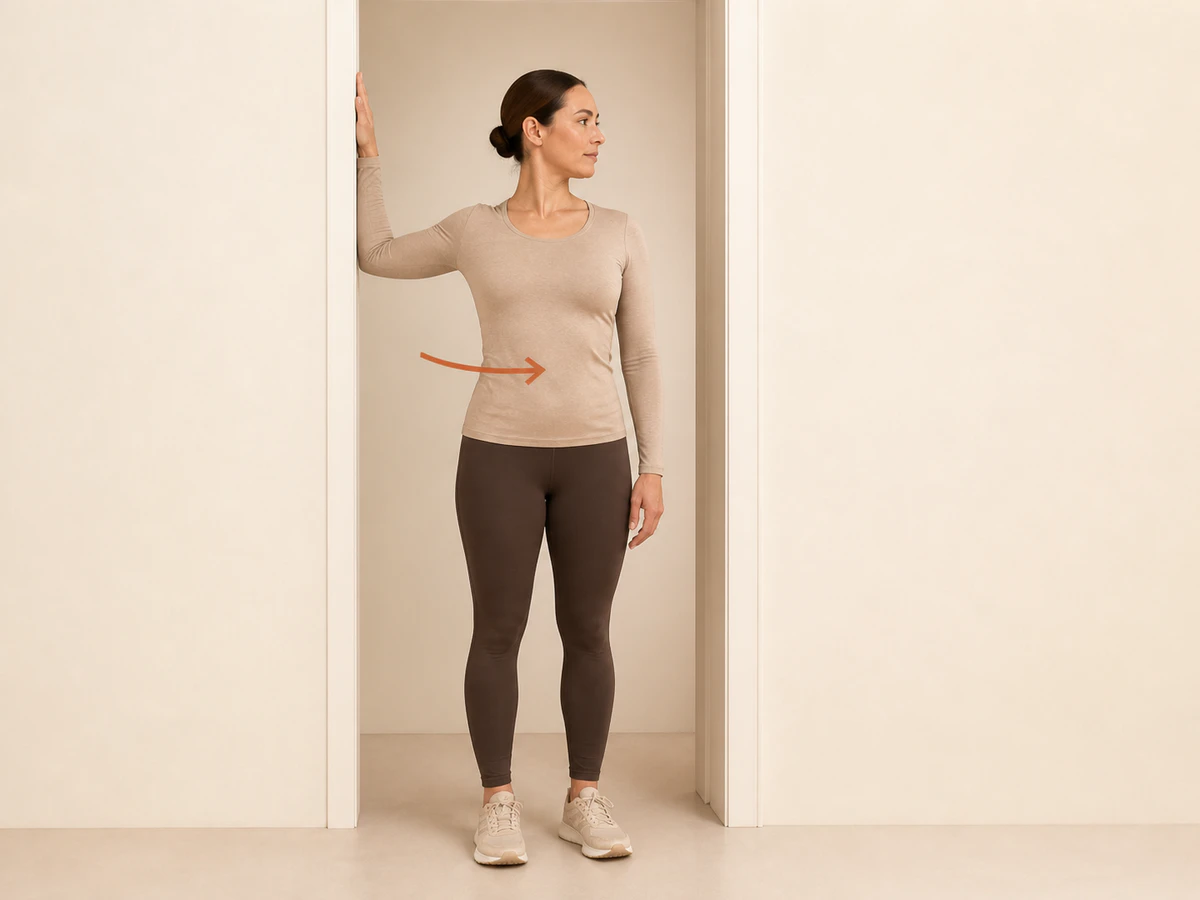
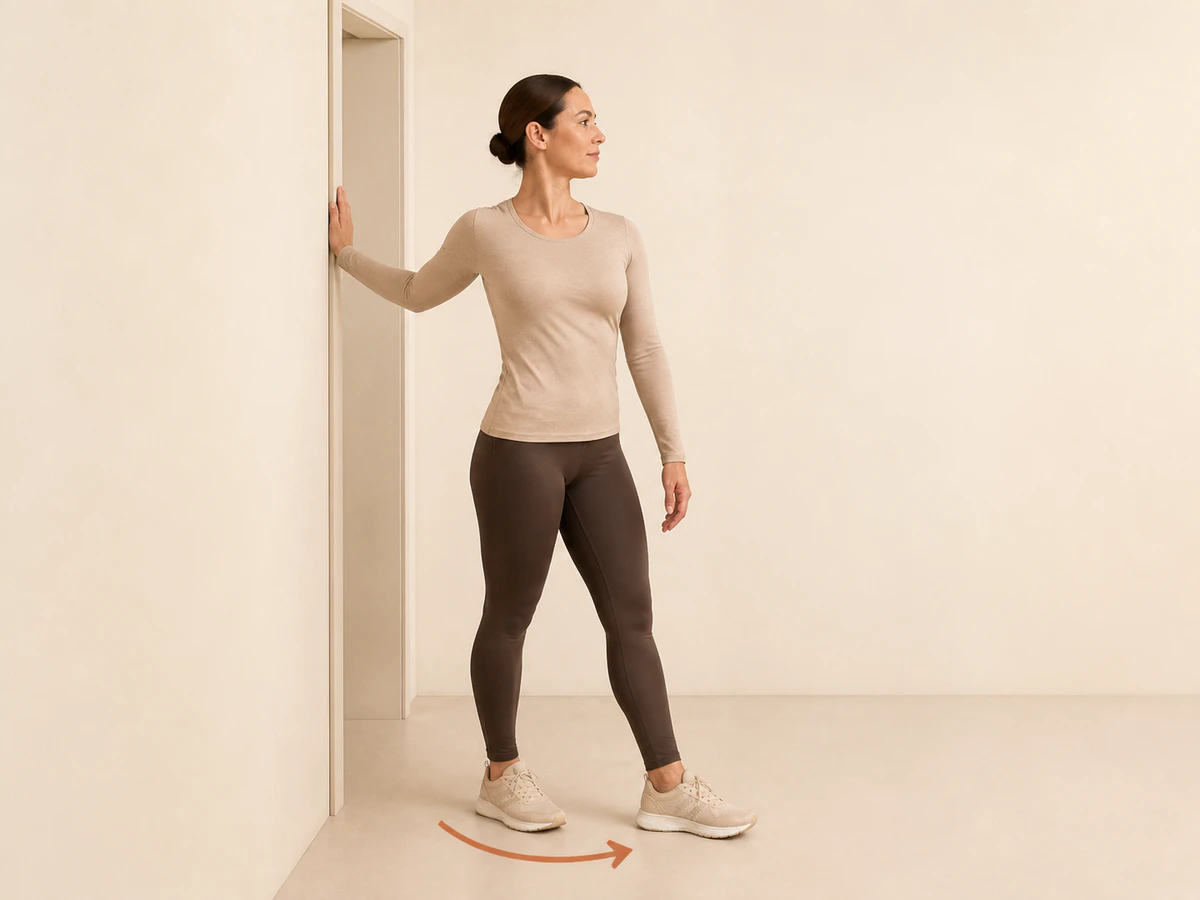
Forearm on a doorframe at shoulder height, step through until you feel a stretch across the chest. It opens the front of the chest and shoulders after hours of reaching forward.
30s each sideWall Angels
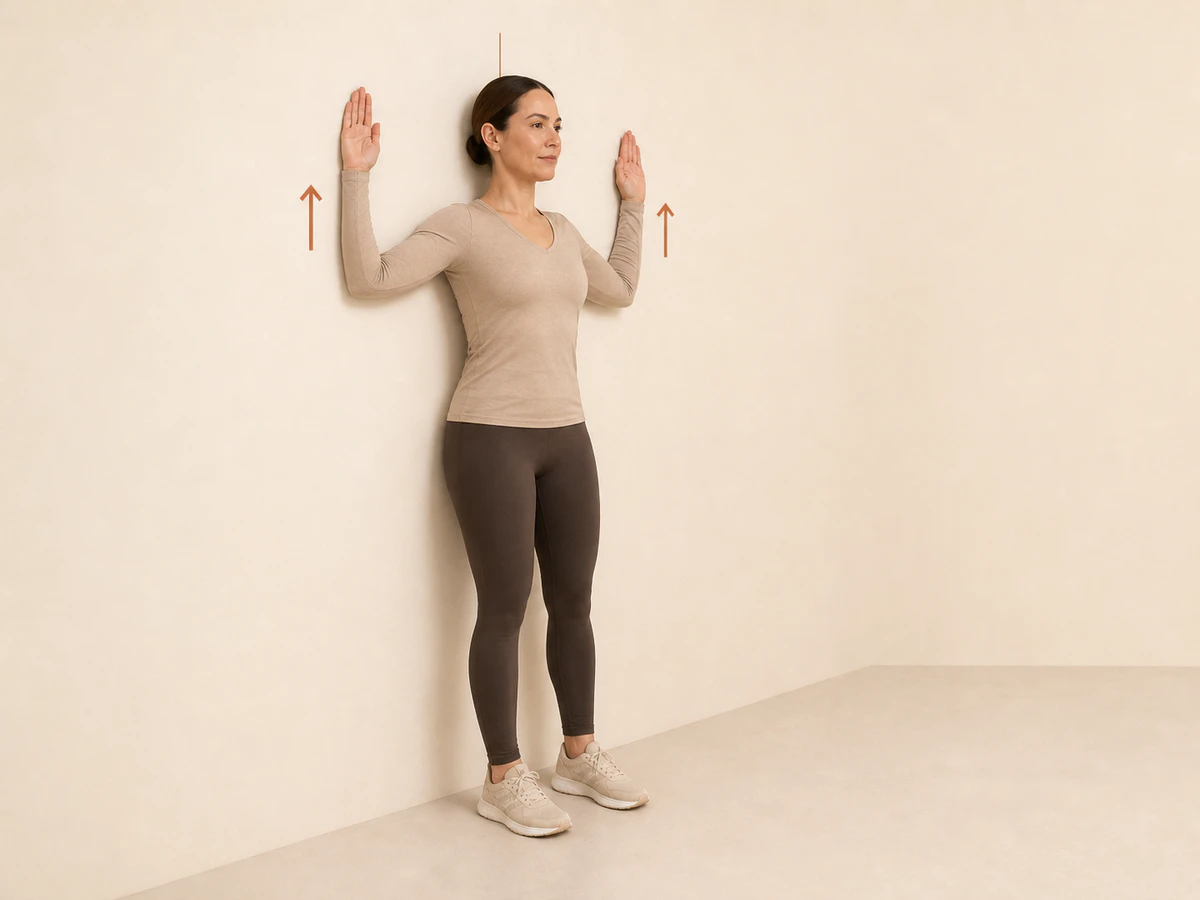
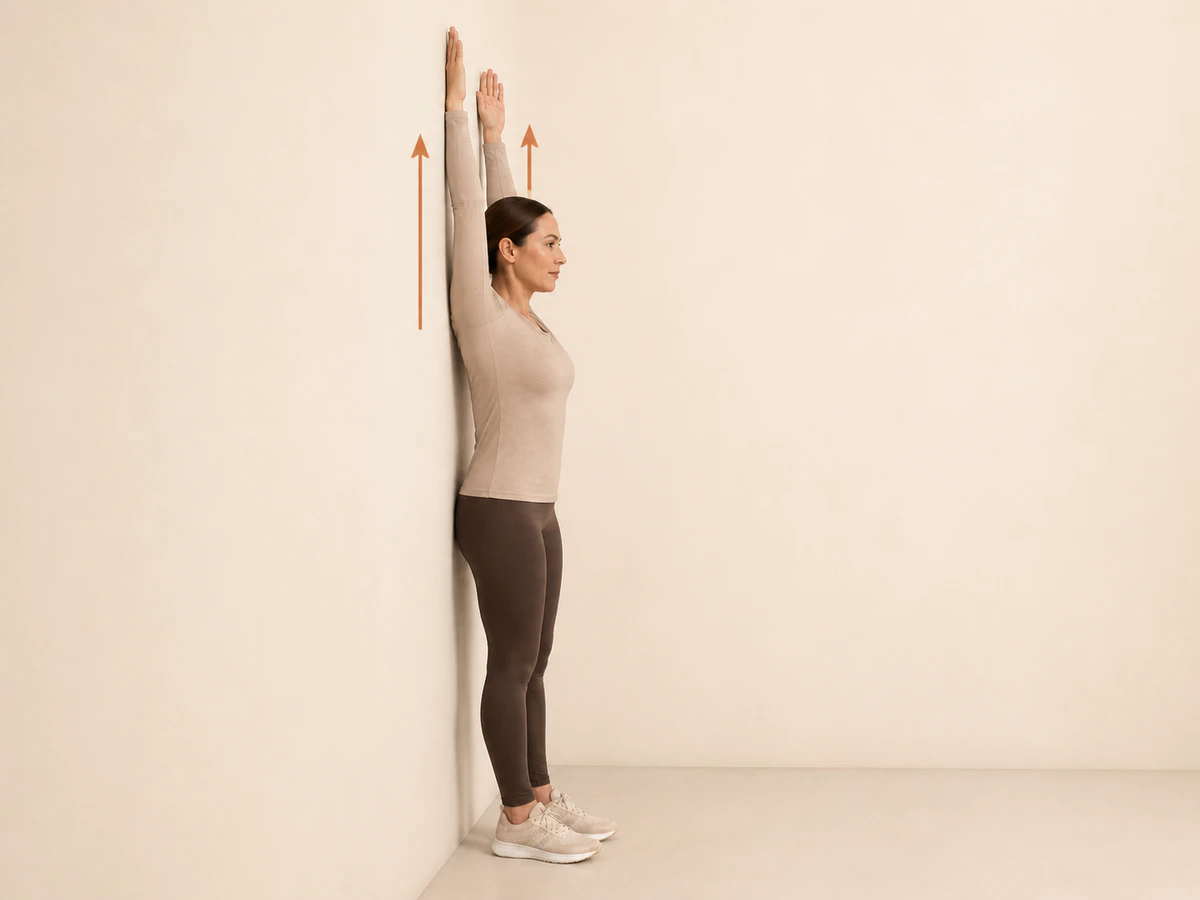
Back flat against a wall, arms in a goal-post shape, slide them up and down while keeping wrists and elbows on the wall. This trains the mid-back muscles that pull your shoulder blades down and back.
10 slow repsLevator & Upper-Trap Release
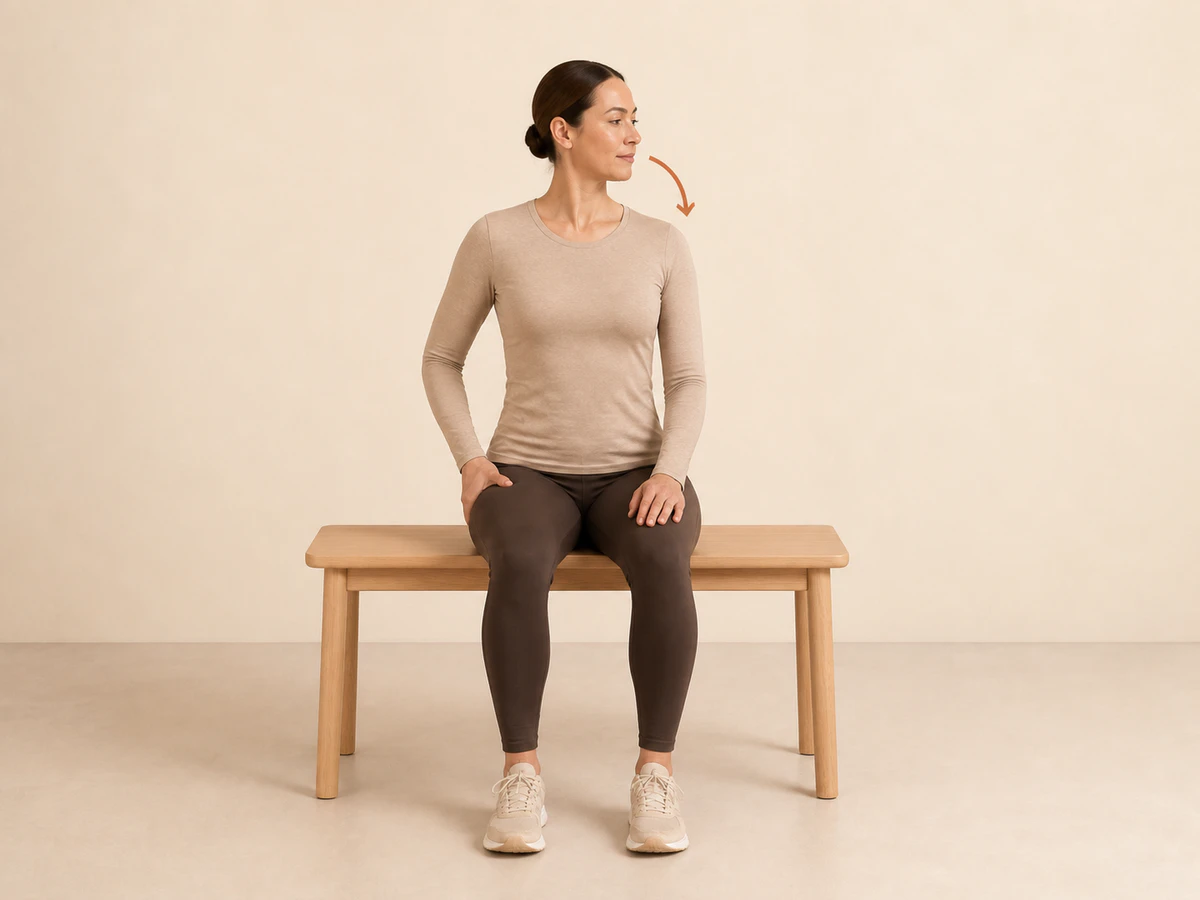

Sit on one hand to anchor the shoulder, tilt your head down and away, then add a gentle look toward your armpit. Many people use it to ease the neck-and-shoulder tightness that often comes with tension headaches.
30s each sideWhy stretching alone rarely does it
Most people try to fix a stiff neck by stretching the parts that feel tight, the neck and shoulders. It feels good for an hour, then the tightness comes right back. Stretching isn't wrong. It is just half the picture.
Muscles that are rarely asked to do much tire quickly, and a tired neck complains. Building strength and endurance in the deep neck flexors and the mid-back muscles gives them more capacity for long days. That is why the routine above deliberately mixes mobility (the stretches) with strengthening (chin tucks, wall angels).
A stiff neck rarely needs a perfect posture. It needs more movement, more variety and a little more strength.
How often should you do tech neck exercises?
Daily, and ideally in small doses rather than one long block. Two or three ninety-second rounds spread through the day beats a single ten-minute session, because what most people feel comes from holding one position for hours, and the answer is interrupting it often. Set a reminder to run chin tucks and a thoracic extension every couple of hours at your desk.
On timeline: give it a few weeks of consistency. If your neck feels no easier after about a month, or it is getting worse, get it assessed. Our full tech neck guide walks through the timeline in more detail.
If you have run these exercises consistently for a few weeks and your neck still locks up, the stiff segments may need hands-on help to move. We assess and treat tech neck at our Cottleville clinic, serving O'Fallon, St. Peters and St. Charles.
When exercises aren't enough
For many people, movement and exercise are enough. But some necks have joints that have stopped moving on their own, or long-standing patterns that won't budge with home work alone — and pushing harder on the drills just frustrates you. That is where in-clinic care earns its place: Precision Spinal Adjustments to restore the segments that are stuck, Pin & Stretch to release the tissue the stretches can't reach, and Corrective Exercise Programming to lock in the routine that fits your body.
If any of this comes with numbness, pins-and-needles into the arm, or pain that is getting worse rather than better, skip the self-care and get assessed — that is a signal, not a stubborn muscle.
Book an assessment and get a routine built for your neck.
Frequently asked questions
- What exercises help tech neck?
- The core routine is chin tucks (for the deep neck flexors), thoracic extensions over a chair, a doorway pec stretch, wall angels, and an upper-trap/levator release. Together they mix mobility with a little strength work. They aren't about forcing a 'correct' posture: a 2023 review found no scientific evidence linking text neck posture with neck pain.
- How often should I do tech neck exercises?
- Daily, ideally in short doses rather than one long session: two or three ninety-second rounds spread through the day. What most people feel comes from holding one position for hours, so interrupting it often is the point. If your neck feels no easier after about a month, get it assessed.
- Can tech neck be fixed with exercises alone?
- Often, movement and exercise are enough for a stiff screen-day neck. Joints that have stopped moving, long-standing cases, or pain with numbness or tingling into the arm usually need an assessment, and sometimes hands-on care alongside the exercises.
- What is the best stretch for tech neck?
- There isn't one best stretch. The doorway pec stretch is a good start because it opens the front of the chest and shoulders after hours of reaching forward. Pair it with strengthening like chin tucks and wall angels, since stretching alone tends to wear off within the hour.