Acupuncture vs. dry needling: what's the difference, and which do you need?
Both use thin needles, so people assume they're the same treatment. Dr. Hailey Andersen on how acupuncture and dry needling actually differ — and which one your pain pattern calls for.
They use the same thin needles but are different treatments. Dry needling is a Western technique that targets one tight muscle or trigger point, with the needle in and out in seconds, while acupuncture places needles at mapped points and retains them for about 20 minutes to work on the wider nervous system. The Spine Studio offers acupuncture by an acupuncture-qualified chiropractor ($60 per session), not dry needling.
Both acupuncture and dry needling use thin, solid needles pushed through the skin, so most people assume they are two names for the same treatment. They are not. They come from different traditions, aim at different targets, and even feel different on the table — and knowing which one your body actually needs saves you time, money, and a fair amount of confusion.
Here is the short version first. Acupuncture works from a traditional framework of mapped points along channels that run across the whole body, and the needles are usually left in place — retained — for about twenty minutes while you rest. Dry needling is a newer Western technique aimed squarely at a tight, knotted muscle, or trigger point; the needle goes in, does its job, and comes right back out, often within seconds. Same tool, two very different jobs.
What is acupuncture, exactly?
Acupuncture is the older of the two by thousands of years. Its map of points and channels comes out of traditional Chinese medicine, but what a modern clinic cares about is what the needling measurably does: it creates a controlled sensory input that the nervous system has to respond to, nudging the body toward pain-gating, a calmer autonomic state, and shifts in local circulation. The National Center for Complementary and Integrative Health, part of the NIH, summarizes the evidence for it in chronic pain, headaches, and related conditions.
The defining feature, mechanically, is retention. Needles are placed at a combination of local and distal points and then left in while you lie still, so the input is sustained and often whole-body rather than aimed at one angry muscle. For a fuller walkthrough of how that plays out neurologically, see our piece on what clinical acupuncture actually does.
What is dry needling, and how is it different?
Dry needling grew out of Western sports medicine and physical therapy over the last few decades. It uses the same kind of fine filament needle, but the goal and the method are narrower: find the taut band in a muscle — the trigger point that refers pain — and needle it directly to provoke a quick twitch and release. As the Cleveland Clinic describes it, the technique targets musculoskeletal trigger points rather than traditional acupuncture points.
The other big difference is time on the table. Dry needling is usually in-and-out — the needle may stay for only seconds to a couple of minutes, and the practitioner often moves it around to find the twitch. There are no channels or point maps involved; it is a local mechanical intervention on one specific muscle that is misbehaving.
Do not choose by counting needles. The real question is never "which one uses needles" — it is whether your problem is one angry muscle or a nervous system running hot everywhere.
Is dry needling the same as acupuncture?
No — and the confusion is understandable, because from the doorway the two look identical. The clearest way to hold them apart: dry needling asks, "what is this one tight muscle doing right now, and can I release it?" Acupuncture asks a broader question about how the whole nervous system is regulating pain, tone, and stress, and treats accordingly with retained needles across mapped points.
Training differs too. Acupuncture involves an extensive body of point-location and technique education; dry needling is typically a shorter certification added onto an existing manual-therapy license. Neither fact makes one universally "better" — they are simply built for different problems.
Which one do you actually need?
If your pain is pinned to a specific, reproducible knot — a trigger point that refers in a predictable pattern and eases with direct pressure — a trigger-point approach is a reasonable fit. If instead you feel wound up in several places at once, wake up braced, get tension headaches, or have pain that moves around and does not map to a single muscle, that is a nervous-system pattern, and retained acupuncture is usually the better tool.
Plenty of people fall in the middle, which is why muscle work and neurological work often belong in the same plan rather than in competition. A stubborn shoulder knot might respond to hands-on release while the reason it keeps re-tightening is a nervous system that never fully powers down. The real mistake is picking based on which one you have heard of, instead of what the exam actually finds.
What does The Spine Studio offer?
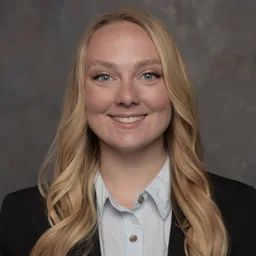
To be clear about our own clinic: The Spine Studio provides acupuncture, performed by Dr. Hailey Andersen, an acupuncture-qualified chiropractor. We do not offer dry needling — the explanation above is here so you can tell the two apart, not because we do both. Our acupuncture runs $60 per session as a focused 20-minute localized needle retention, used on its own or layered into a broader care plan alongside adjustments and soft-tissue work. You can see how it fits with everything else on our services page.
And if the only thing holding you back is the needles themselves, the honest answer to how they feel lives on our does acupuncture hurt page — for most people, barely.
Acupuncture at The Spine Studio is $60 per session — a 20-minute localized needle retention with Dr. Andersen, available standalone or as an add-on to your visit. If you are not sure whether it fits your pain pattern, an assessment sorts it out before you commit to a course.
If you are deciding which is right for you, see how we use clinical acupuncture at our Cottleville clinic.
Looking for acupuncture near Cottleville, O'Fallon, St. Peters or St. Charles?
Because dry needling and acupuncture get mixed up so easily, people across St. Charles County often go searching for one when the other is what they actually want. If it is acupuncture you are after, our Cottleville office is a short drive whether you are coming from O'Fallon, St. Peters, or St. Charles — and it is worth knowing which one you want before you book, because the wrong treatment is the real detour.
Wherever you are driving from, it is the same focused 20-minute needle retention with Dr. Andersen, booked on its own or added to a visit at our Cottleville office.
Book an assessment and find out whether acupuncture belongs in your plan.
Frequently asked questions
- Is dry needling the same as acupuncture?
- No. They use the same kind of thin needle, so they look identical from across the room, but they answer different questions. Dry needling is a Western technique that targets a tight muscle or trigger point directly, with the needle usually in and out in seconds. Acupuncture uses a traditional map of points along channels, and the needles are retained in place for about twenty minutes to work on the wider nervous system.
- What's the difference between acupuncture and dry needling?
- The difference is the framework and the goal. Dry needling grew out of sports medicine and physical therapy to release a specific knotted muscle, moving the needle to find a twitch and then removing it. Acupuncture comes from traditional Chinese medicine and places retained needles at mapped points to influence pain-gating, muscle tone, and a calmer nervous-system state across the whole body. One is a local mechanical release; the other is a broader neurological reset.
- Does The Spine Studio in Cottleville do dry needling or acupuncture?
- The Spine Studio in Cottleville offers acupuncture, performed by Dr. Hailey Andersen, an acupuncture-qualified chiropractor. We do not offer dry needling. Acupuncture is $60 per session as a focused 20-minute localized needle retention, used on its own or added to your visit alongside adjustments and soft-tissue work.
- Which is better for my pain, acupuncture or dry needling?
- It depends on the pattern, not on which one you've heard of. If your pain is one specific, reproducible knot that eases with direct pressure, a trigger-point approach can fit. If you feel wound up in several places, wake up braced, or get tension headaches, that is a nervous-system pattern that retained acupuncture is built for. An assessment is the honest way to tell which one your body actually needs.