Sciatica: causes, relief, and how long it really lasts.
Sciatica is a symptom, not a diagnosis — the pain is in your leg, but the source is almost always in your back. How to tell what's driving it, and how long recovery actually takes.

When a patient is told they "have sciatica," what they actually have is a symptom — a sharp, electrical, sometimes burning pain that runs from the low back or buttock down the back or side of the leg. The sciatic nerve is the largest nerve in the body. When something pinches, compresses, or chemically irritates it anywhere along its path, the pain shows up downstream — in the leg.
This is why patients arrive convinced they have a leg problem. The leg is where it hurts. But the leg is almost never the cause.
The three most common upstream causes
Roughly nine out of ten sciatica cases come from one of three sources:
- Lumbar disc herniation. A disc between L4-L5 or L5-S1 bulges into the canal where the nerve root exits. This is the classic cause and the one most people picture.
- Facet joint and foraminal restriction. The bony channels the nerve passes through get narrowed by joint inflammation. Common in patients over 45.
- Piriformis or deep gluteal compression. The nerve passes near or through the piriformis muscle in the buttock. A tight or guarding piriformis can compress it. Harvard Health has good background reading on this.
The treatment changes radically depending on which of those three is driving the pain. Which is why the exam matters more than the imaging.
What good evaluation looks like
An MRI is occasionally necessary, but it is not where we start. The orthopedic and neurological exam tells us most of what we need to know in twenty minutes:
- Where the pain travels (dermatomal mapping)
- Which reflexes are blunted
- Which muscles have lost strength
- Which positions and movements provoke or relieve symptoms
For a thorough overview of the evaluation process from a medical perspective, the Mayo Clinic's sciatica page is plain-language and accurate.
How long does sciatica last?
Most acute sciatica resolves within four to six weeks. Roughly half of patients improve substantially within two weeks of starting conservative care, and the majority are functional again by the six-week mark.
The distinction that matters is acute versus chronic. Here is the realistic timeline we give patients:
- Acute, first episode. A few days to six weeks. Pain peaks early, then tapers as the nerve root inflammation settles and the disc or joint calms down.
- Subacute. Six to twelve weeks. Still improving, but the tissue is healing slower — often because the underlying load (sitting, posture, weak glutes) hasn't changed.
- Chronic. Beyond twelve weeks, or three to four episodes already on record. These cases respond, but the arc is measured in months, not weeks, and the work shifts toward making the spine resilient enough that the original load stops re-aggravating it.
Pain that is worsening rather than tapering after the first couple of weeks — or that comes with new weakness — is a reason to be re-examined, not to wait it out.
Sciatica vs. piriformis: how to tell them apart
These two get confused constantly because the pain overlaps. The difference is where the irritation starts.
True sciatica from the spine is a nerve root problem — the disc or facet narrows the channel where the root exits the lumbar spine. The pain often follows a clean dermatomal line down the leg, can reach past the knee into the calf or foot, and may come with numbness, tingling, or measurable weakness. Coughing, sneezing, or bearing down tends to spike it.
Piriformis syndrome is a muscular problem — the piriformis in the buttock compresses the nerve well after it has left the spine. The pain centers in the buttock, is reproduced by sitting on a hard surface or crossing the leg, and rarely produces true reflex changes or root-level weakness. Stretching and releasing the muscle changes the symptom; that is the tell.
The exam separates them quickly, and it matters: spinal sciatica responds to restoring motion at the involved level, while piriformis-driven pain responds to soft-tissue work and targeted stretching. Treating one as the other is why so many people stall.
What actually helps
For most disc-driven sciatica caught early, conservative care works. At The Spine Studio that usually means:
- Precision spinal adjustments to restore segmental motion above and below the involved level
- Pin & Stretch and Cupping & Scraping on the piriformis and lumbar paraspinals — these are almost always part of the picture
- Neural mobilization (nerve flossing) — gentle gliding of the nerve through its sheath
- A position-specific home plan — typically a series of extension-based movements (McKenzie protocol) for disc-driven cases
A first visit is a $149 initial assessment; follow-up visits are $60 and include a precision adjustment plus one soft-tissue modality — Pin & Stretch, Cupping & Scraping, or Corrective Exercise Programming — at no extra charge. Acupuncture, performed by an acupuncture qualified chiropractor, is $60 per session and pairs well with nerve-irritation cases — here’s whether acupuncture helps back pain and sciatica. For stubborn tissue, Shockwave Therapy is offered as a $375 three-session package, the minimum recommended course for tissue repair.
Sciatica stretches and what actually helps at home
Home work matters more than any single treatment. The patients who recover fastest are the ones who move correctly between visits, not the ones who only chase passive relief. A few specifics that earn their place:
Nerve Floss (Sciatic Nerve Glide)
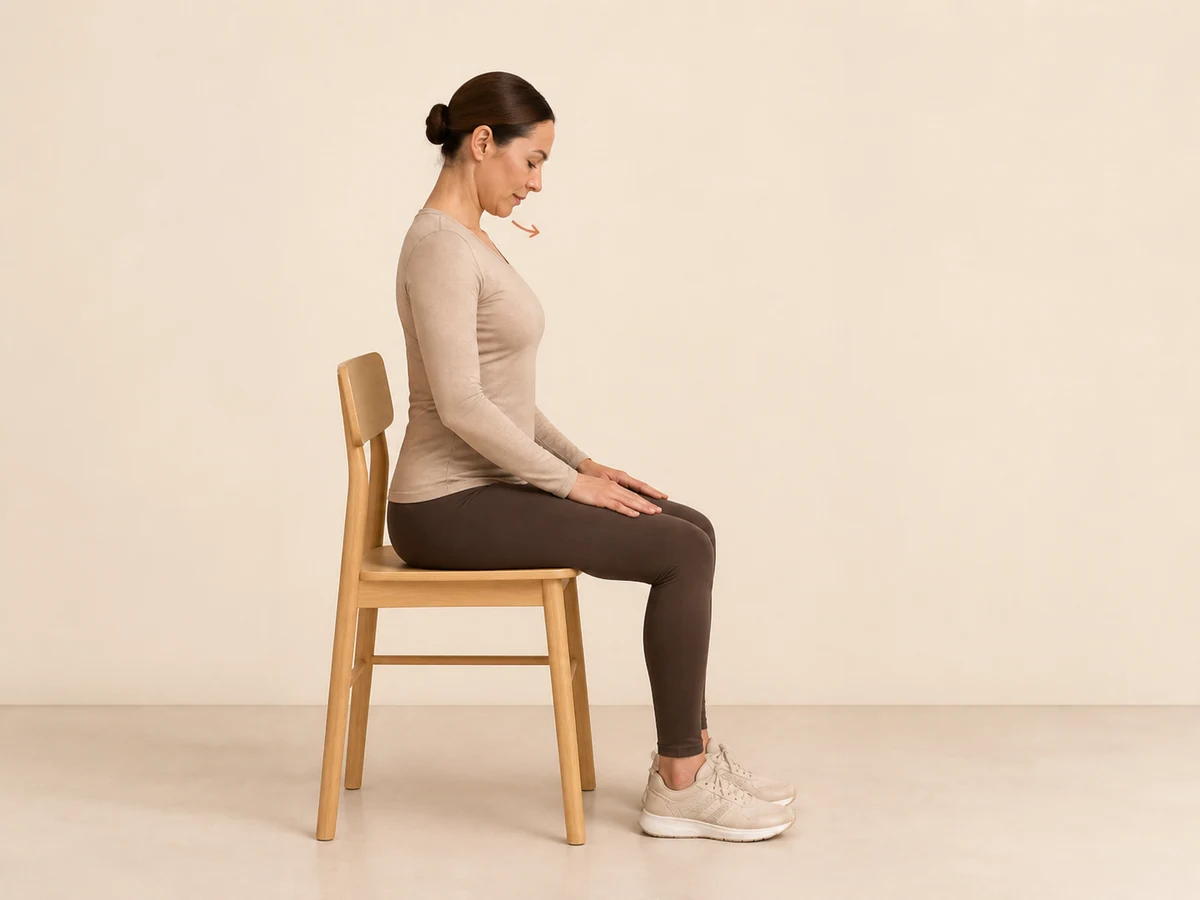
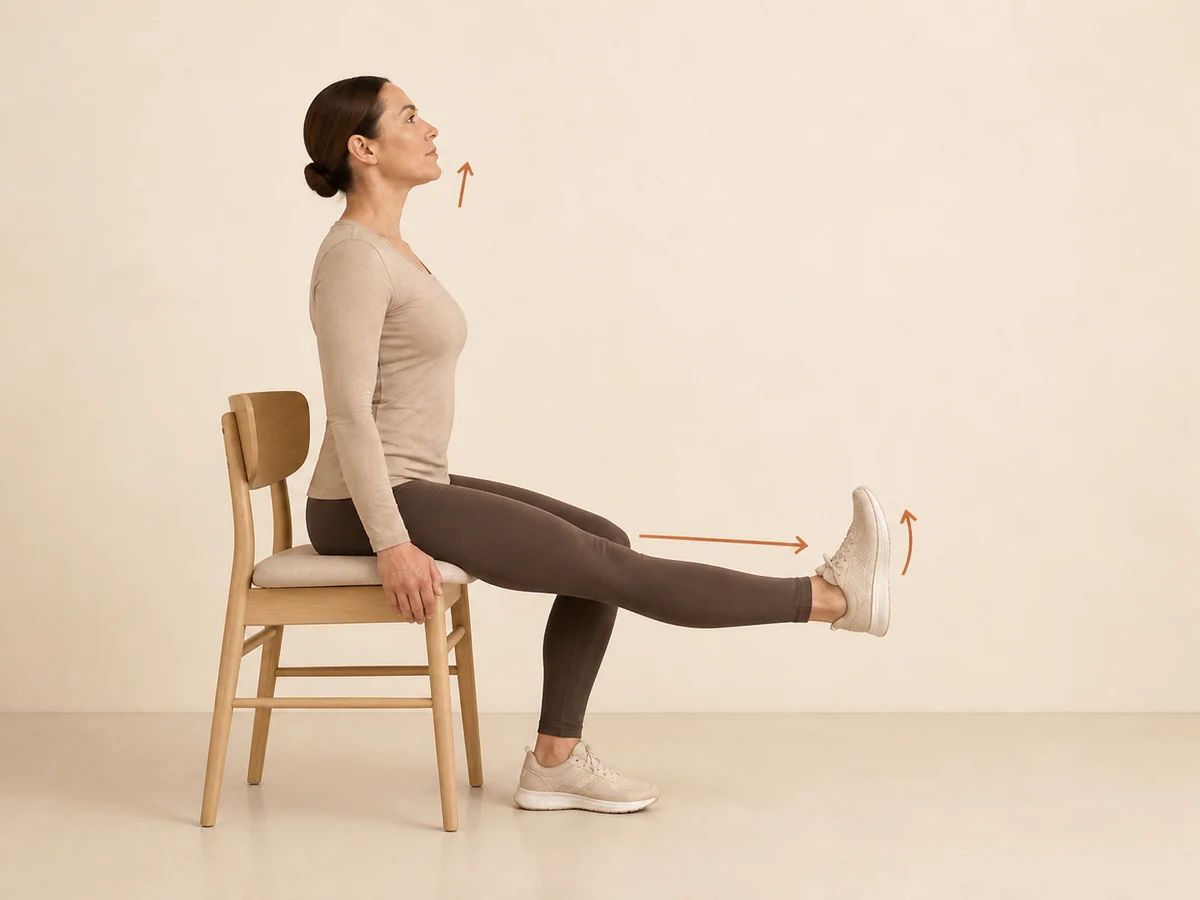
Sit tall, slowly straighten one knee while pulling your toes up and tucking your chin, then reverse. The goal is gentle gliding, not a deep stretch — never push into the electrical pain.
10–12 slow glidesProne Press-Ups


Lie face down and gently press your chest up while your hips stay down. For disc-driven pain: if leg pain pulls back toward your spine, that is a good sign; if it travels further down the leg, stop.
8–10 repsFigure-Four Glute Stretch


On your back, cross one ankle over the opposite knee and draw the thigh toward your chest. This targets the buttock, not the spine — the one that helps piriformis-driven cases.
30s each side- Walk often, in short bouts. Walking pumps fluid through the disc and keeps the nerve mobile. Several five-to-ten-minute walks beat one long forced one.
- Avoid prolonged sitting. Sitting loads the lumbar discs more than standing. Set a timer, stand every 30 minutes, and avoid deep slouched couch positions that flex the spine.
One caution: the right stretch depends on the cause. Extension-based movements help most disc cases and can aggravate some stenosis cases, while glute stretching helps piriformis but does little for a true disc. This is exactly why the exam comes first. If you also lift, our notes on lifting through low back pain cover how to keep loading safely while the nerve settles. The AAOS OrthoInfo library is a reliable second reference for home management.
Sudden numbness in the saddle area (between your legs), loss of bowel or bladder control, or progressive weakness in both legs is a medical emergency called cauda equina syndrome. Don't book a chiro visit — go to the ER. These signs are rare but they're surgical.
What patients ask me most
"Will it come back?" Possibly, if the underlying conditions don't change. Sciatica caused by years of poor sitting posture and weak glutes responds to treatment but recurs when the desk job resumes. Long-term, the goal is to make your spine resilient enough that the original load doesn't re-aggravate it.
"Can I keep training?" Almost always yes, with modifications. We work around it.
"How long is this going to take?" For acute, uncomplicated sciatica: a few weeks. For chronic cases with three or four episodes already on the books: months, but with a clear arc of improvement.
If the pain in your leg has a source in your back, the fastest route out is figuring out which of the three causes you actually have — and then doing the work that matches it.
We assess and treat sciatica at our Cottleville clinic, serving O'Fallon, St. Peters and St. Charles.
If the pain is worst overnight or first thing in the morning, where and how you sleep matters — here's the best sleeping position for back and nerve pain.
Get a proper sciatica evaluation and a plan.
Frequently asked questions
- How long does sciatica last?
- Most sciatica from a simple flare-up eases within 4 to 6 weeks, and many people feel meaningfully better within the first couple of weeks once the irritated nerve is taken off tension and movement is restored. Pain that has lasted more than 6 weeks, or that comes with weakness or numbness, should be assessed rather than waited out.
- What is the fastest way to relieve sciatica?
- The fastest relief comes from finding which position decompresses the nerve and using it often — for many people that's gentle extension or a specific nerve-glide, not bed rest. We identify the exact source (disc, joint or piriformis), calm it down hands-on, and give you a couple of movements to repeat through the day so it keeps settling.
- Is sciatica the same as piriformis syndrome?
- No. True sciatica is irritation of the nerve root in the low back, usually from a disc or joint. Piriformis syndrome is compression of the sciatic nerve by a tight hip muscle further down. They feel similar but respond to different treatment, which is why an exam matters before you start stretching.
- Can a chiropractor help with sciatica?
- Yes — for the common mechanical causes. Restoring motion to the irritated segment, releasing the surrounding tissue and retraining the movement pattern that overloaded it addresses why the nerve is being pinched. We screen first for the red flags that need imaging or referral, and treat the rest at our Cottleville clinic.