Balance and fall prevention: simple work that keeps you steady
Balance is a trainable skill, not a fixed trait. Why it declines with age, the simple home drills that rebuild it, and when a stumble is worth a formal assessment.

Balance is a trainable skill, not a fixed trait: it relies on vision, the inner ear, position sense (proprioception) and leg and hip strength, and three of the four respond to training at any age. Daily single-leg stands, heel-to-toe walking and sit-to-stands near a counter are the place to start. If you have already fallen, feel unsteady on stairs, hold furniture to get around or get dizzy turning your head, get a formal balance assessment.
Losing your balance — the small stumble stepping off a curb, the grab for the counter when you stand up too fast — is one of the most common reasons people search "how to improve my balance" or quietly worry "I keep losing my balance." Balance is not a fixed trait you either have or lose. It is a trainable skill, and a few minutes of the right work each day genuinely keeps you steady.
The reason this matters so much after 55 is simple: a fall is the fastest way to lose your independence. So the real question behind "how to prevent falls" is not about being careful — it is about building the systems that catch you before a stumble ever becomes a fall.
Why does my balance get worse as I age?
Staying upright is a team effort between four systems, and age chips away at each one quietly. When they all decline a little at once, the result feels like "my balance is going" — but each part is something you can test and train.
- Vision. Your eyes tell your brain where level is and where the ground sits. Dimmer light, glasses changes, and slower low-light adjustment all make the eyes a less reliable guide.
- The inner ear. Deep in each ear is your balance organ — the vestibular system — a set of fluid-filled canals that sense head movement and tilt. Its signal fades with age, which is why quick head turns or rolling over in bed can feel briefly off.
- Position sense. Your body knows where your feet and joints are without looking — that is position sense, or proprioception. Sensors in your muscles and joints feed the brain a constant map, and that map gets fuzzier over time.
- Leg and hip strength. Sensing a wobble does no good if the muscles cannot respond fast enough to correct it. Weak hips and ankles are often the difference between a recovered stumble and a fall.
The good news is that three of those four respond to training, and the fourth — vision — usually just needs an up-to-date prescription and better lighting. Strength and position sense in particular improve at any age with consistent, specific work. This is the same principle behind staying mobile after 55: the systems you use, you keep.
Simple balance exercises you can do at home
You do not need equipment or a gym. Do these near a counter or sturdy chair so a hand is always within reach, and progress from light-touch support toward hands-free as you steady. A few minutes daily beats a long session once a week.
Single-Leg Stands
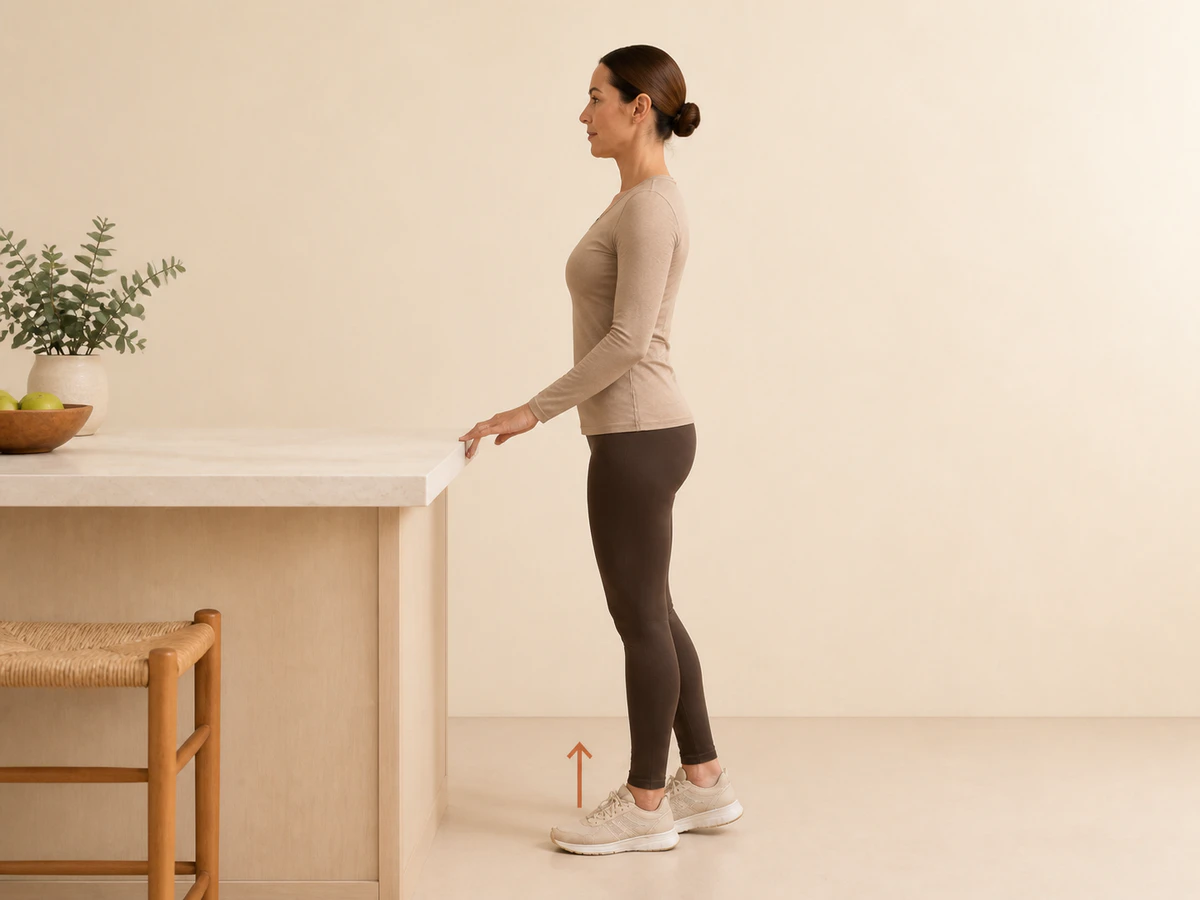
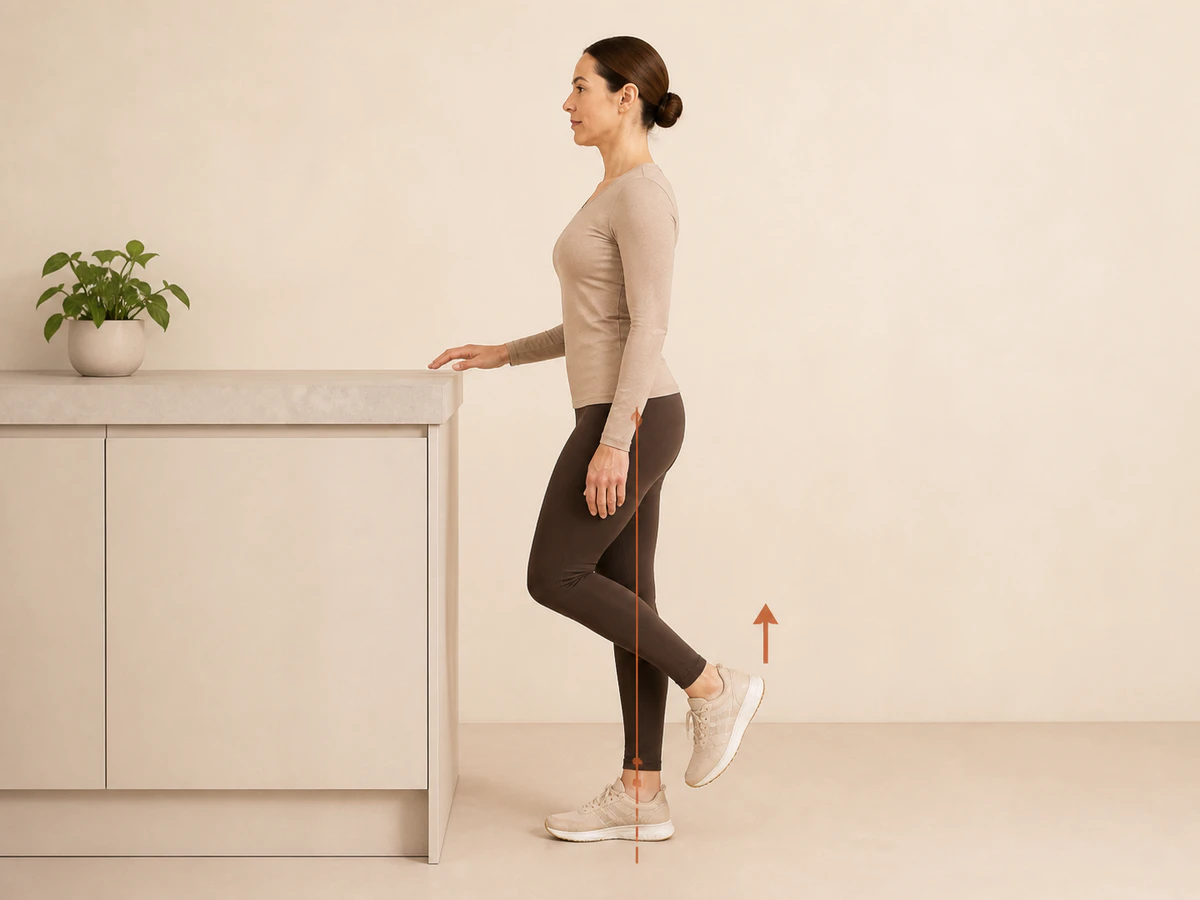
Stand tall, lift one foot a few inches, and hold. Switch sides. This trains ankle strength and position sense together — the two systems most responsible for catching a wobble.
Hold 10–30s/each sideHeel-to-Toe Walking
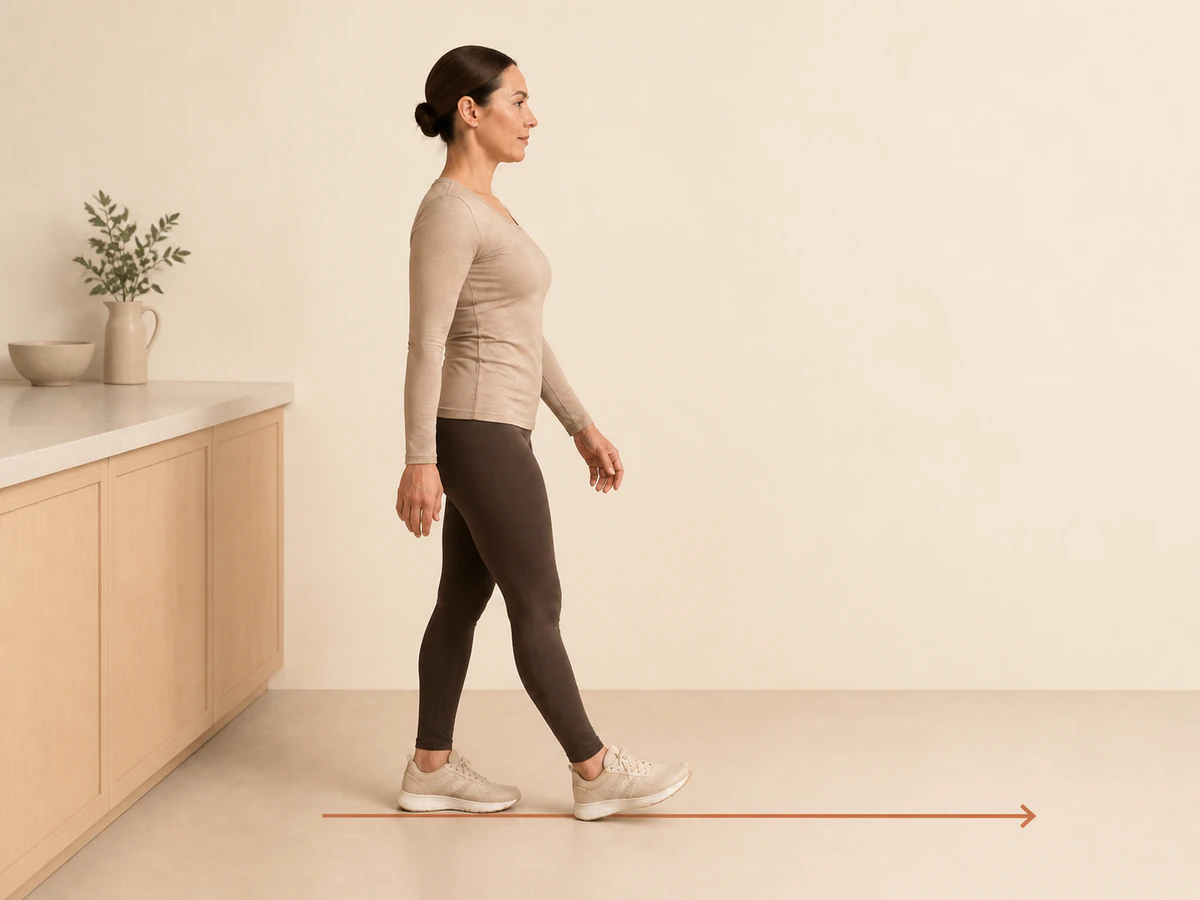
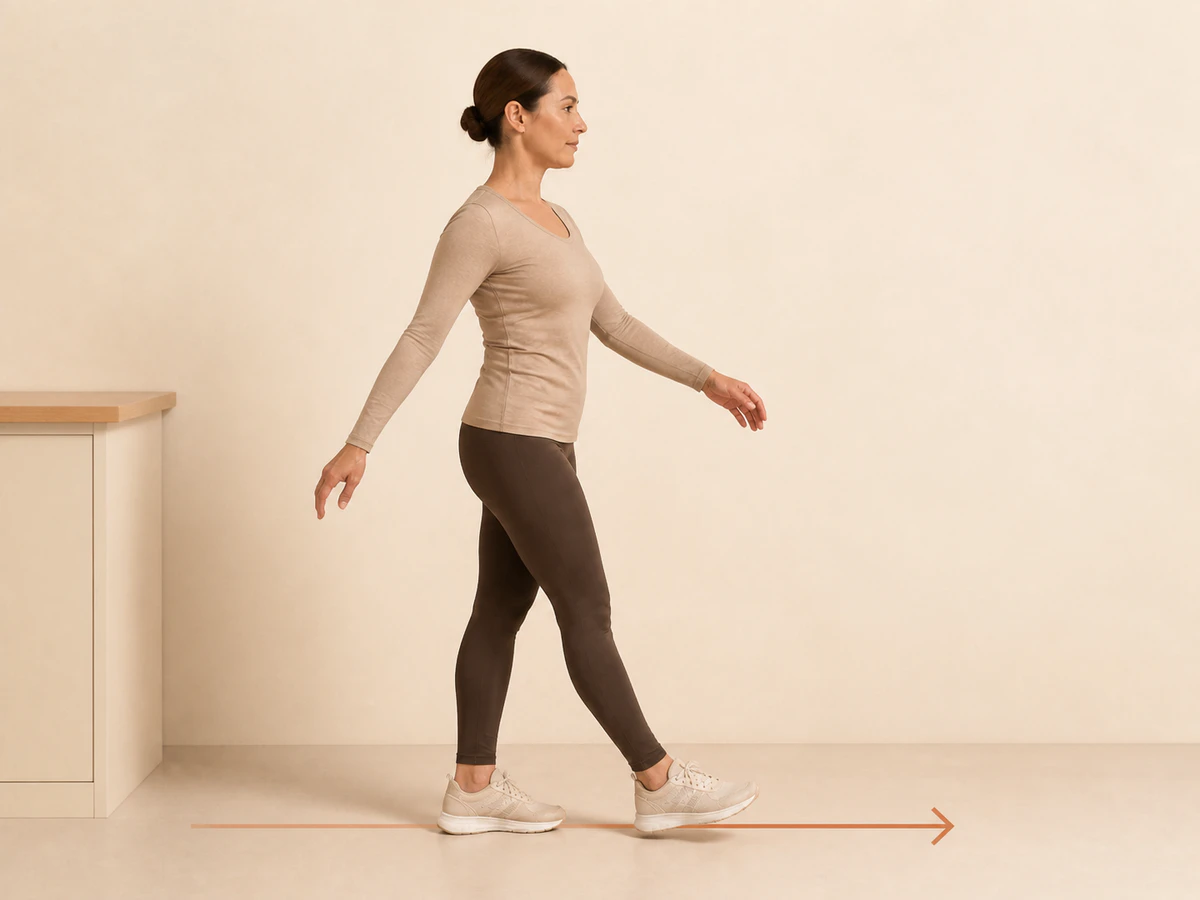
Walk a straight line placing the heel of one foot directly against the toes of the other, as if on a tightrope. It narrows your base and forces the small stabilizers to work.
10–15 stepsSit-to-Stands
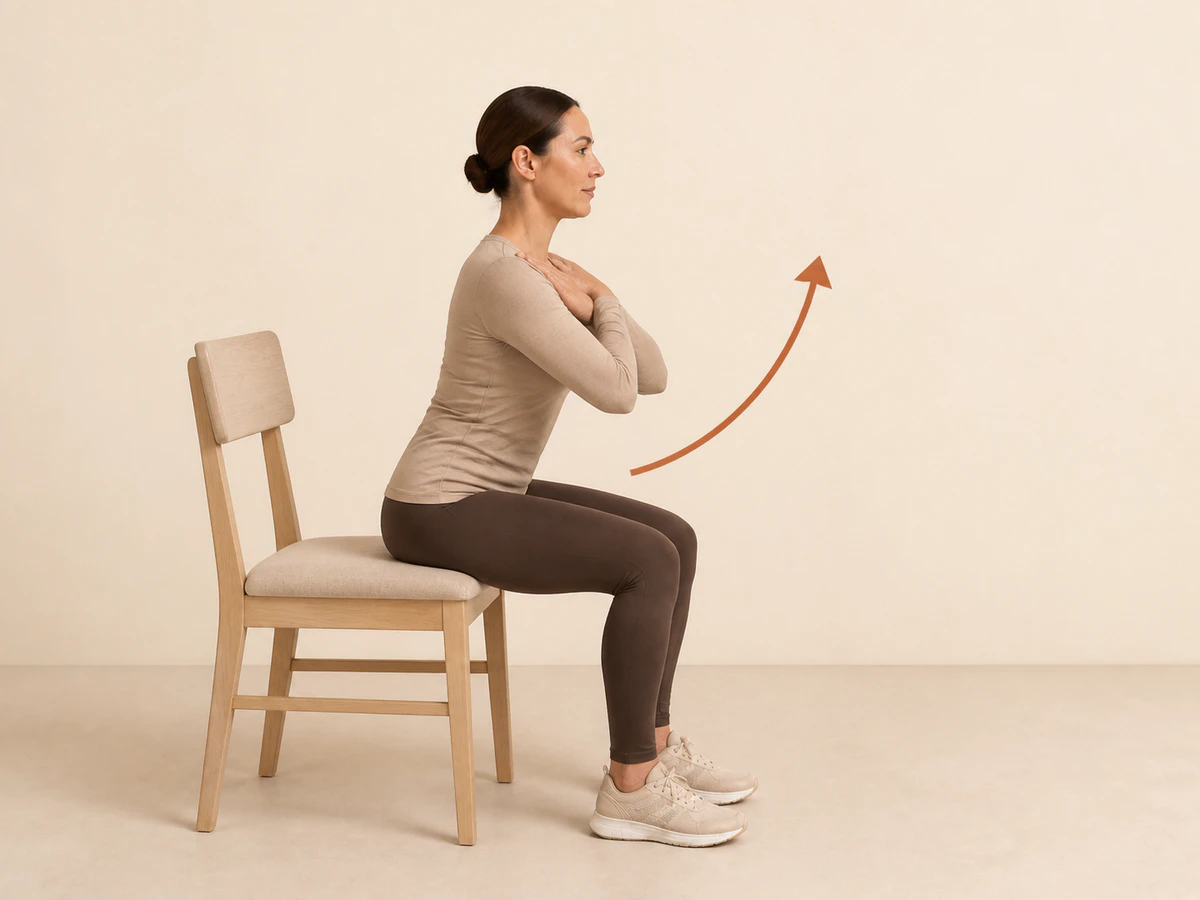
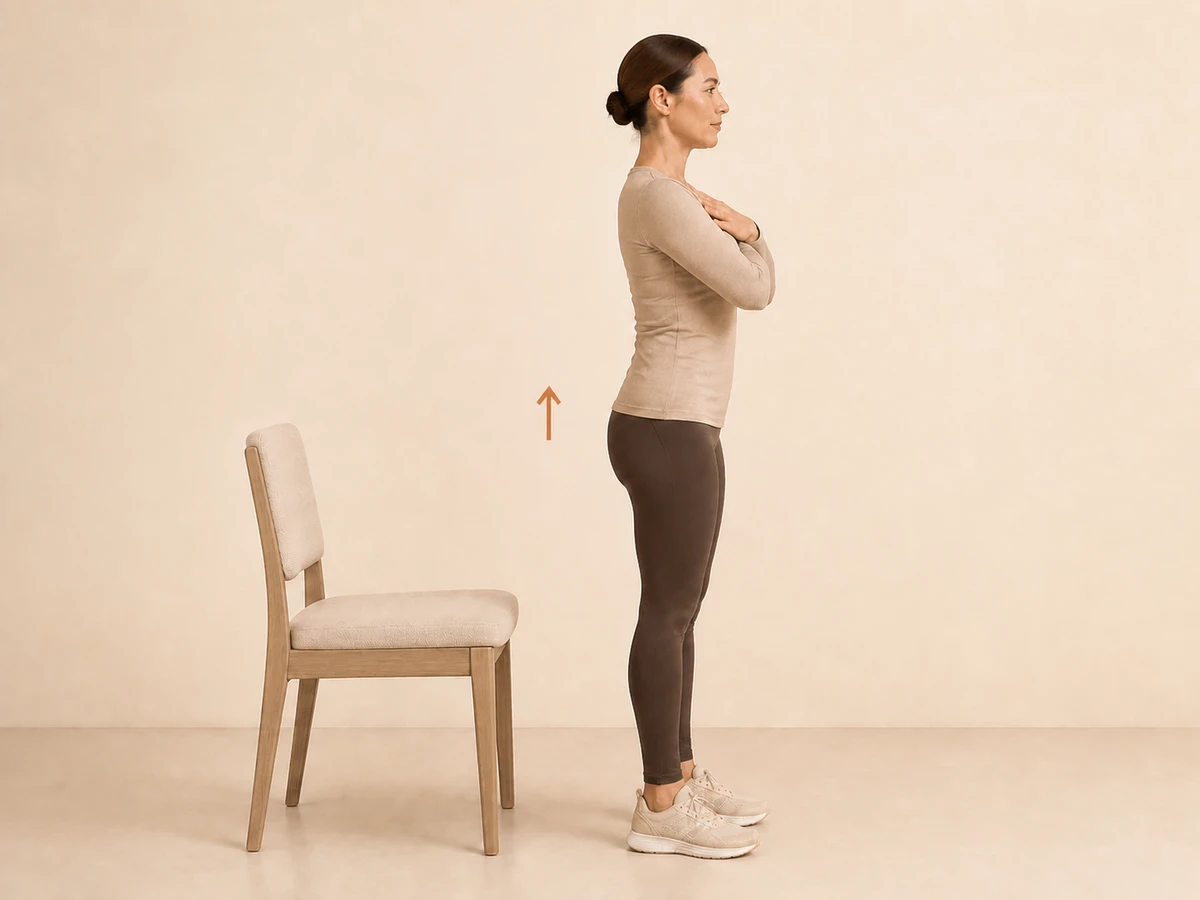
From a firm chair, stand up and sit back down without using your hands, slow and controlled. This builds the exact hip and thigh strength you use to rise, climb stairs, and recover a stumble.
8–12 repsOnce those feel easy, raise the challenge honestly: close your eyes during a single-leg stand, or stand on a couch cushion. Removing vision or a stable surface forces your inner ear and position sense to carry more of the load — which is precisely how you train them.
Ankle strategy vs hip strategy: how your body catches itself
When you sway, your body corrects in one of two ways. For a small wobble it uses the ankle strategy — tiny adjustments at the ankle joint that keep you centered without moving your feet. For a bigger lurch it switches to the hip strategy, bending fast at the hips to shift your weight back over your base.
Both matter, and both weaken with age and inactivity. Single-leg stands sharpen the ankle strategy; sit-to-stands and hip-hinge work build the power the hip strategy needs. Strong bones make this safer still, which is why balance work pairs naturally with the loading in our piece on exercise for bone density — steadier footing plus a more fracture-resistant frame.
Most people wait until after a fall to take balance seriously. I would rather train the catch reflex while it is still just insurance — because the stumble you recover on your own never becomes the fall that changes everything.
How do I know if I should get my balance checked?
Some unsteadiness is worth a formal look rather than home drills alone. According to the CDC, roughly one in four adults 65 and older falls each year, and falls are the leading cause of injury-related death in that age group. Those are not numbers to be careful around — they are numbers to train against.
Get assessed if you have already fallen, feel unsteady on stairs or uneven ground, hold furniture to move through your home, or notice dizziness with head movement. The National Institute on Aging flags these as signals worth acting on early. Back and leg symptoms matter too — nerve-related weakness or numbness can quietly undercut steadiness, which is part of why we take back pain after 55 seriously rather than filing it under "just getting older."
What does balance training look like at The Spine Studio?
Here is where the obvious approach falls short: handing someone a printout of exercises assumes their four systems are all working and just need practice. Often they are not. A stiff ankle, a joint that has stopped moving well, or dulled position sense in one leg will cap how much a home routine can do — so we start with an assessment, not a worksheet.
An Initial Assessment ($149, first visit) maps where your steadiness is actually breaking down. From there, Precision Spinal Adjustments restore movement to joints that have gone stiff, Pin & Stretch frees tissue that limits ankle and hip range, and Corrective Exercise Programming builds the specific strength and position-sense drills your body needs — all included in a standard $60 follow-up visit. You can see the full list of services to understand how the pieces fit.
The aim is not a one-time fix. It is a routine you can run for years, so steady stays your default instead of something you think about only after a scare.
If you have already had a fall or a near-miss, that is the signal to get assessed, not to wait for the next one. We build balance and strength programs for older adults across Cottleville, St. Charles, and O'Fallon — matched to what your own assessment shows.
Book a balance assessment and build the steady habits that keep you on your feet.
Frequently asked questions
- How can I improve my balance at home?
- Start with three simple drills done daily near a counter for safety: single-leg stands, heel-to-toe walking, and sit-to-stands without using your hands. These train the ankle strength, hip strength, and position sense that catch a wobble before it becomes a fall. A few minutes every day works better than one long session a week, and you progress by closing your eyes or standing on a cushion as each drill gets easier.
- Why do I keep losing my balance as I get older?
- Balance depends on four systems working together — your vision, your inner-ear balance organ, your body's position sense (proprioception), and your leg and hip strength. Age chips away at each one a little, and the combined decline is what feels like your balance slipping. Three of the four respond well to training at any age, so unsteadiness is rarely something you simply have to accept.
- How do I prevent falls after 65?
- Prevention comes down to training the systems that recover a stumble, not just moving carefully. Build leg and hip strength, practice standing on one foot and narrow-base walking, keep your vision prescription current, and remove trip hazards and poor lighting at home. If you have already fallen or feel unsteady on stairs, get a formal assessment — the CDC notes that one in four older adults falls each year, and early training meaningfully lowers that risk.
- When should I see someone about my balance instead of just doing exercises?
- See a provider if you have already fallen, feel unsteady on stairs or uneven ground, hold onto furniture to move around your home, or get dizzy when you turn your head. Those signs suggest one of the balance systems needs a closer look than home drills can give. At The Spine Studio, an Initial Assessment maps where your steadiness is breaking down so your program targets the real problem rather than guessing.