Stretches for drivers: keep the cab from wrecking your back.
Truck, delivery, and rideshare drivers sit more than almost anyone. A practical set of stretches that fit a fuel stop or a delivery break — and why movement beats a new seat cushion.
Related guide Low back pain

Drivers can protect their back with a short standing routine beside the cab: a hip-flexor lunge, chest opener, figure-four glute stretch, gentle back extension, chin tucks with shoulder rolls, and a side bend, about 20–30 seconds each. Run it at every fuel stop or delivery, since frequent breaks beat any cushion. Stop a stretch that sends pain down a leg or arm, and see a physician for numbness, weakness or bladder or bowel changes.
Professional drivers spend more of the workday sitting than almost anyone, and the body keeps the receipt. The truck cab, delivery van, or rideshare seat that pays the bills also locks up the hips, low back, neck, and mid-back one hour at a time — and by the last leg of the run, that stiffness has turned into a deep ache that follows you home.
Here is the short version of how to keep driving from wrecking your back: the seat is not the whole problem, and no cushion fixes a posture you never leave. What actually changes how you feel at the end of a shift is breaking up the stillness with a handful of stretches that fit a fuel stop, a delivery break, or two minutes at a red light. Movement is the medicine; the cushion is a bandage.
Why does driving all day make my back and hips so tight?
Sitting is not rest. Holding one position for hours keeps the hip flexors shortened, switches off the glutes and deep core, and loads the discs of the low back under a steady, unchanging pressure. The neck creeps forward to watch the road and mirrors, and the mid-back rounds to reach the wheel — so the muscles that should be sharing the work quietly clock out.
Prolonged sitting is a documented occupational hazard, not a comfort complaint. NIOSH, the federal worker-safety institute, flags long stretches of uninterrupted sitting and whole-body vibration — the low-frequency shaking that comes up through a truck seat on the highway — as real contributors to musculoskeletal strain. For drivers, the two stack: you are sitting still while the road works on your spine. That is a big part of the many things that quietly drive low back pain.
The seat position that feels fine at the on-ramp is the same position punishing your hips two hundred miles later. The fix is not a better seat — it is not staying in any seat as long.
What stretches can I do at a fuel stop or delivery break?
You do not need a gym or a floor. This is a standing routine you can run beside the cab in three or four minutes, using the truck, a trailer, or a wall for support. Move slowly, breathe, and hold each position long enough to feel the tissue give — roughly 20 to 30 seconds a side. If any move sharply increases pain or sends symptoms down a leg or arm, stop that one; sharp is a signal, not a target.
Standing Hip-Flexor Lunge
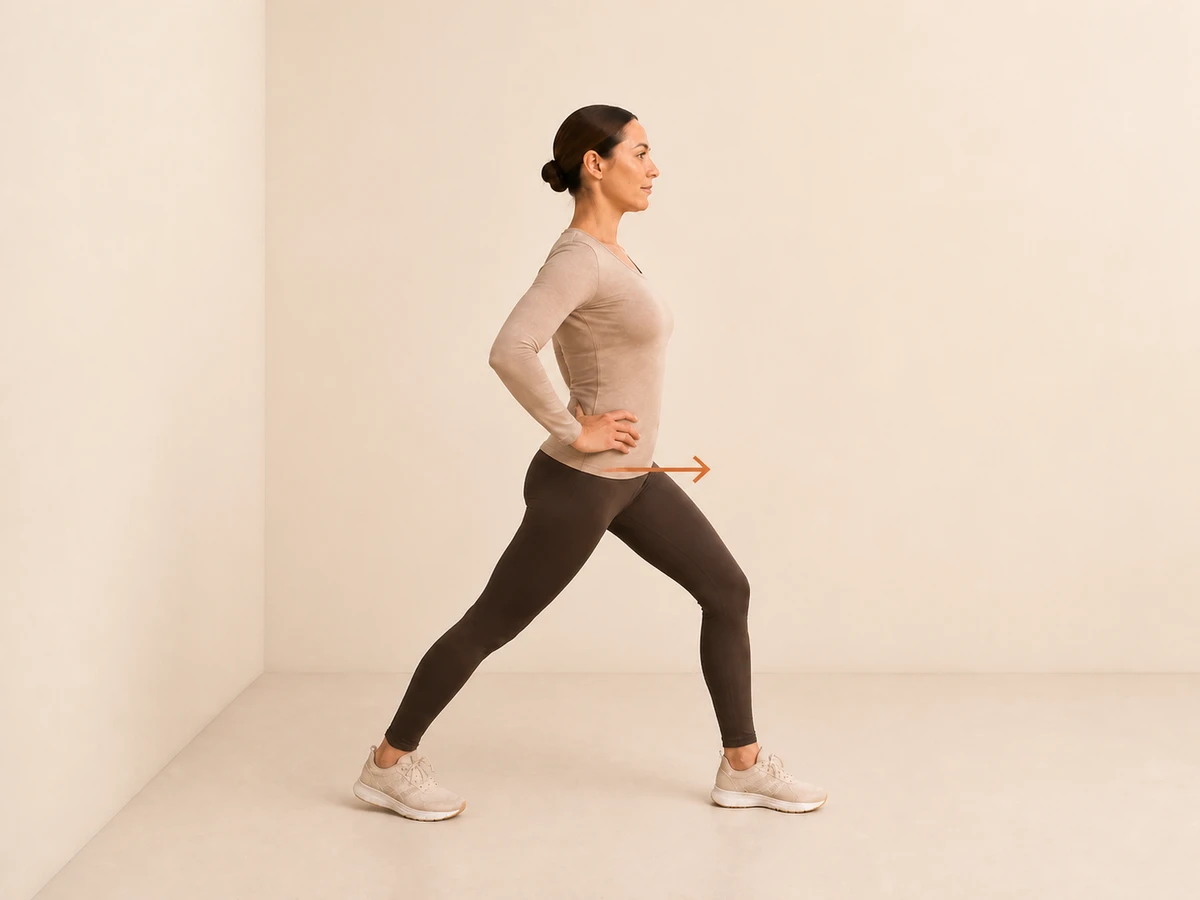
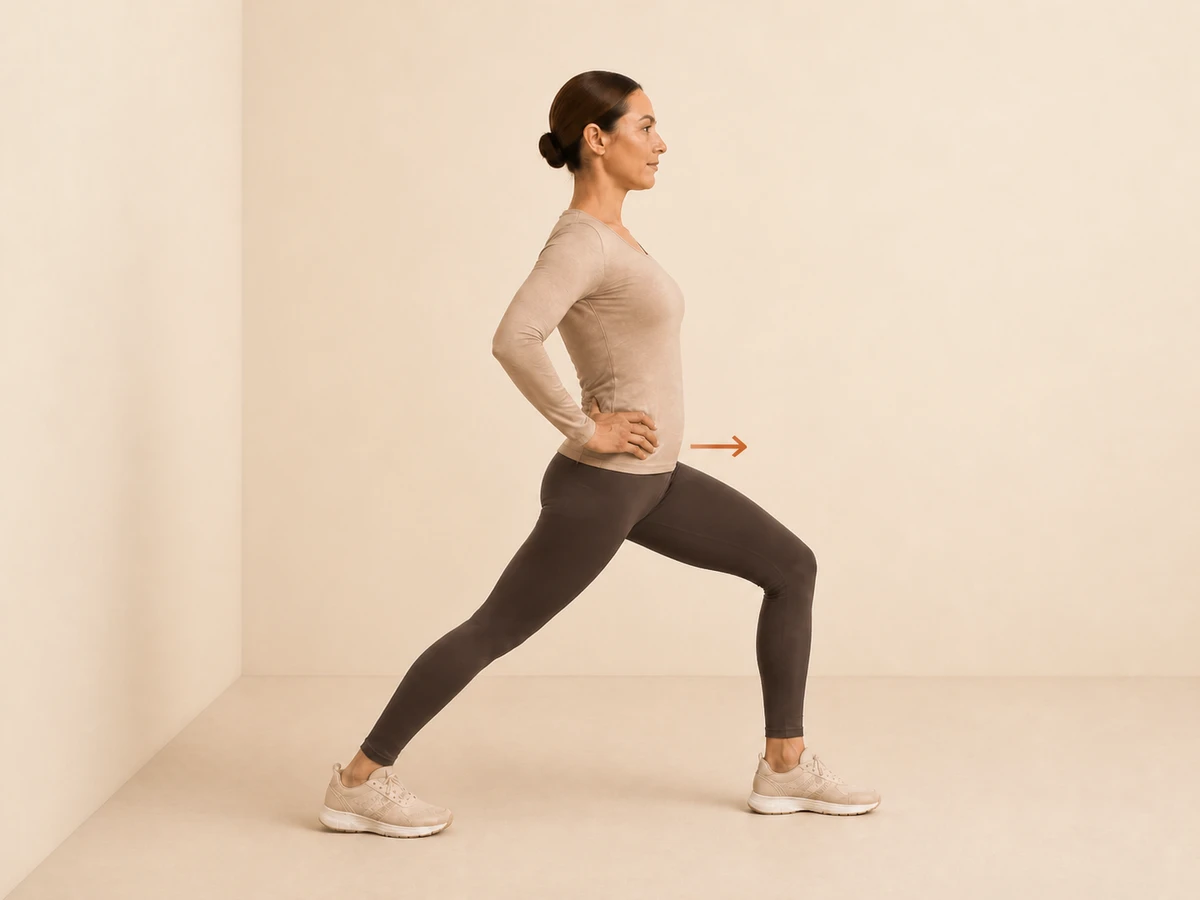
Step one foot back, tuck your tailbone under, and press the hips forward until you feel a stretch across the front of the back hip. This is the muscle sitting shortens most.
20–30s each sideDoorway or Trailer-Edge Chest Opener
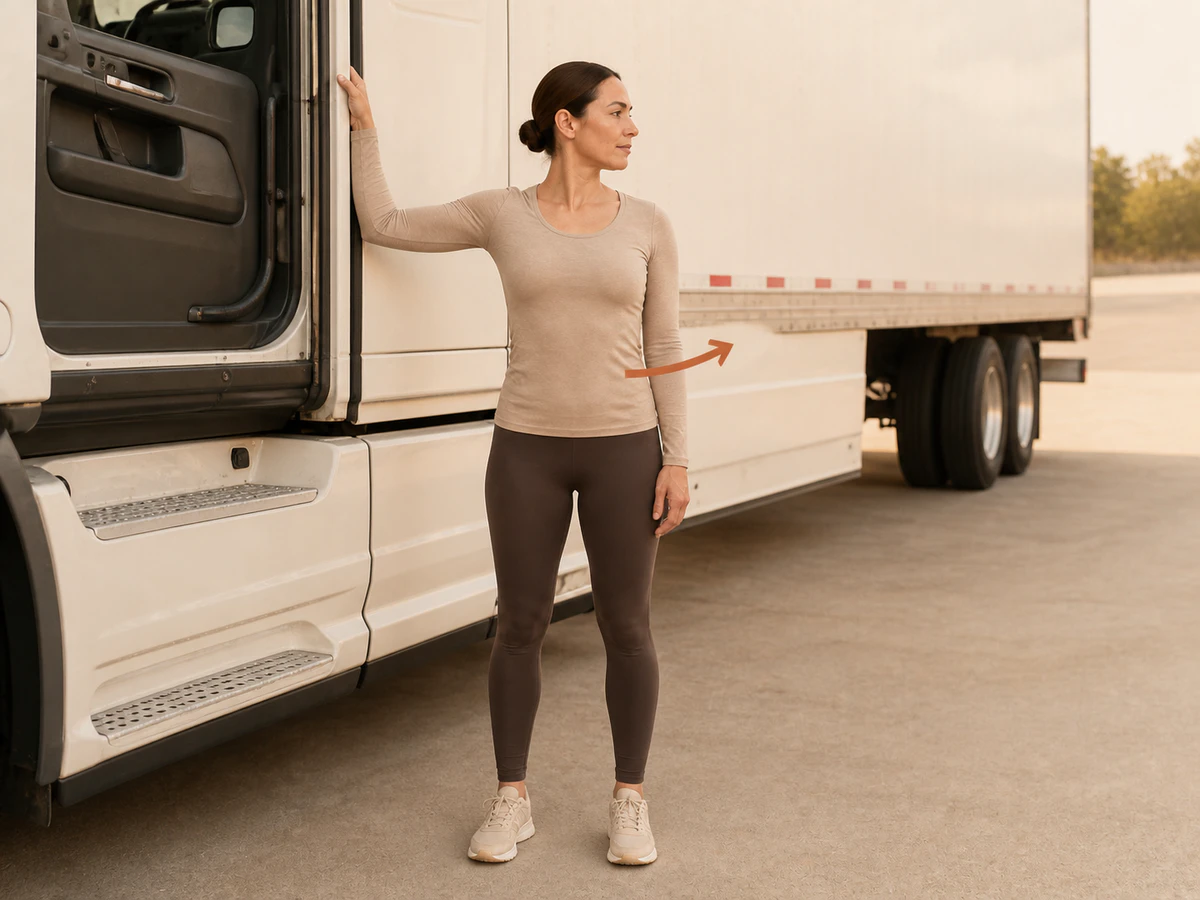
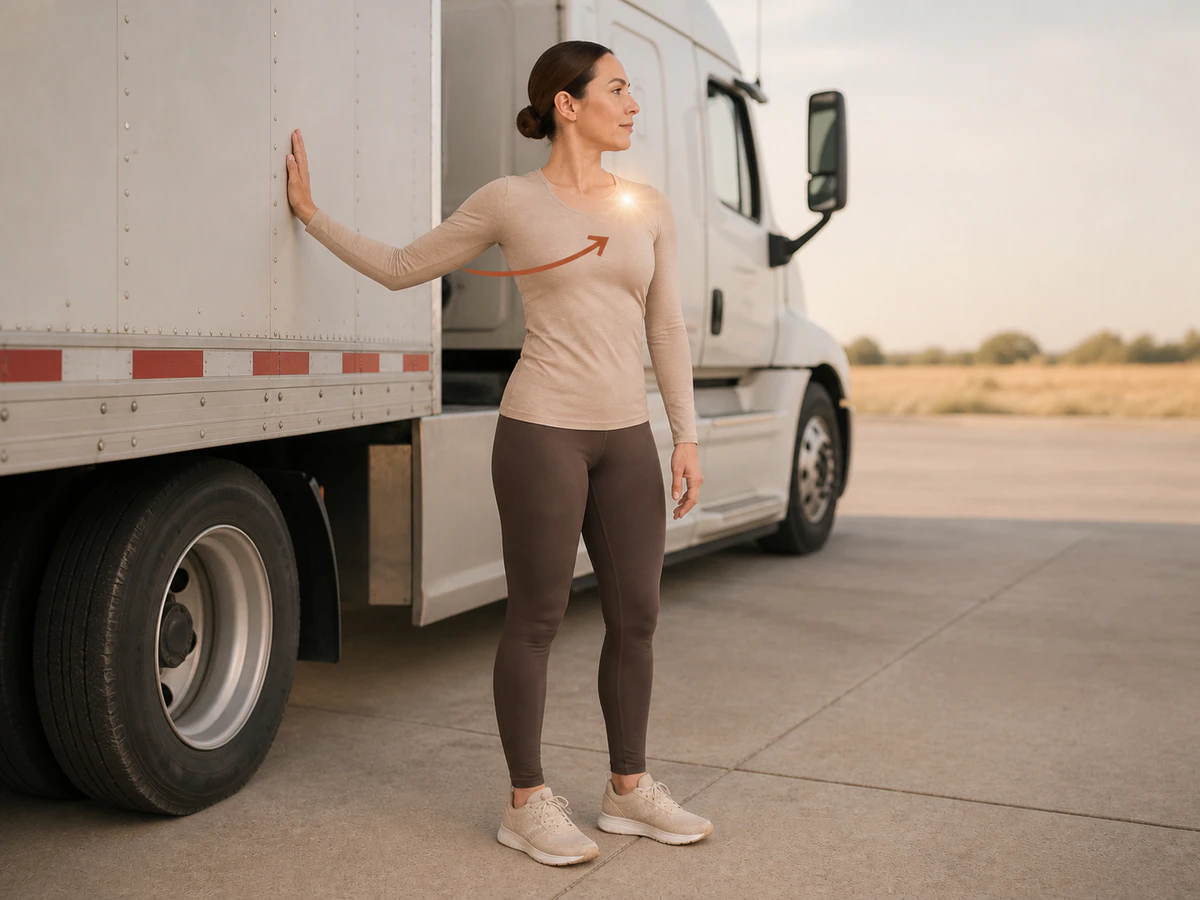
Forearm on the door frame or trailer edge, elbow at shoulder height, then turn your body away. It reverses the rounded reach-for-the-wheel posture across the chest and shoulder.
20–30s each sideStanding Figure-Four for the Glutes
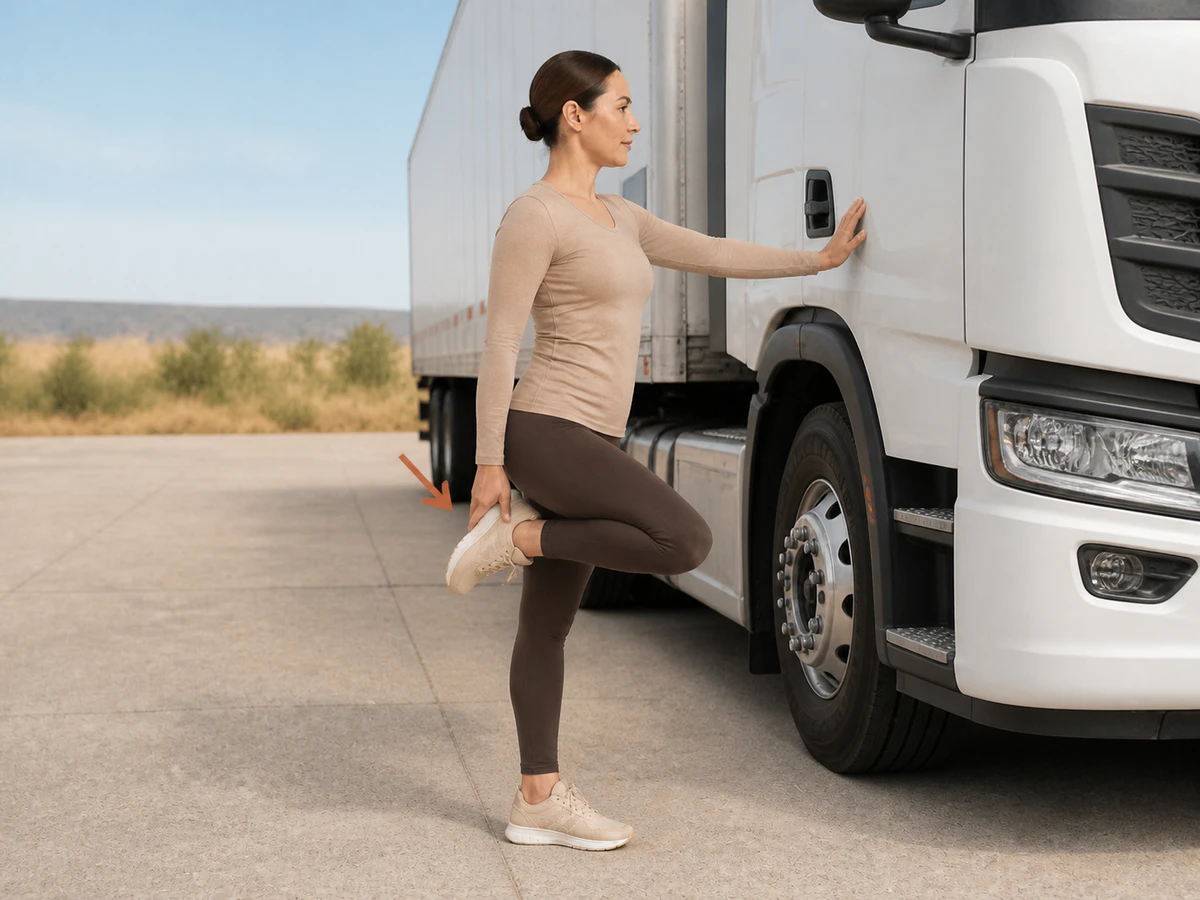
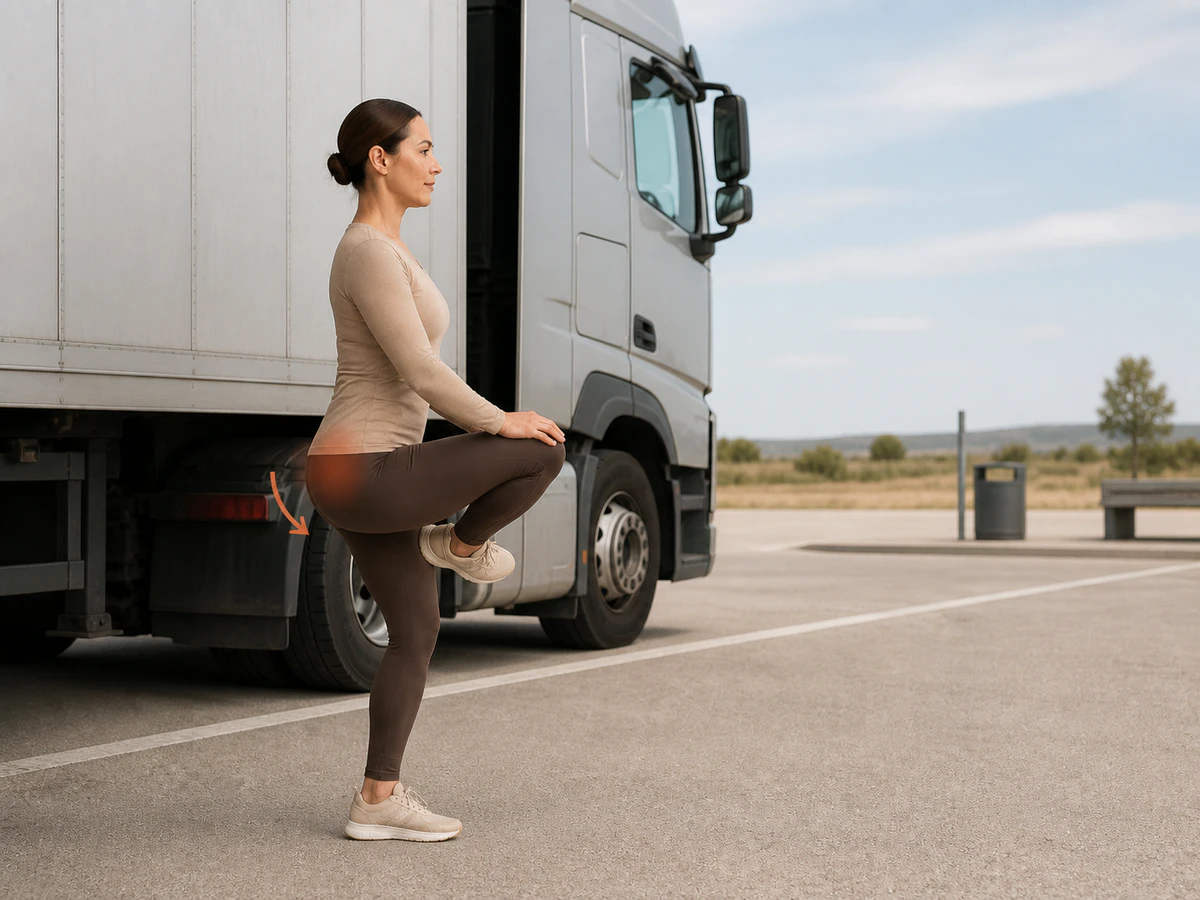
Cross one ankle over the opposite knee, hold the cab for balance, and sit back into a shallow squat. It opens the deep hip muscles that go stiff and cranky after hours of sitting.
20–30s each sideGentle Back Extension
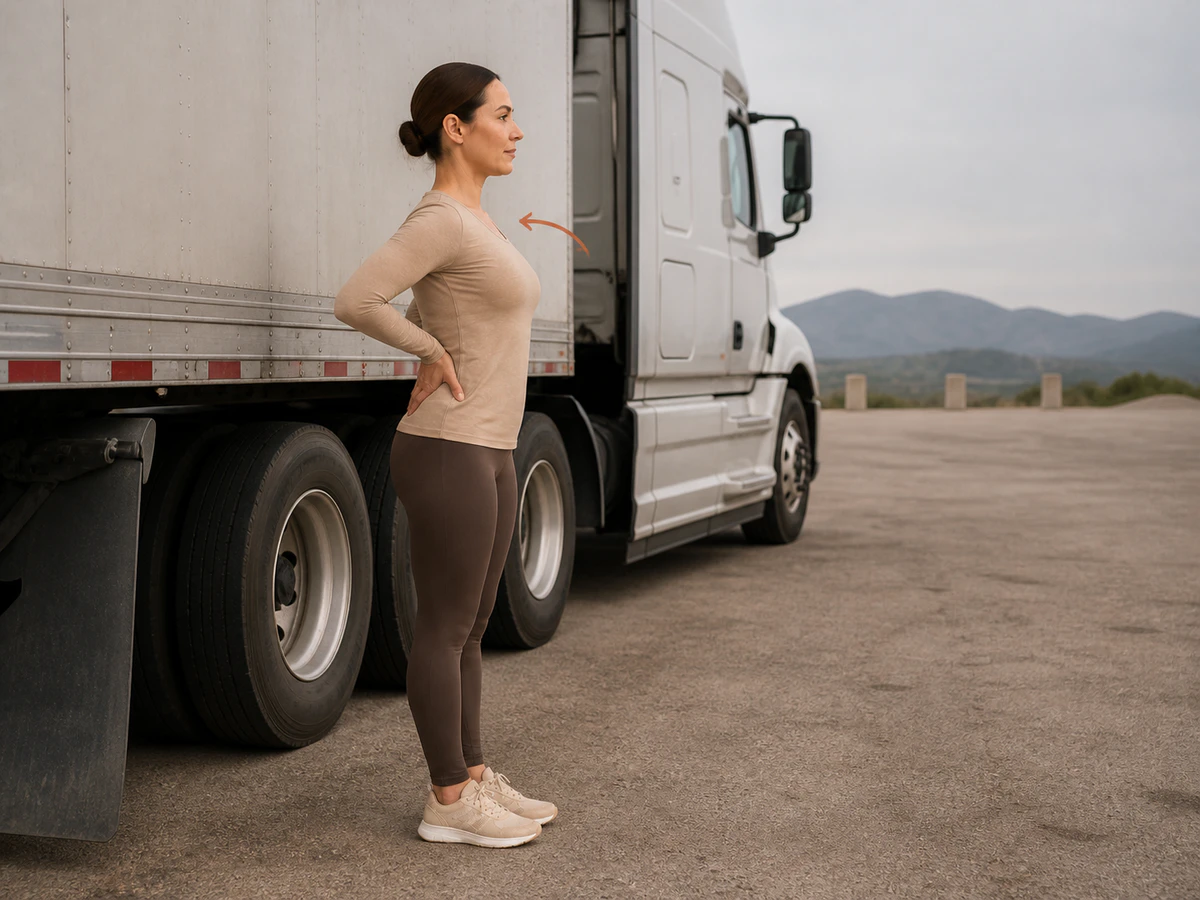
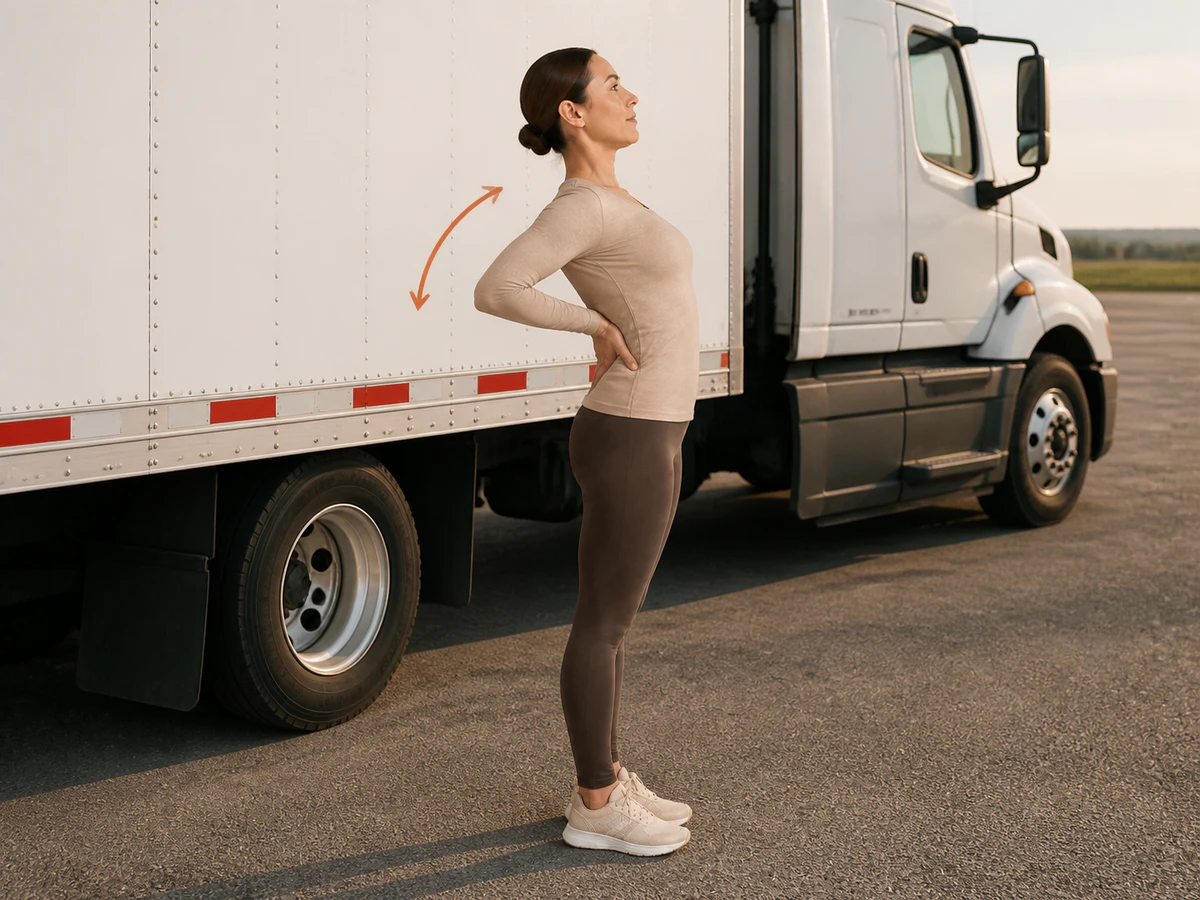
Hands on your low back, elbows in, and lean gently backward to arch the spine the opposite way it has been rounding all day. Small range, no forcing.
8–10 repsChin Tucks & Shoulder Rolls
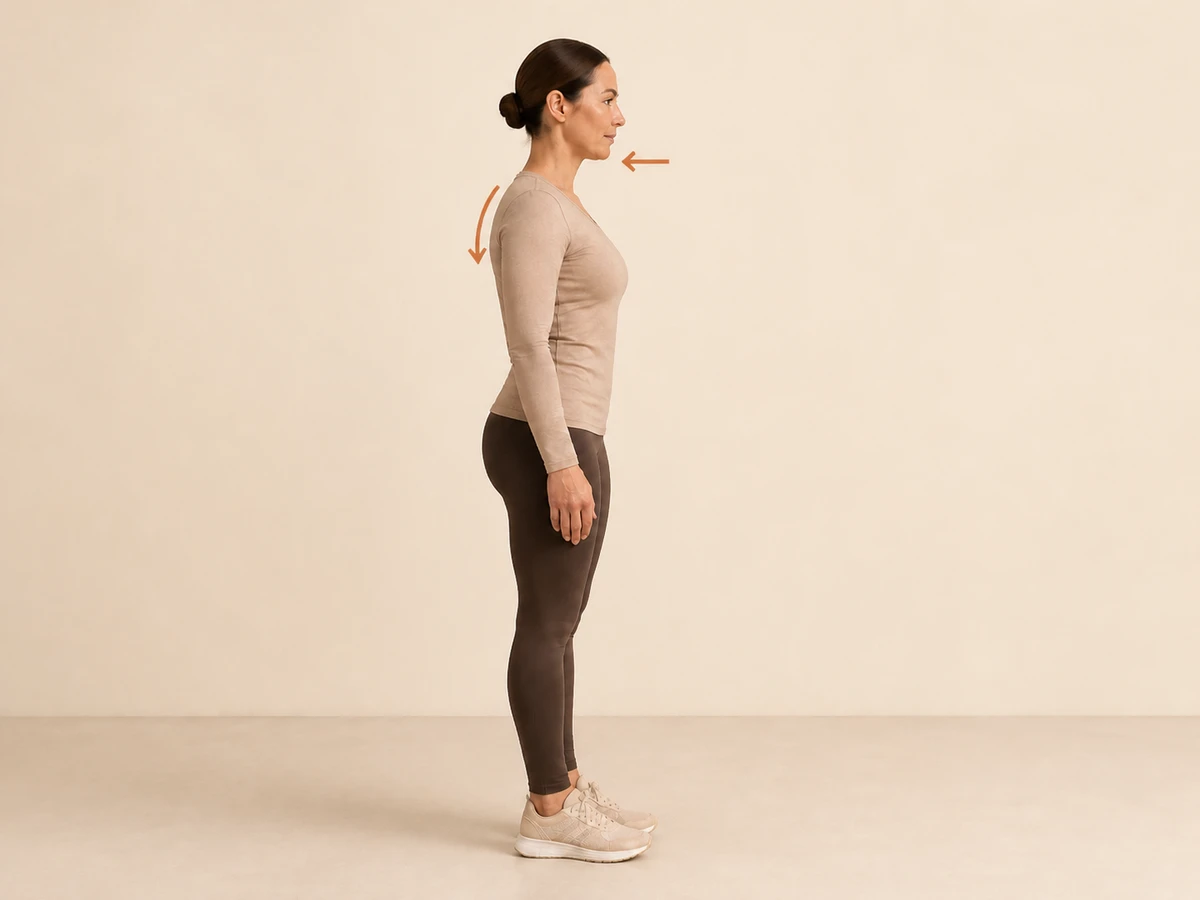
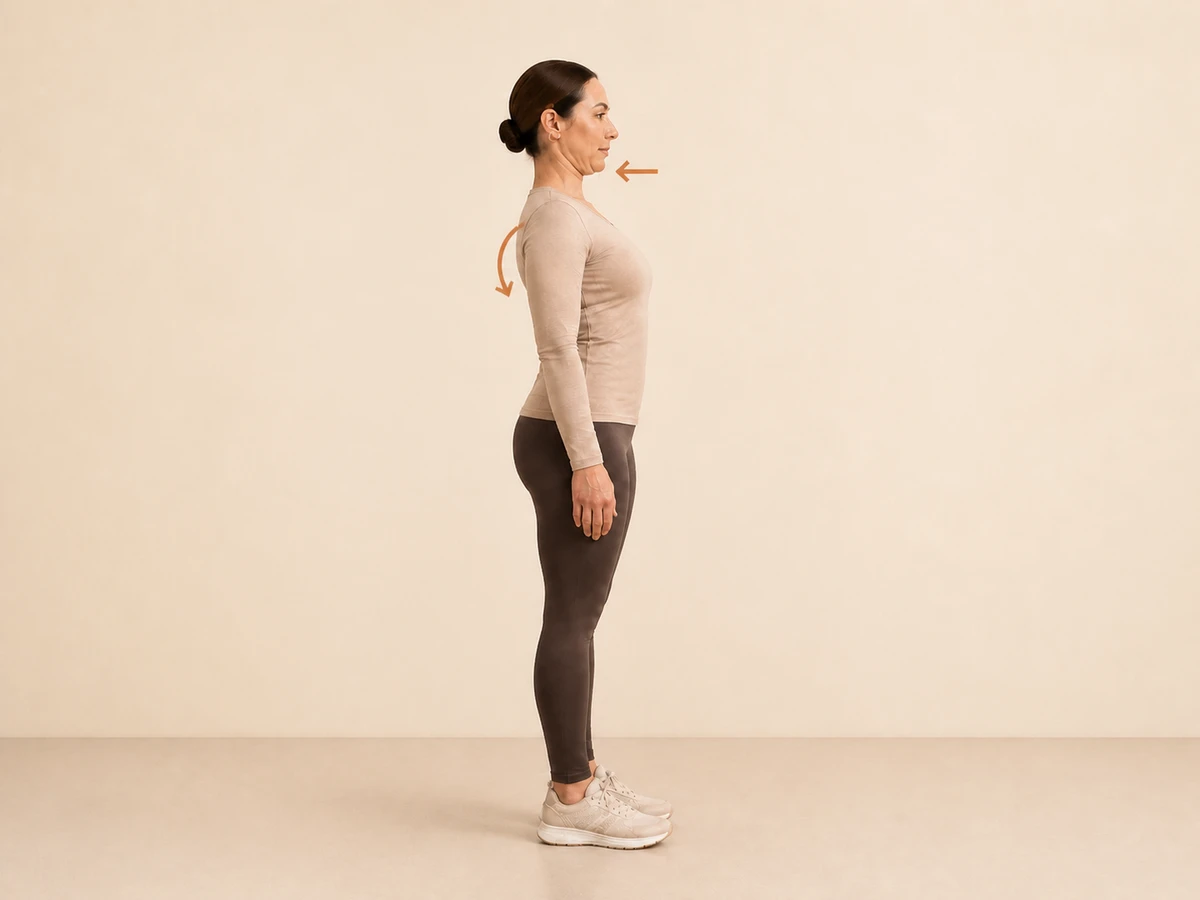
Draw the chin straight back to stack your head over your shoulders, then roll the shoulders back and down five or six times to unwind the forward-head, hunched-mid-back set.
5–6 repsStanding Side Bend
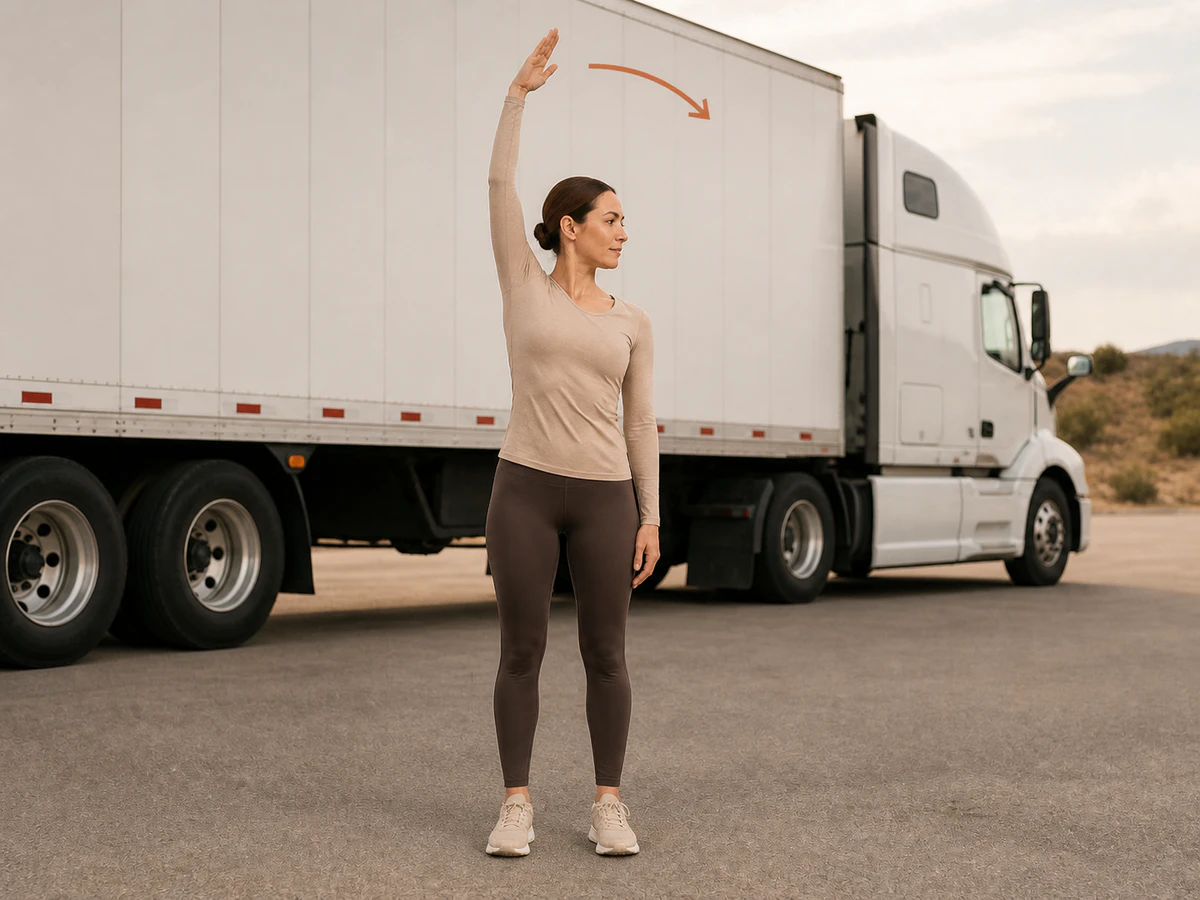

Reach one arm overhead and lean away to lengthen the side of the trunk and the mid-back, then switch. It restores the sideways motion a fixed seat and seatbelt take away all shift.
20–30s each sideRun the whole set once and you have spent about the time it takes to swipe a fuel card. The point is not a perfect stretch — it is interrupting the position before it sets.
How do I fit stretching into a shift on the I-70 and Highway N run?
The best routine is the one that survives a real schedule, so anchor it to things you already do. If you run the I-70 and Highway N corridor through St. Charles County, you already stop — for fuel, for a delivery signature, for a scale or a coffee. Attach one round of stretches to each stop instead of trying to carve out a separate break you will skip.
- Every fuel stop. While the tank fills, run the standing routine beside the cab. It is dead time anyway.
- Every delivery or drop. Add a hip-flexor lunge and a back extension before you climb back in. Two moves, thirty seconds.
- At long lights and in traffic. Chin tucks, shoulder rolls, and a seated glute squeeze cost nothing and keep the muscles awake between stops.
Three or four short rounds spread across a shift beat one long stretching session at the end — the damage from sitting is cumulative, so the counter has to be frequent, not heroic.
Why a new seat cushion alone won't fix it
Drivers spend real money on lumbar cushions, gel pads, and air-ride seats, and a good seat genuinely helps — it is worth having. But a cushion only changes how a fixed position is loaded; it cannot give you the thing your spine is actually starving for, which is variety of movement. The most ergonomic seat in the world, held for ten hours, is still ten hours in one position.
Movement is what feeds discs, wakes up the glutes and core, and keeps the hips from setting like concrete. Cleveland Clinic makes the same point about back pain generally: staying active and changing position beats prolonged rest and static posture. The cushion is the supporting actor. The stretches, and getting out of the seat, are the lead.
When the muscles are already knotted and restricted from months of the same shift, movement sometimes needs help getting started. That is where hands-on soft tissue work and a driver-specific rehab plan come in — not to replace the stretching, but to unstick the tissue so the stretching finally takes.
When driver back pain means it's time to see someone
Most driving-related stiffness is mechanical and responds to movement. But some signs mean you should see a physician promptly rather than stretch through it: numbness, weakness, or pain that shoots down a leg or arm; pain after a crash or a hard jolt; or any loss of bladder or bowel control, which is an emergency. Stretching is general movement guidance, not a treatment for a specific injury — when in doubt, get it looked at.
Short of those red flags, the fix is usually restoring how the joints and muscles move. At The Spine Studio, that starts with an exam to find which segments are stuck and which muscles have checked out, then Precision Spinal Adjustments, Pin & Stretch, and Cupping & Scraping to restore motion. The piece that keeps it fixed for a working driver is Corrective Exercise Programming — a short set of moves built around your cab and your route, so the gains survive the next shift.
Corrective Exercise Programming is included in a standard $60 follow-up visit — no separate charge. We map the routine to what you actually have on the road: the truck, a trailer edge, a fuel-stop curb. Drivers on the corridor near Wentzville can build the whole plan with our Wentzville chiropractic team and take it back out on the run.
You cannot stop driving, and you should not have to trade your back for the job. The drivers who stay comfortable are not the ones with the fanciest seat — they are the ones who never let the position set. Start with one round at your next fuel stop, and let us build you a plan that fits the cab you already drive.
Turn your fuel stops into back insurance — let's build a routine around your route.
Frequently asked questions
- What are the best stretches for truck drivers?
- A standing routine you can run beside the cab beats anything that needs a floor: a hip-flexor lunge, a chest opener against the trailer, a figure-four for the glutes, a gentle back extension, chin tucks with shoulder rolls, and a standing side bend. Hold each about 20 to 30 seconds and run the set at fuel and delivery stops. Stop any move that sharply increases pain or sends symptoms down a leg or arm.
- How do I stop my back and hips hurting from driving all day?
- The single biggest lever is not staying in one position as long. Break the sitting up with a few short rounds of stretching spread across the shift — at every fuel stop and delivery — rather than one session at the end. A good seat and cushion help, but they only change how a fixed position is loaded; movement is what actually feeds the discs and wakes the muscles back up.
- Will a better seat cushion fix driver back pain?
- A good cushion or air-ride seat helps and is worth having, but it cannot fix a posture you never leave. It changes how one position is loaded; it does not give your spine the movement variety it needs. Pair the seat with frequent stretching and getting out of the cab, and treat the cushion as support, not the solution.
- When should a driver see a doctor for back pain?
- See a physician promptly for numbness, weakness, or pain shooting down a leg or arm, for back pain after a crash or hard jolt, or for any loss of bladder or bowel control, which is an emergency. Short of those red flags, most driving-related stiffness is mechanical and responds to movement, hands-on soft tissue work, and a driver-specific corrective exercise plan.