Rounded shoulders: what causes them, and the exercises that help.
Hunched, forward shoulders are common and only loosely tied to pain. What causes them, what the research says, and a five-minute routine that opens the chest and strengthens the upper back.
Related guide Neck pain & tech neck

Rounded shoulders come from long hours reaching forward, a stiff upper back and upper-back muscles with little to do, plus your natural build. Research ties posture to pain less than most people expect. A daily routine of chest stretches, wall angels, rows and upper-back mobility still helps. Arm numbness or weakness should be checked by a physician.
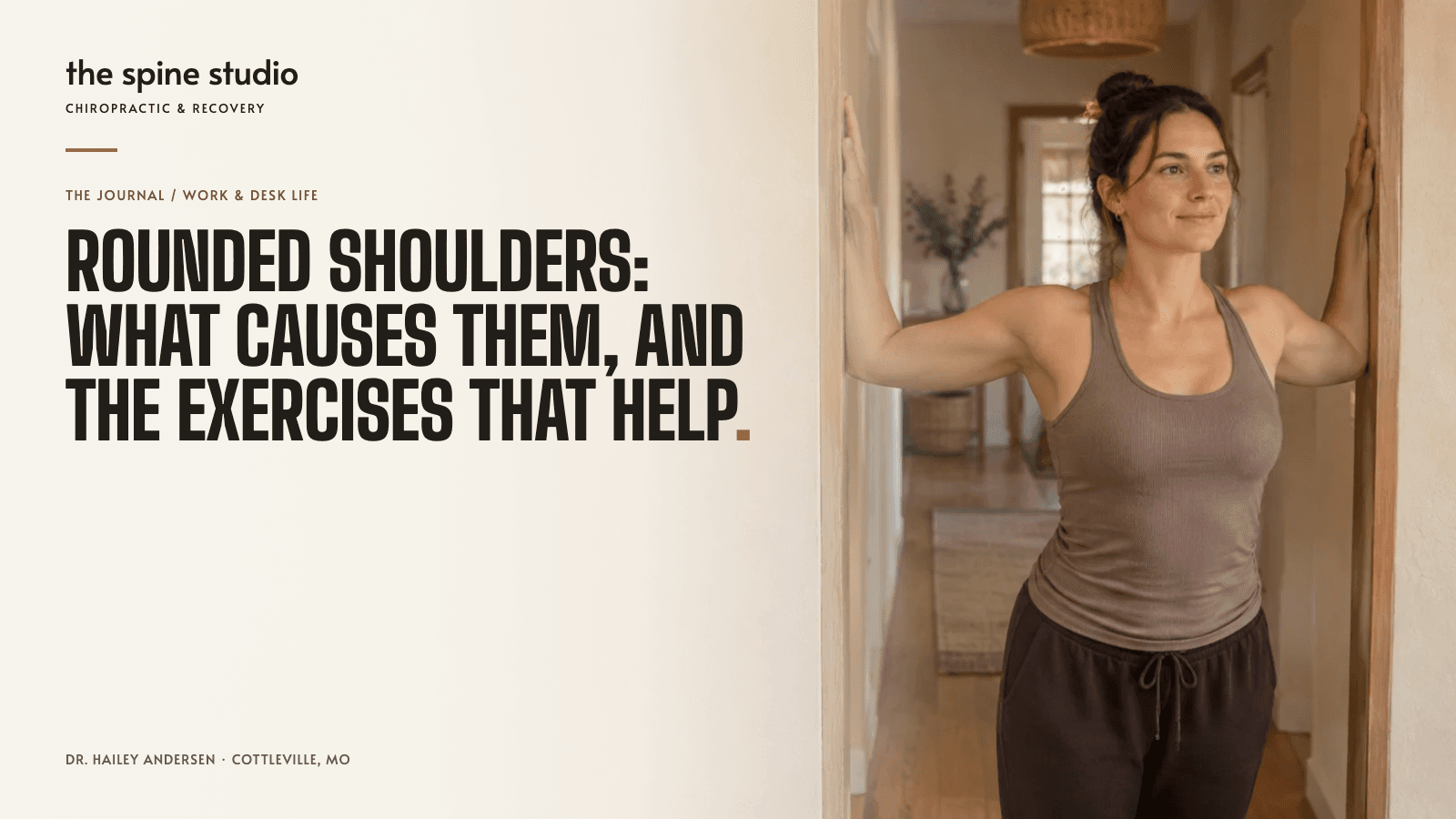
Most people notice rounded shoulders in a photo or a shop window: the shoulders sit forward of the chest, the upper back curves and the head pokes ahead. Some call it hunched shoulders or slouching, and many are told it is the reason their neck and upper back ache by the end of the day.
Here is the short version: rounded shoulders are common, partly how you are built and partly how you spend your day, and the research tying them to pain is weaker than most people expect. A short daily routine that opens the chest and strengthens the upper back still helps, because what usually hurts is a body that has held one position too long with too little strength.
What are rounded shoulders?
When the shoulder blades slide forward and around the rib cage, the shoulders roll in and the chest narrows. Clinicians call this forward shoulder posture or protracted shoulders. It often travels with a rounded upper back (thoracic kyphosis) and a forward head, a cluster sometimes labelled upper crossed syndrome online, though research has not established it as a distinct condition.
There is no single correct shoulder position. How far forward your shoulders sit varies with your build, your work and even how you are breathing at the moment the photo is taken.
What causes hunched shoulders?
- Long hours reaching forward. Keyboards, phones, steering wheels and workbenches all keep the arms in front of you, so the chest muscles spend the day shortened.
- A stiff upper back. When the mid-back stops moving, the shoulders have less room to sit back, however hard you try.
- Upper-back muscles with little to do. Muscles that are rarely asked to work tire quickly, so holding an upright position feels like effort and the shoulders drift forward again.
- Build and history. Some people simply carry their shoulders forward, and a growth-spurt habit or a sport such as swimming or boxing can add to it.
Do rounded shoulders cause neck pain?
Less than the ads suggest. A 2023 review of the tech neck research found no scientific evidence linking the head-forward posture with neck pain, and its authors advise against calling any posture "incorrect." People with very different postures have similar rates of neck and shoulder pain.
What does seem to matter is staying still for hours and having little strength in reserve. That is why our guide to tech neck focuses on movement and capacity rather than a perfect shape.
Shoulders are not supposed to be pinned back all day. They are supposed to move, and to have the strength to come back when they wander.
Rounded shoulders or something else?
If the upper back stays rounded even when you try hard to straighten up, or there is a firm hump at the base of the neck, the curve may be structural rather than postural. Our guide to dowager’s hump covers how to tell. One shoulder sitting clearly higher than the other, especially in a growing child, is worth checking for a sideways curve of the spine.
Exercises for rounded shoulders: a 5-minute routine
These five moves open the front of the chest and build the upper back. Do them once a day, slowly, and spread a few chin tucks and shoulder rolls through long desk days. Stop any move that causes sharp pain or tingling into an arm.
Doorway Pec Stretch
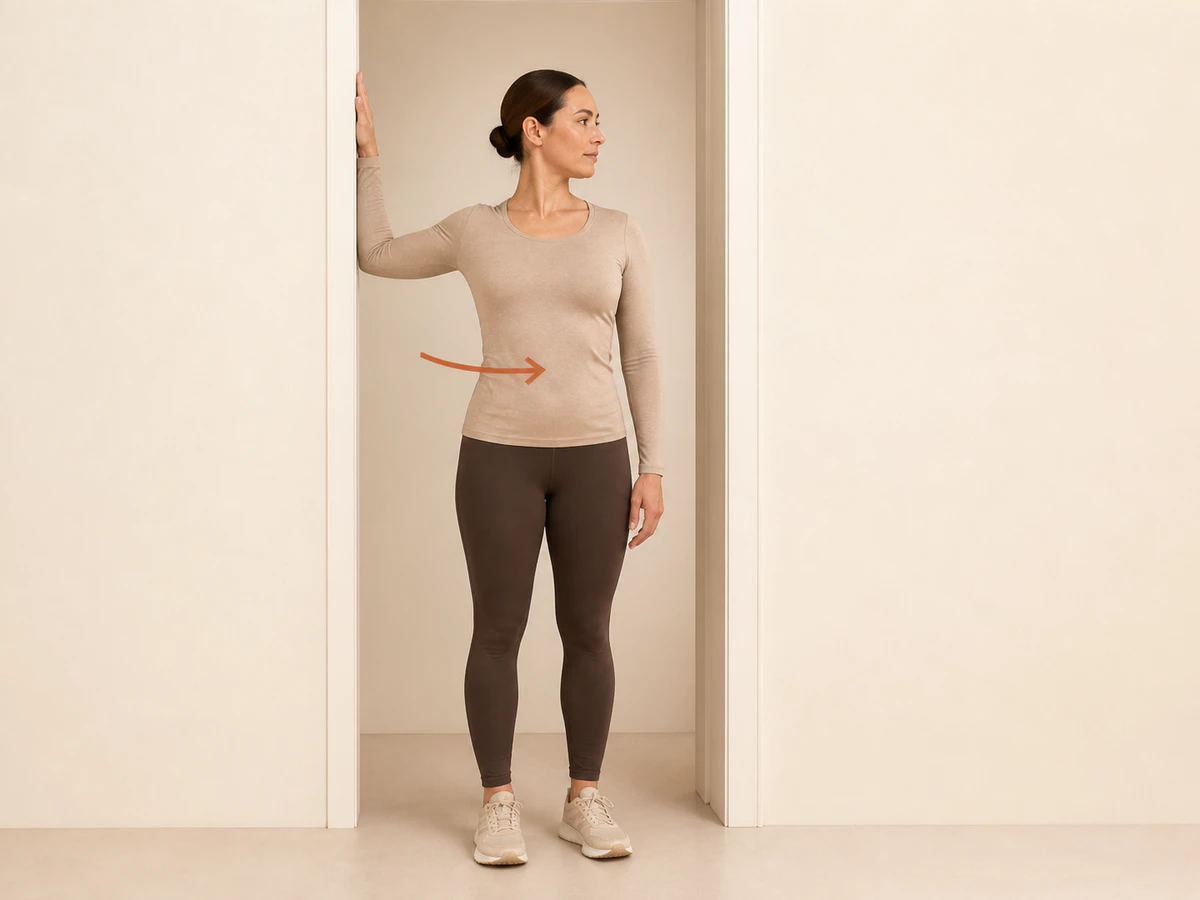
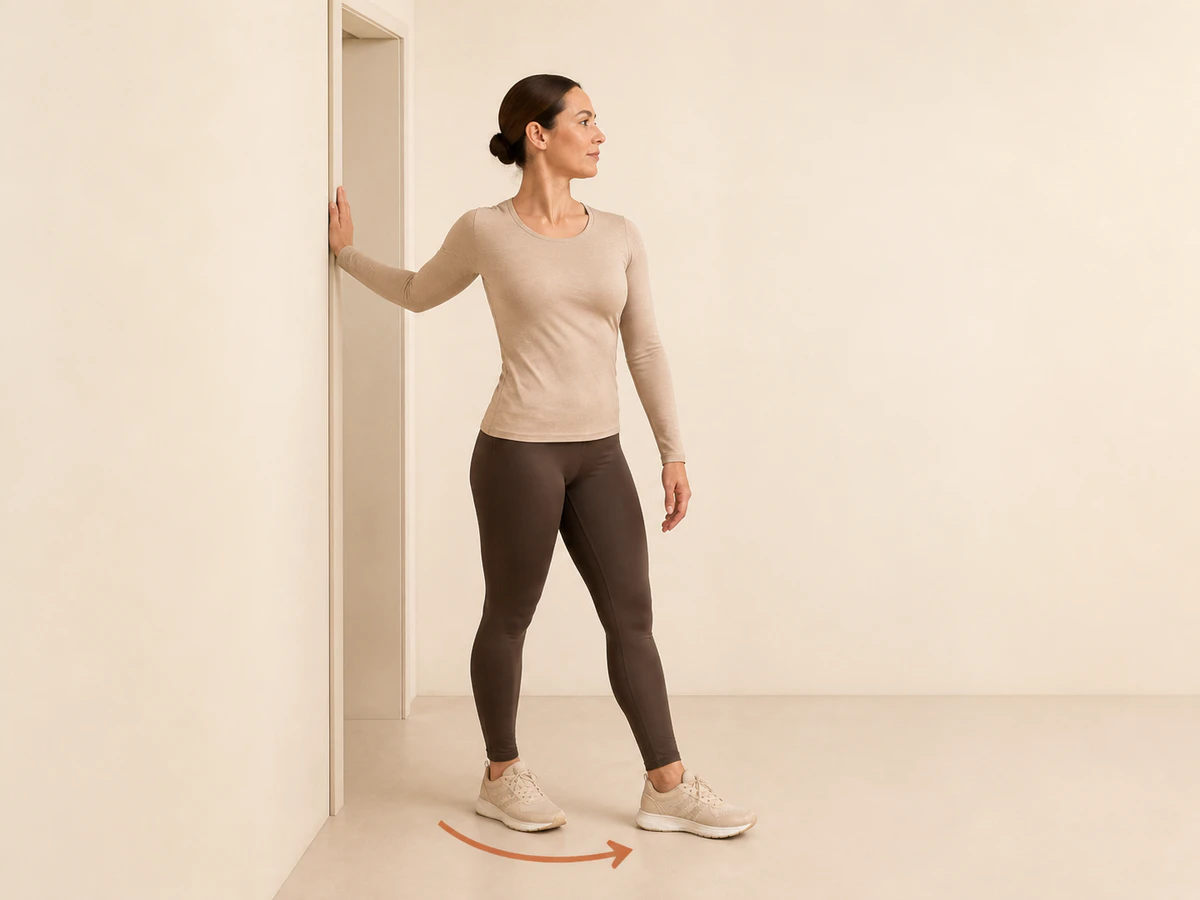
Rest your forearm on a doorframe at shoulder height and step through until you feel a stretch across the front of the chest. Opening the chest makes it easier for the shoulders to settle back without effort.
30s each sideWall Angels
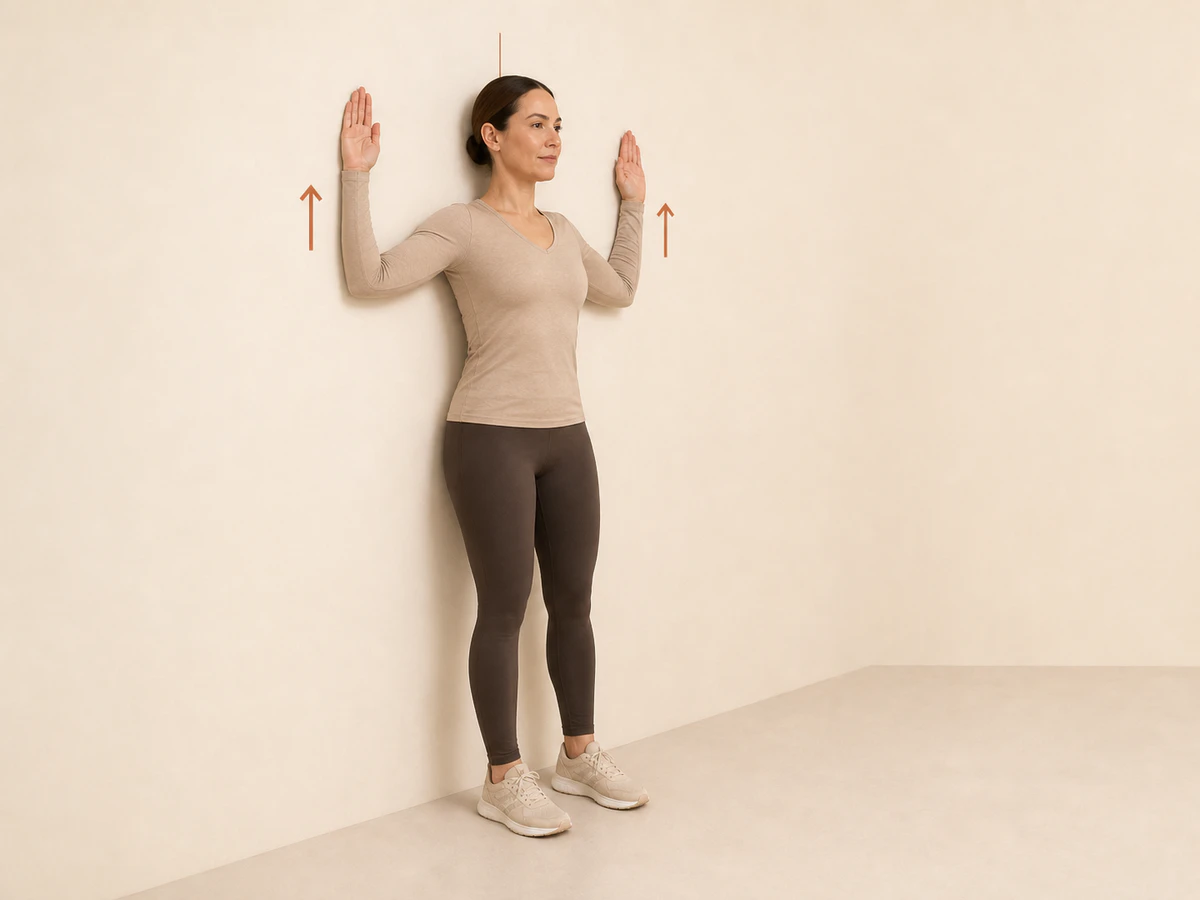
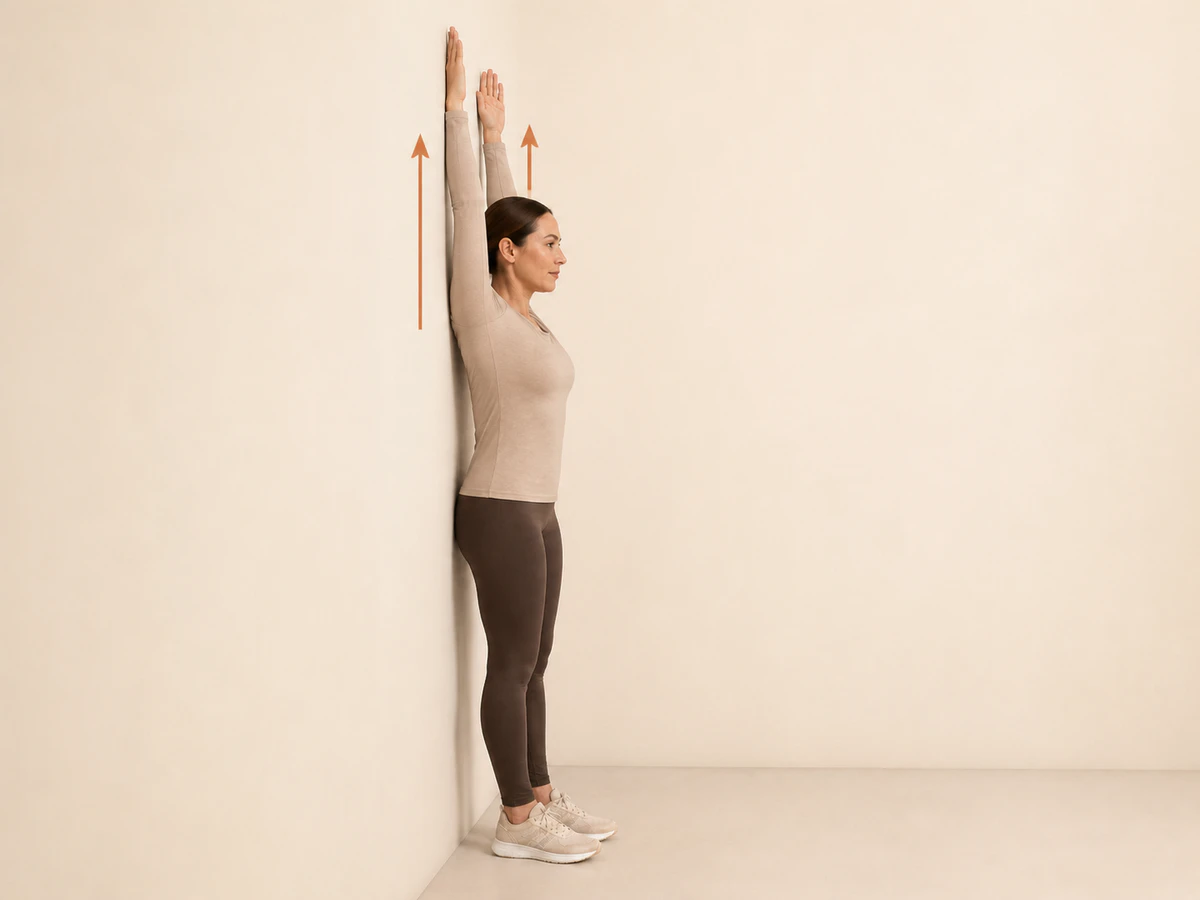
Stand with your back flat against a wall, arms in a goal-post shape, and slide them slowly up and down while keeping wrists and elbows near the wall. It trains the muscles that draw the shoulder blades down and back.
10 slow repsBand Rows
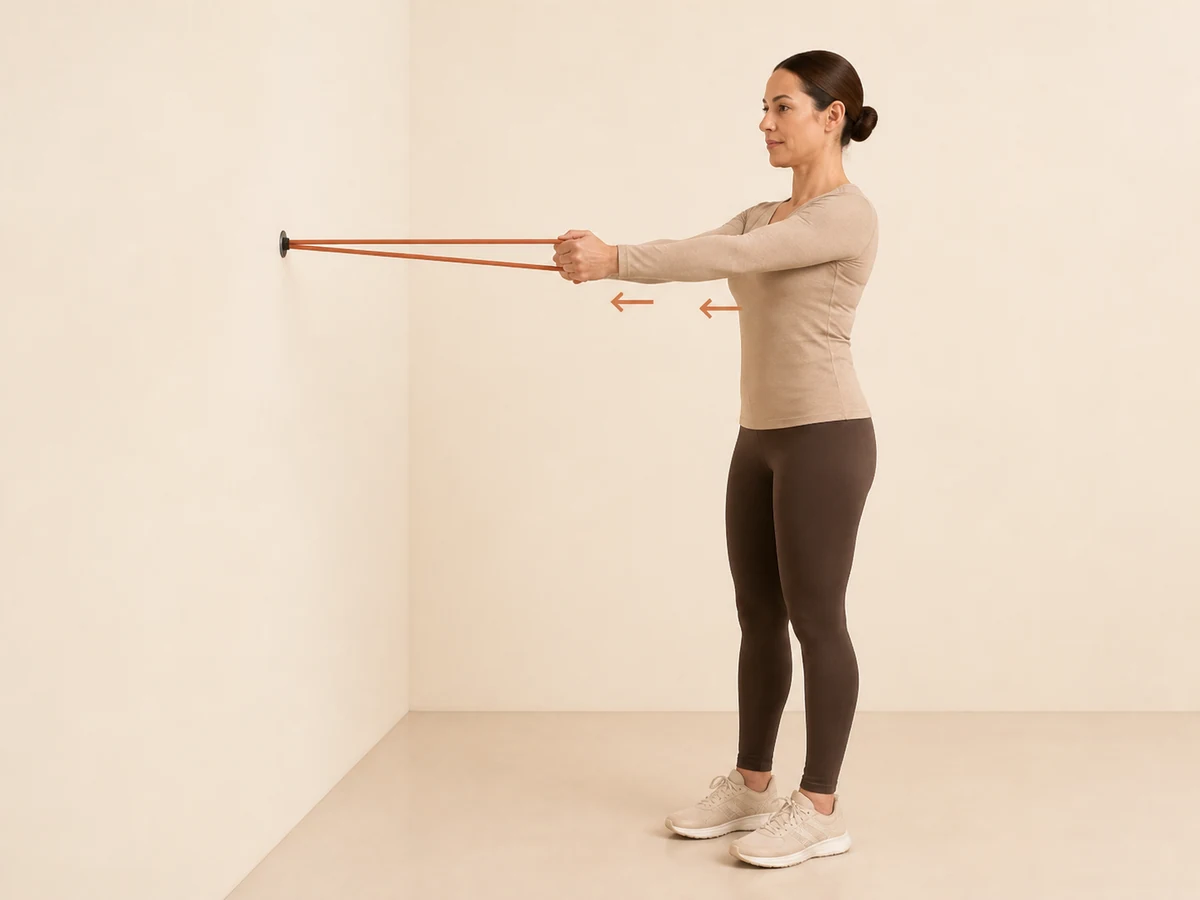
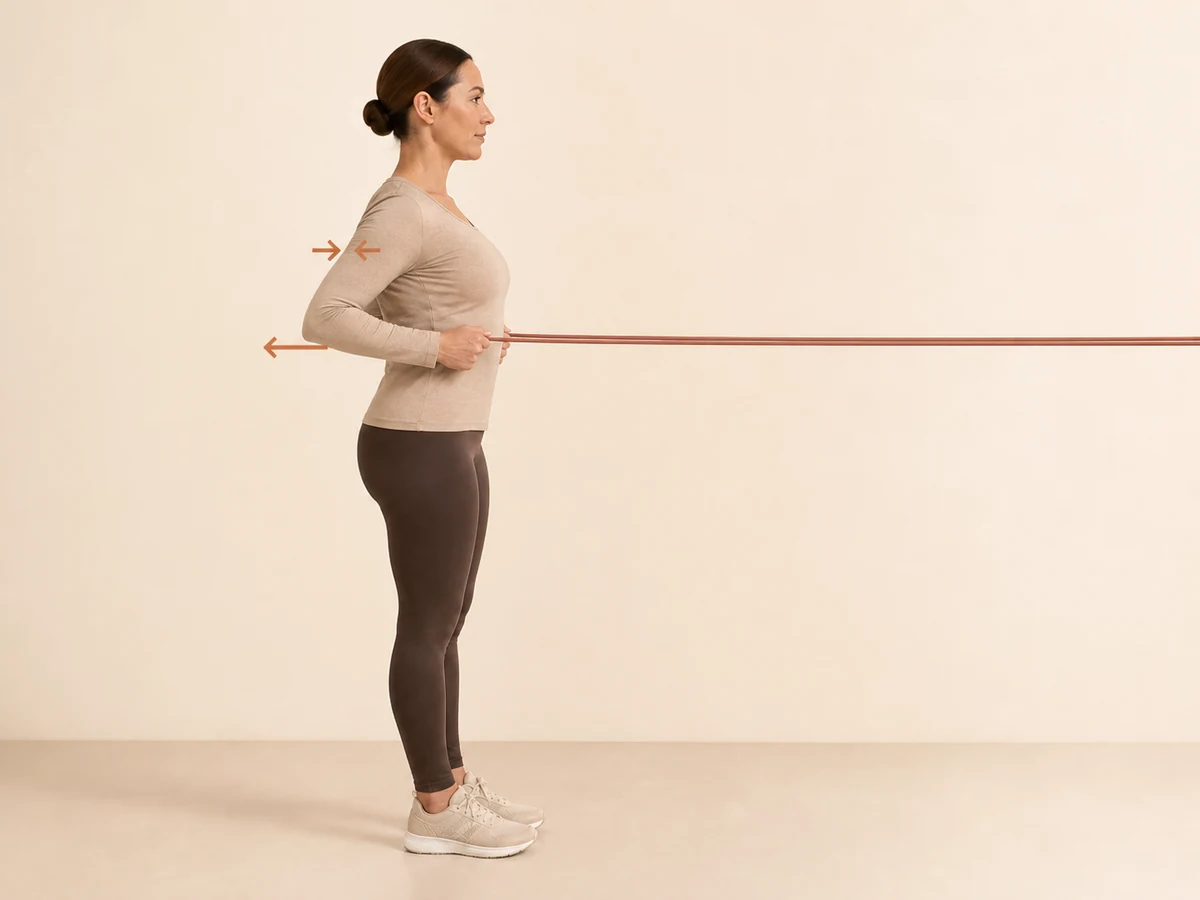
Anchor a resistance band at chest height and pull your elbows back past your ribs, squeezing your shoulder blades together without shrugging, then return slowly. Rows build the upper-back strength that lets an upright position last past lunch.
12–15 reps/2 roundsThoracic Extension Over a Chair
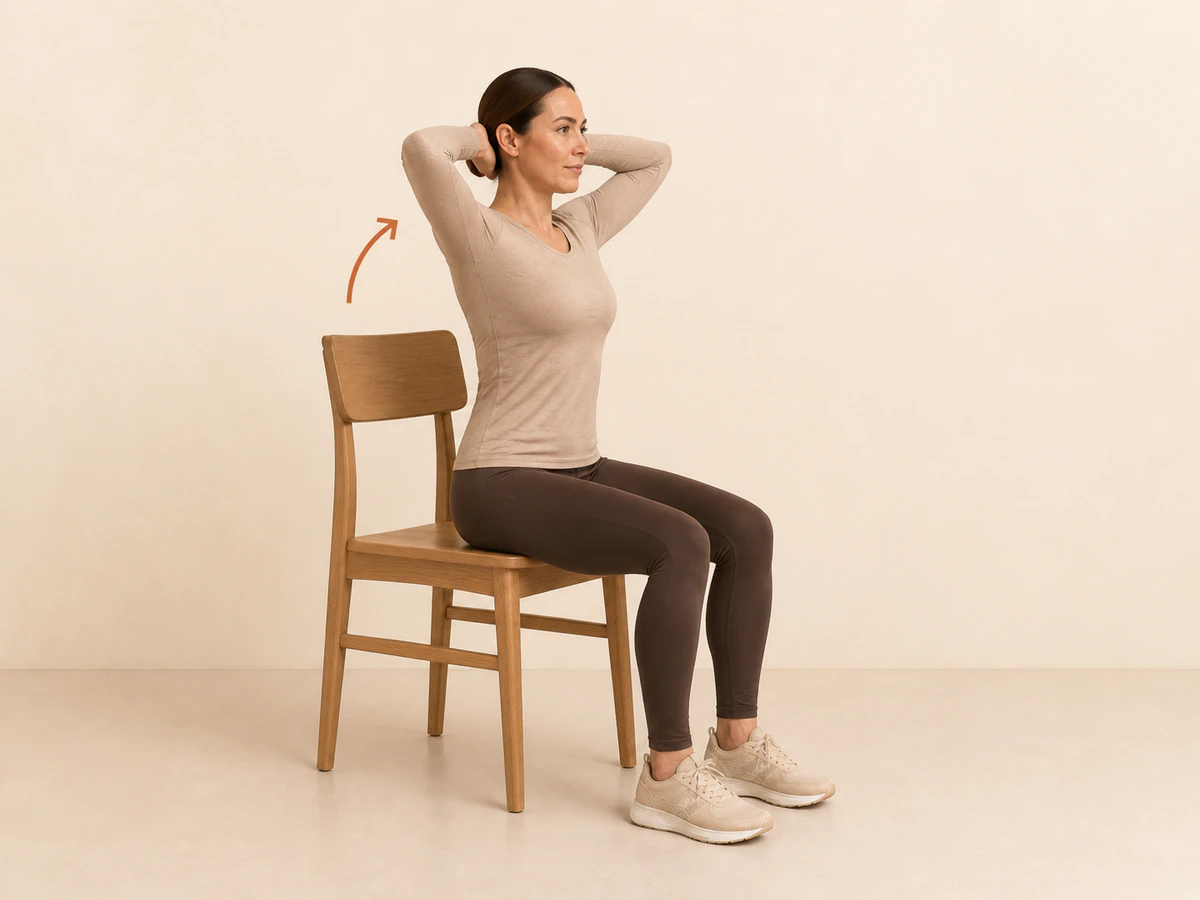
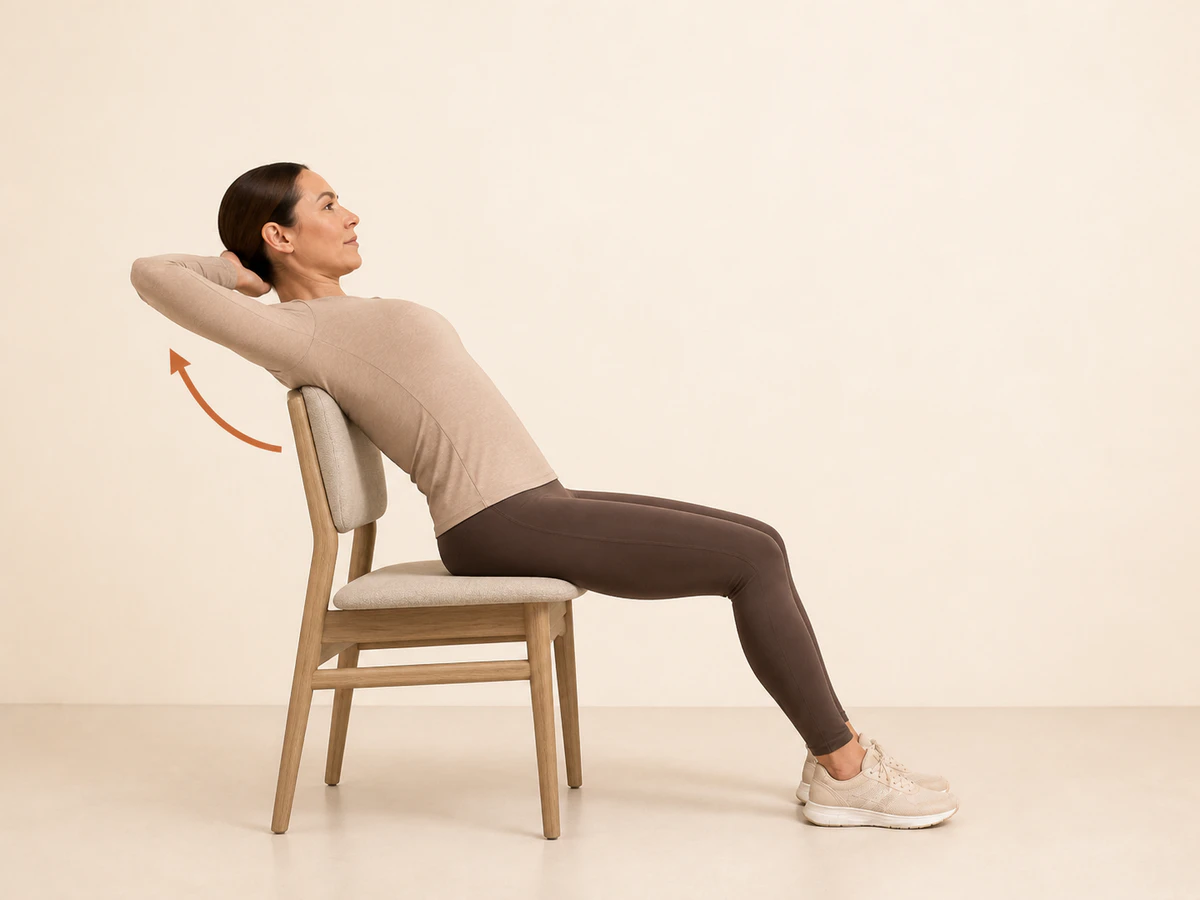
Sit tall with your hands supporting your head and arch your upper back gently over the top of the chair, opening your chest toward the ceiling. A mid-back that moves well gives the shoulders somewhere to go.
8 slow repsChin Tucks & Shoulder Rolls
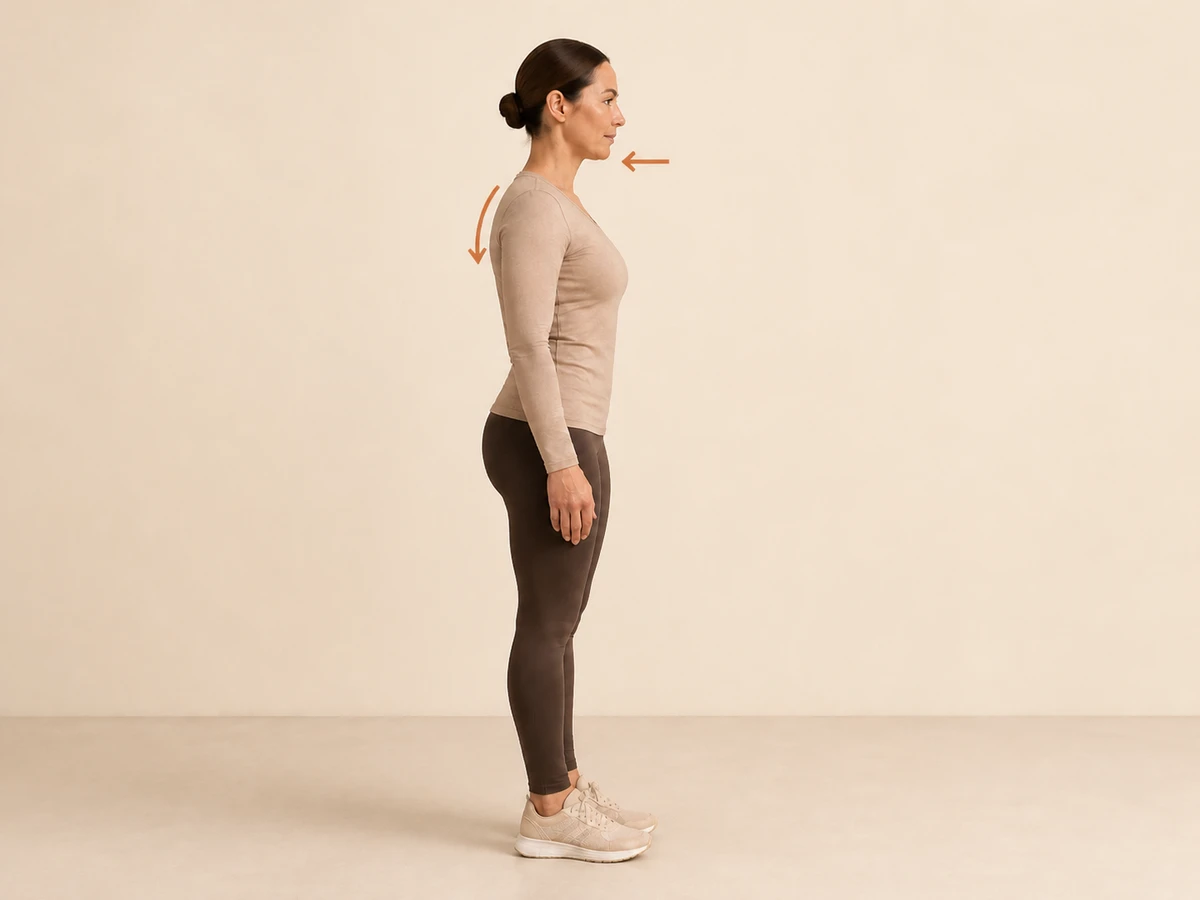
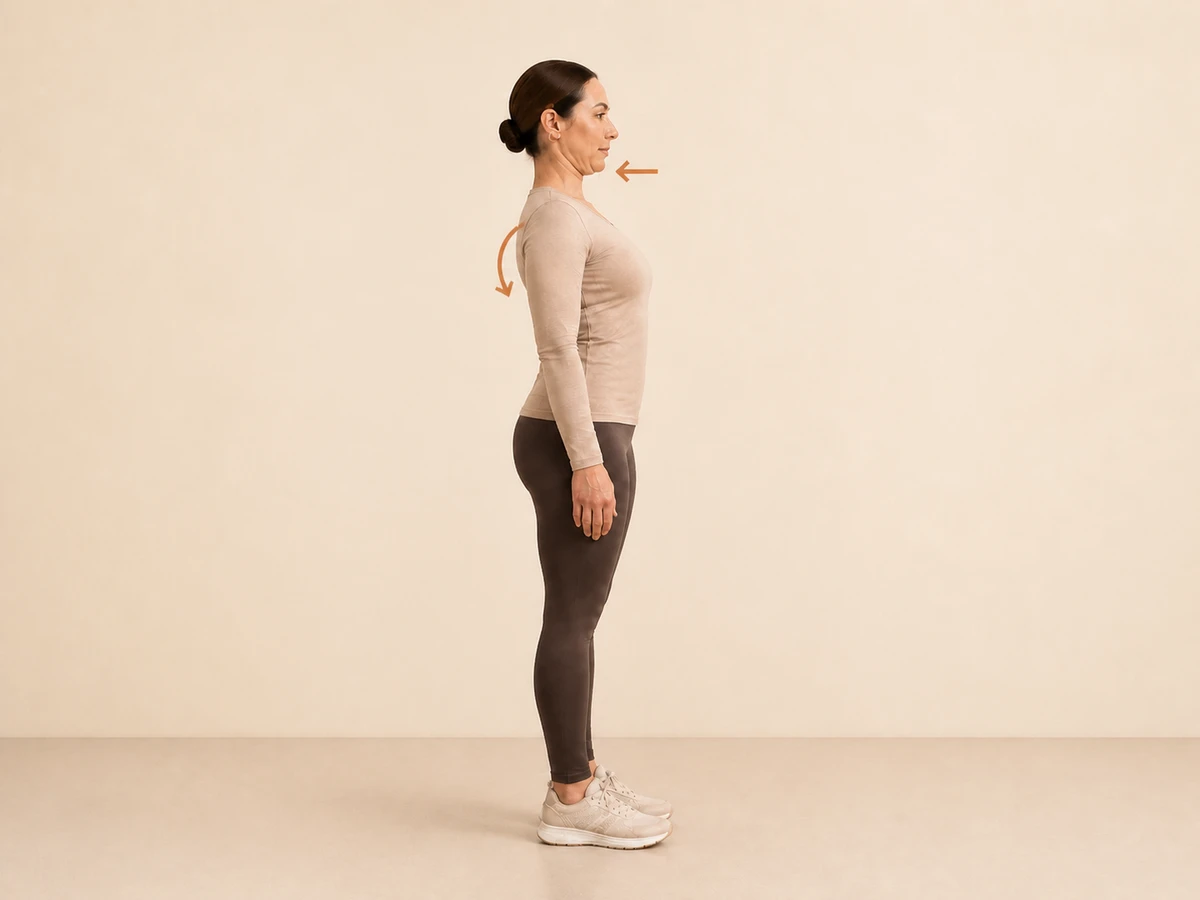
Draw your chin straight back to stack your head over your shoulders, then roll the shoulders up, back and down five or six times. It is a ten-second reset you can repeat at the desk every hour.
5–6 repsGive it four to six weeks of steady practice before judging it. Strength, not stretching alone, is what lets the change last.
Why a posture brace rarely fixes it
A strap that pulls your shoulders back can remind you to sit differently while you wear it. It does not build the muscles that hold you upright the rest of the day, and while it holds you, those muscles have less to do. Our article on posture correctors walks through the evidence.
Stretching the chest alone has the same limit. It feels good for an hour, then the shoulders settle back where they were, because nothing changed in the upper back that has to hold them.
When to get rounded shoulders checked
It is worth an assessment if your neck, shoulders or upper back ache most days despite a few weeks of the routine, if raising your arm overhead pinches at the front of the shoulder, or if you cannot straighten your upper back when you try.
See a physician promptly for numbness, tingling or weakness in an arm or hand, a rounded back that is getting worse quickly, sudden upper-back pain in someone over 50 or with thinning bones, or a visible curve or shoulder-height difference in a growing child.
What a visit here looks like
Dr. Andersen checks how your upper back, neck and shoulder blades move, how far the rounding straightens when you try, and how strong the upper-back and deep neck muscles are. She also asks about your workday, your sport and where the ache actually sits, because the shape is only part of the story.
Care can include precision spinal adjustments for stiff upper-back segments, Pin & Stretch for a tight chest and neck, and Corrective Exercise Programming that builds on the routine above. If anything points to a structural curve, a nerve problem or a bone issue, we refer you to your physician first.
How long does it take to fix rounded shoulders?
Aches and stiffness often ease within a few weeks of steady exercise and more frequent breaks. Visible change usually takes a few months, and how much changes varies from person to person. If the rounding comes from the bones themselves, the goal is comfort and strength rather than a different shape.
We are at 5285 State Route N, Suite 102 in Cottleville, minutes from O’Fallon, St. Peters and Lake Saint Louis. Tell us what your workstation looks like; small setup changes often do as much as the exercises.
Build an upper back that holds you up without a strap.
Frequently asked questions
- How do I fix rounded shoulders?
- Open the chest with a doorway stretch, then strengthen the upper back with wall angels and band rows, and add upper-back mobility over a chair. Do it once a day and break up long desk stretches with quick shoulder rolls. Most people feel easier within a few weeks; visible change takes a few months.
- What causes hunched shoulders?
- Usually long hours reaching forward at a desk, phone or wheel, a stiff mid-back, and upper-back muscles that rarely work hard. Build plays a part too. If the upper back will not straighten when you try, the curve may be structural and is worth an exam.
- Do rounded shoulders cause neck pain?
- Less than most people think. A 2023 review found no scientific evidence linking head-forward posture with neck pain. Holding one position for hours and having little strength in reserve seem to matter more, which is why movement and strength work help.
- Can a posture corrector fix rounded shoulders?
- A brace can act as a reminder while you wear it, but it does not build the upper-back strength that holds you up the rest of the day. Exercise does that job better, and a brace can be a short-term cue alongside it at most.