Shoulder pain: what it usually is, by where it hurts.
The seatbelt, the jacket, the top shelf. Where your shoulder hurts and which movements set it off say a lot about what is behind it. The common causes, a 5-minute routine, and when shoulder pain needs a doctor.
Related guide Shoulder pain

Most shoulder pain comes from the rotator cuff tendons, a stiff or unstable joint, or the neck sending pain into the shoulder. Where it hurts and which movements set it off narrow it down. Gentle movement and shoulder-blade strength usually help within a few weeks. Left shoulder or arm pain with chest pressure or shortness of breath needs 911.
Shoulder pain has a way of showing up in the small moments: reaching for the seatbelt, pulling on a jacket, lifting a bag into the overhead bin, or rolling onto that side at night. Where it hurts and which movements set it off say a lot about what is behind it.
Here is the short version: most shoulder pain comes from the tendons of the rotator cuff, a stiff or unstable joint, or the neck sending pain into the shoulder. Most of it eases within a few weeks with the right movement and strength work. A few patterns, especially in the left shoulder, need a doctor right away.
Where does your shoulder hurt?
The shoulder is several joints working together, held in place by muscles and tendons. The American Academy of Orthopaedic Surgeons sorts most shoulder problems into four groups: tendon problems, instability, arthritis and fractures. Where it hurts helps narrow it down:
- Outer side of the upper arm, worse lifting the arm out to the side or reaching overhead. Usually the rotator cuff tendons. See rotator cuff injuries and shoulder impingement.
- Deep in the joint, with stiffness in every direction, including when someone else moves your arm. That points to frozen shoulder.
- On top of the shoulder, often after a fall onto the shoulder or an outstretched hand. Usually the joint at the top, covered in AC joint sprains.
- Back of the shoulder or over the shoulder blade. Often the muscles around the shoulder blade, or pain coming from the neck. Pain with tingling down the arm points to a pinched nerve in the neck.
Left shoulder pain and right shoulder pain: does the side matter?
Usually not for the common causes. Tendon and joint problems happen on either side; the shoulder that hurts tends to be the one you use more, sleep on or reach with.
The exception is the left shoulder. Heart attack pain can spread to the arms, back, neck and jaw, according to the NHS. Left shoulder or arm pain that comes with chest pressure, shortness of breath, sweating, nausea or lightheadedness is a reason to call 911, not to stretch.
A sore shoulder usually needs better movement and a stronger shoulder blade, not more rest. Rest takes the pain away for a week; strength keeps it away.
Exercises for shoulder pain: a 5-minute routine
This routine starts with gentle movement for a sore, stiff shoulder and builds to strength for the shoulder blade, which gives the joint room to move. Do it once a day. Work in a range that is comfortable to mildly achy, never sharp, and stop any move that sends pain down the arm.
Pendulum Swings
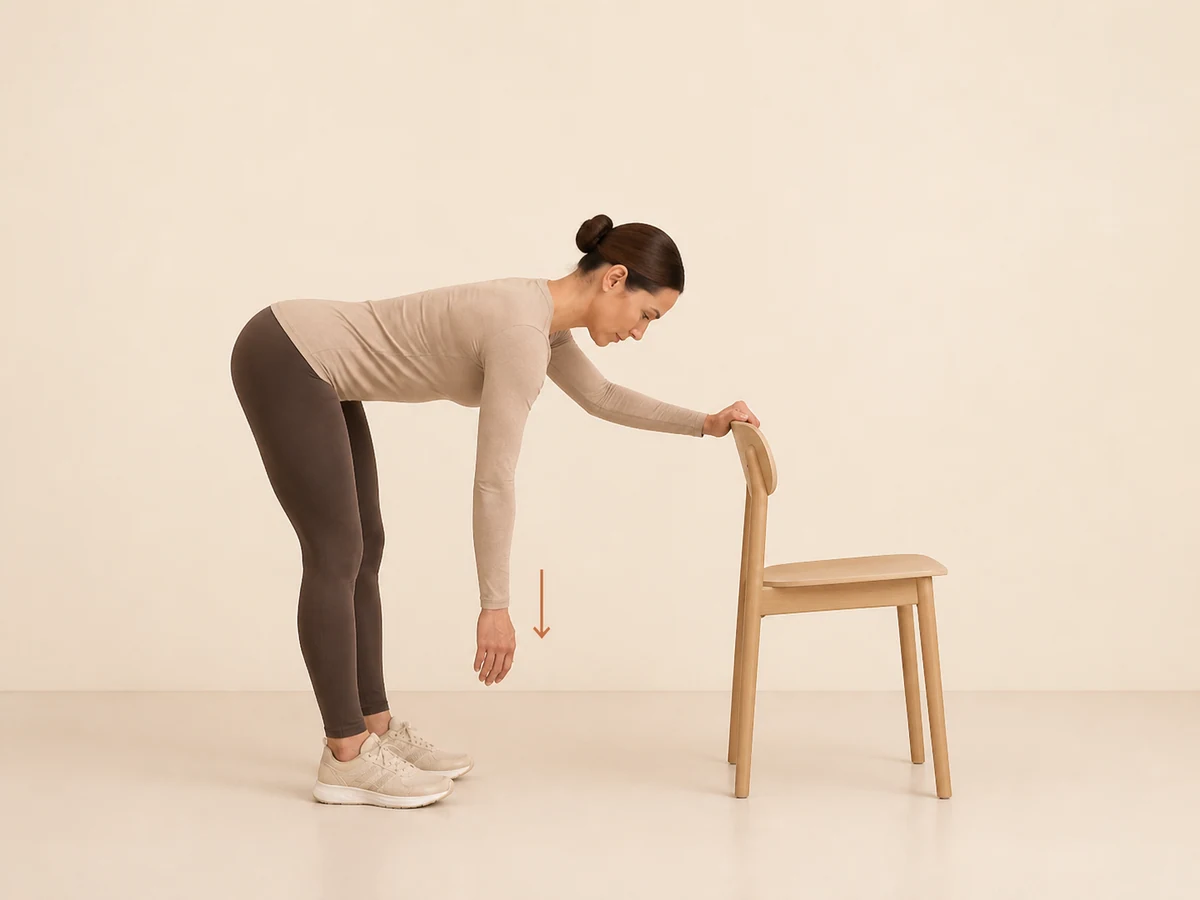
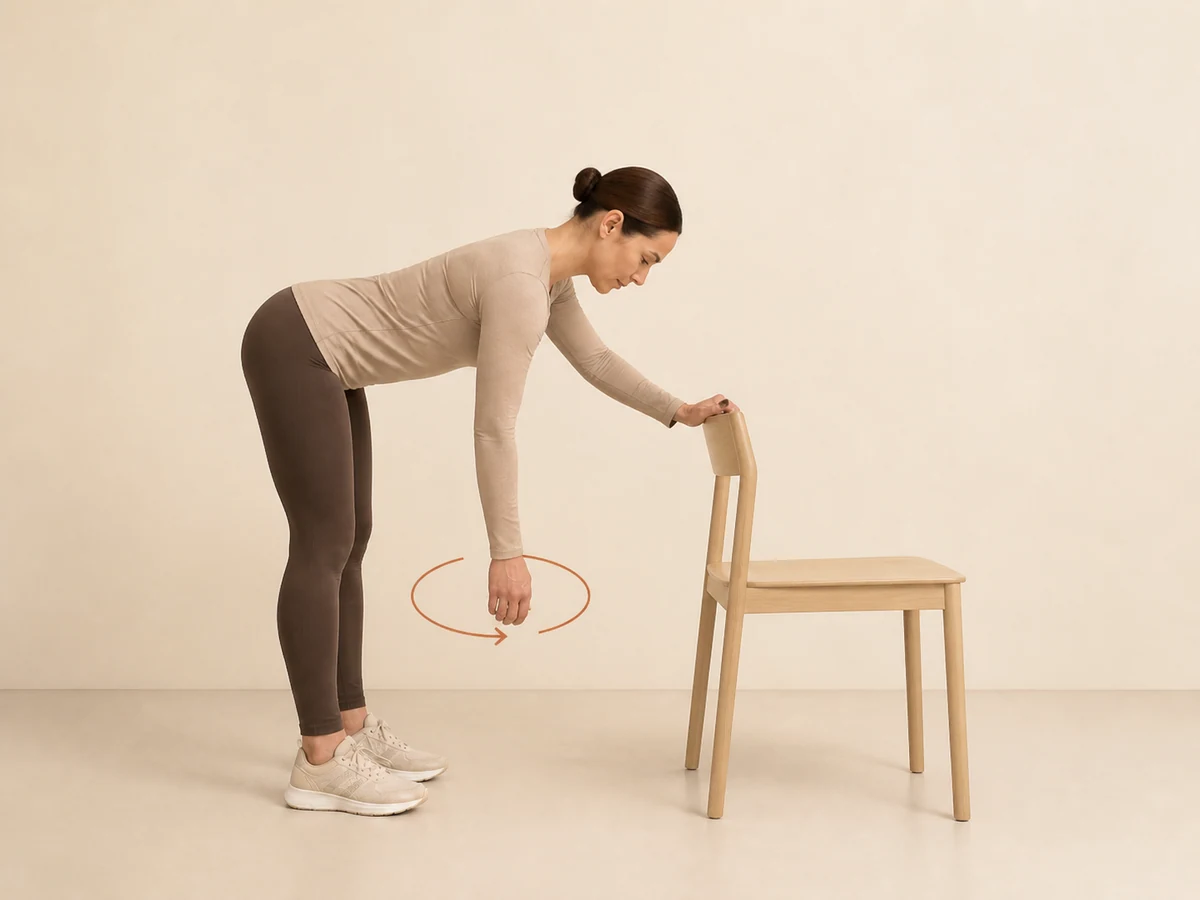
Lean over with your good hand on a table and let the sore arm hang. Make small circles using gravity rather than muscle. It moves the joint gently when everything else hurts.
Small circles/1–2 minTable Slides
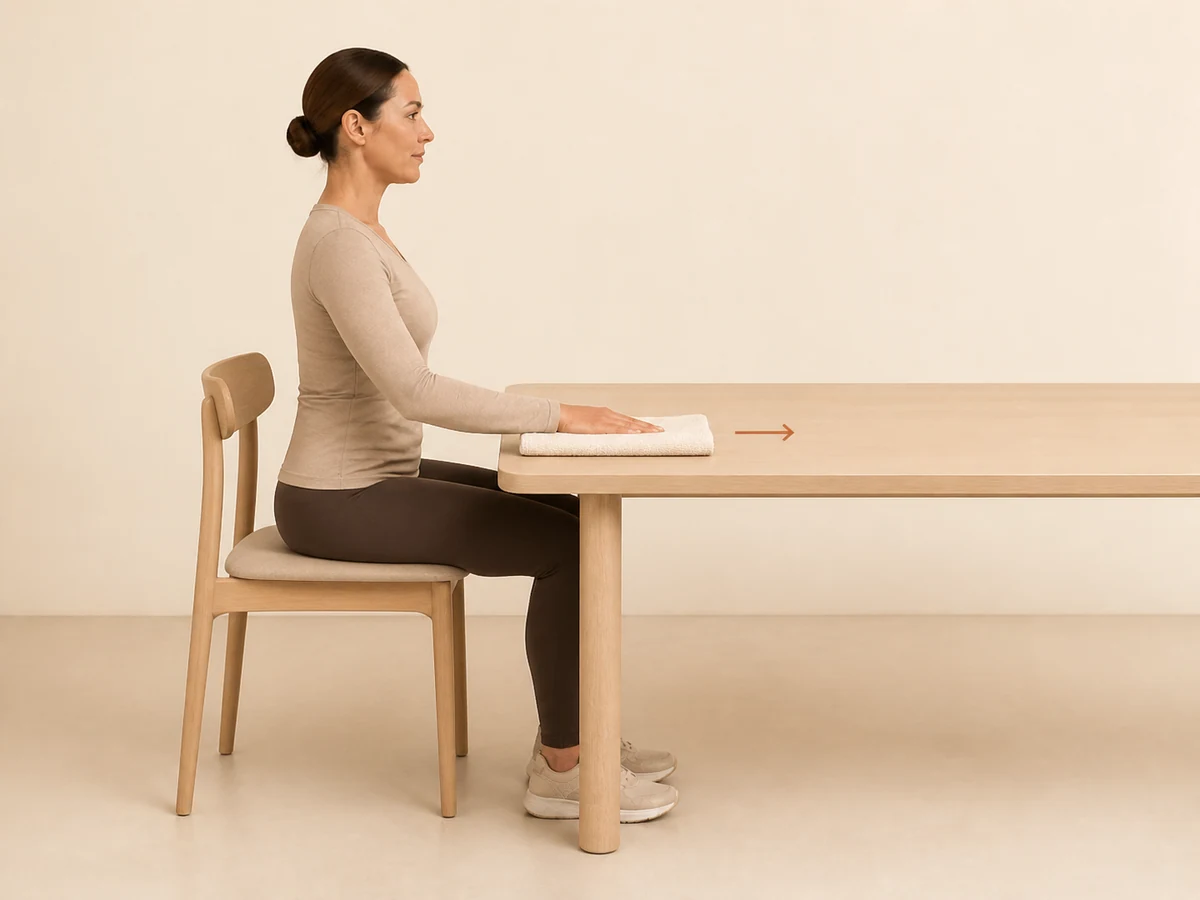
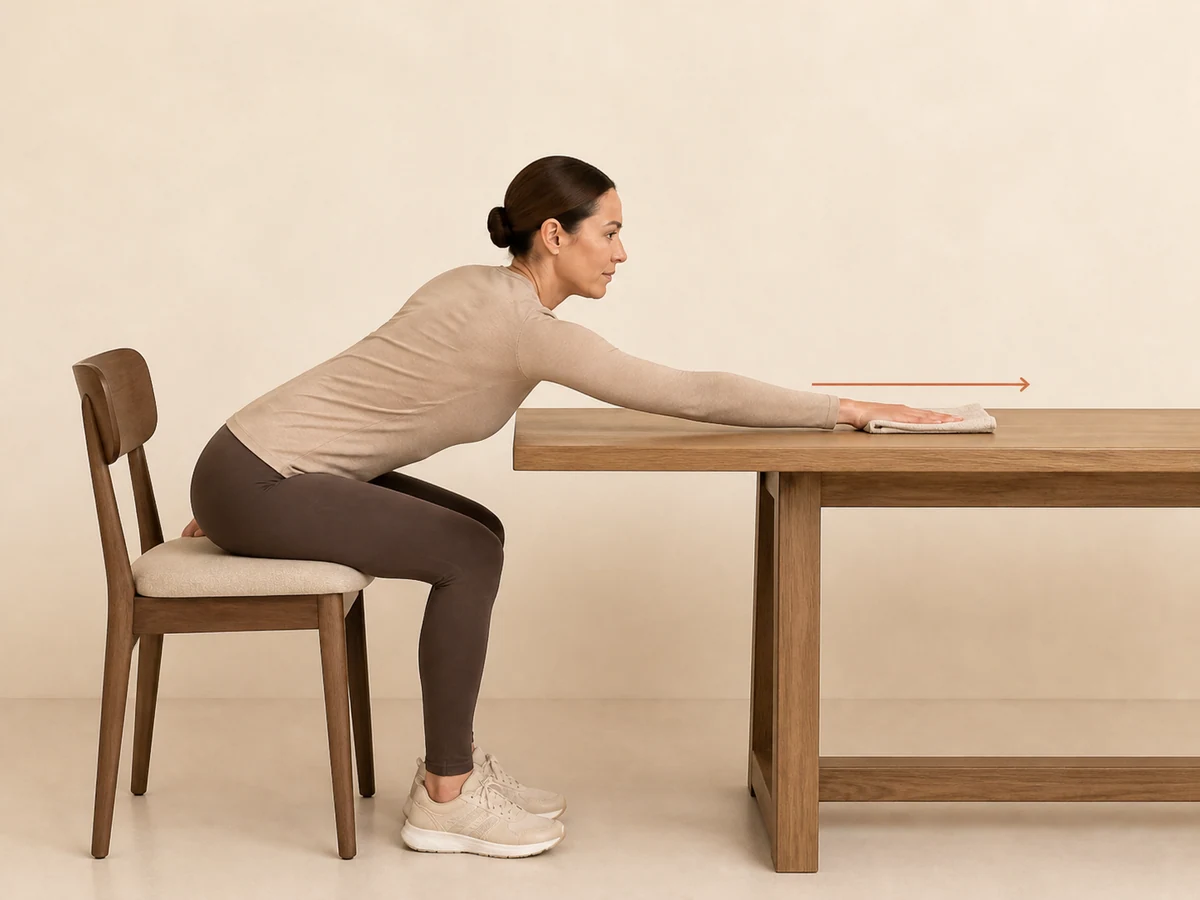
Sit at a table with a towel under your hand. Keeping the arm relaxed, slide the hand forward along the table, bowing gently from the trunk so the shoulder lifts a little further. No forcing.
8–10 slow slidesWall Walks
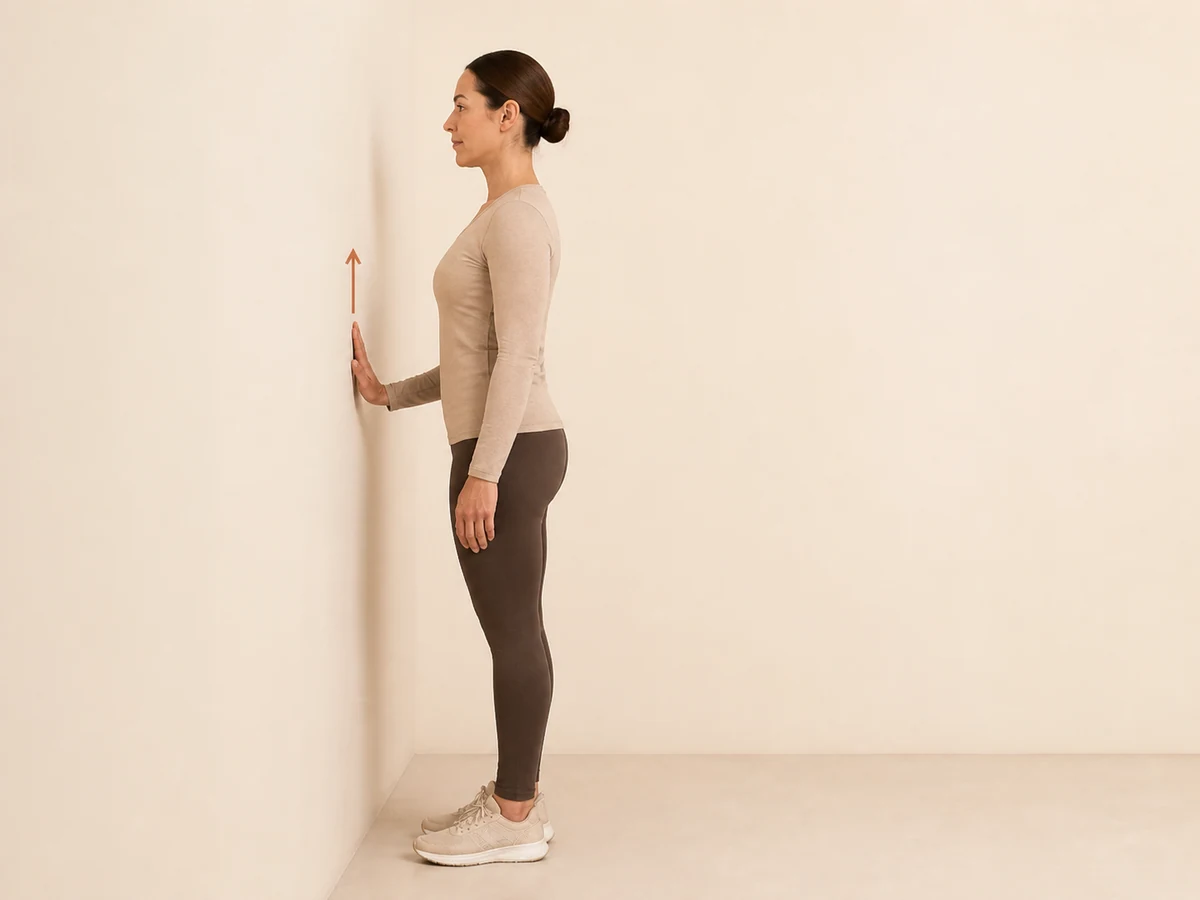
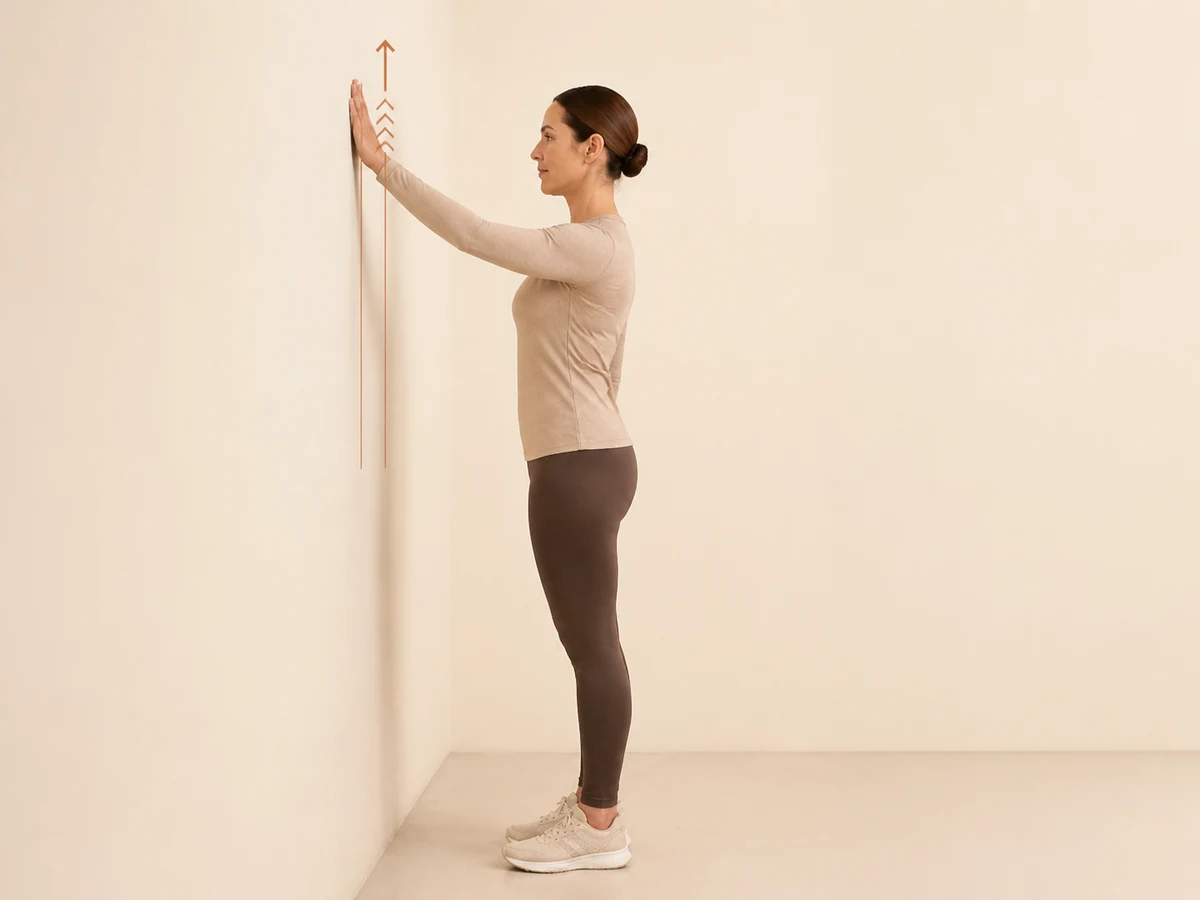
Face a wall, fingertips on it at about waist height, and walk your fingers up as far as is comfortable. Hold, then walk back down. Over days, creep a little higher.
5 walks/Hold 5s at the topBand Rows
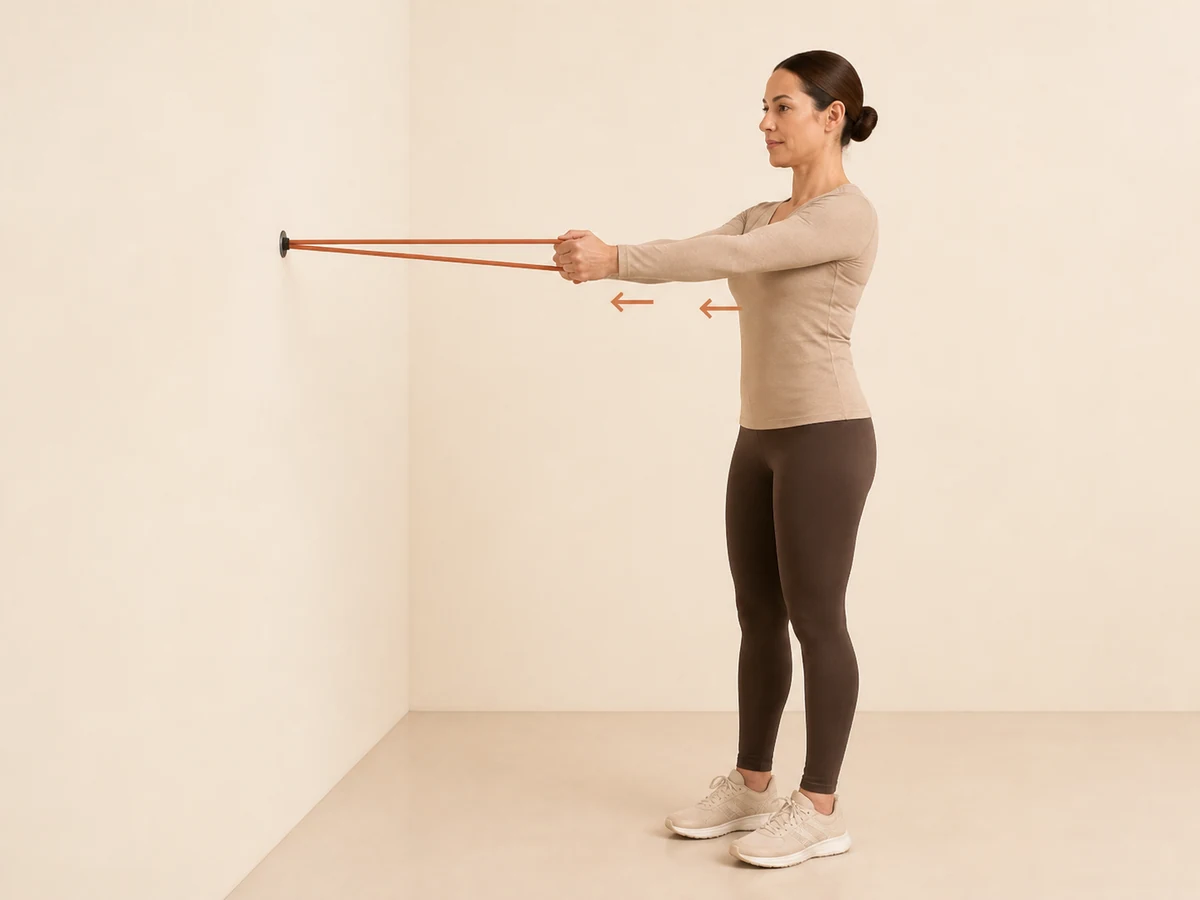
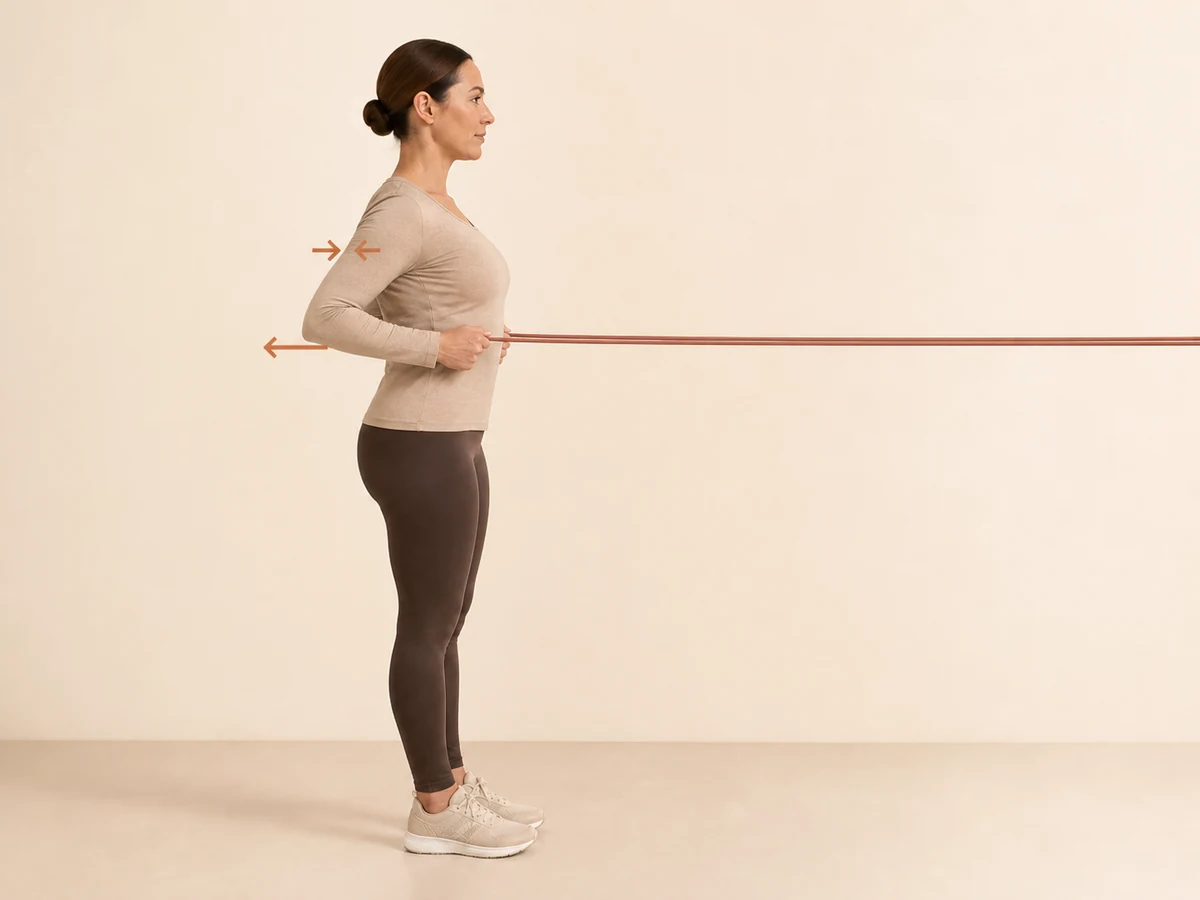
Anchor a resistance band at chest height and row your elbows back past your ribs, drawing the shoulder blades together. A shoulder blade that sits and moves well gives the shoulder joint more room.
12–15 reps/2 roundsWall Angels
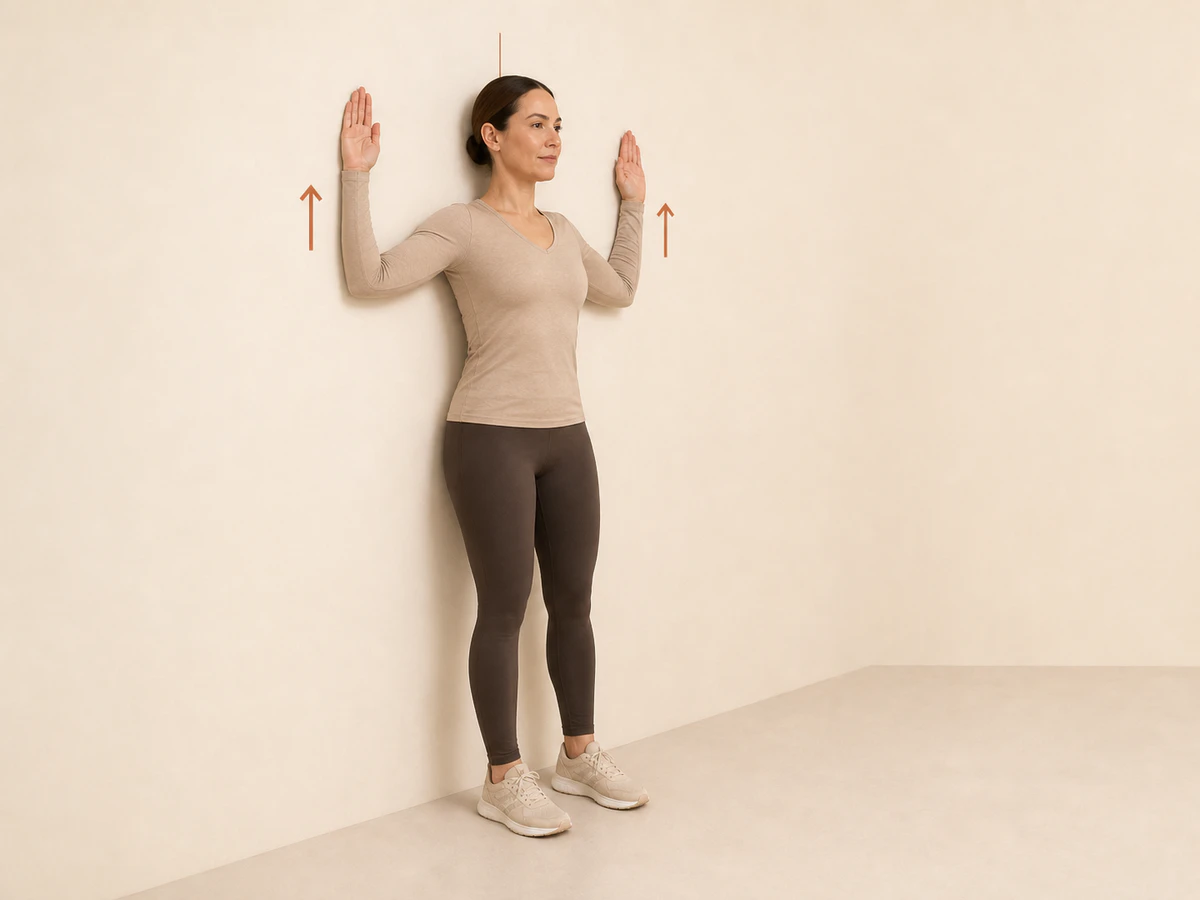
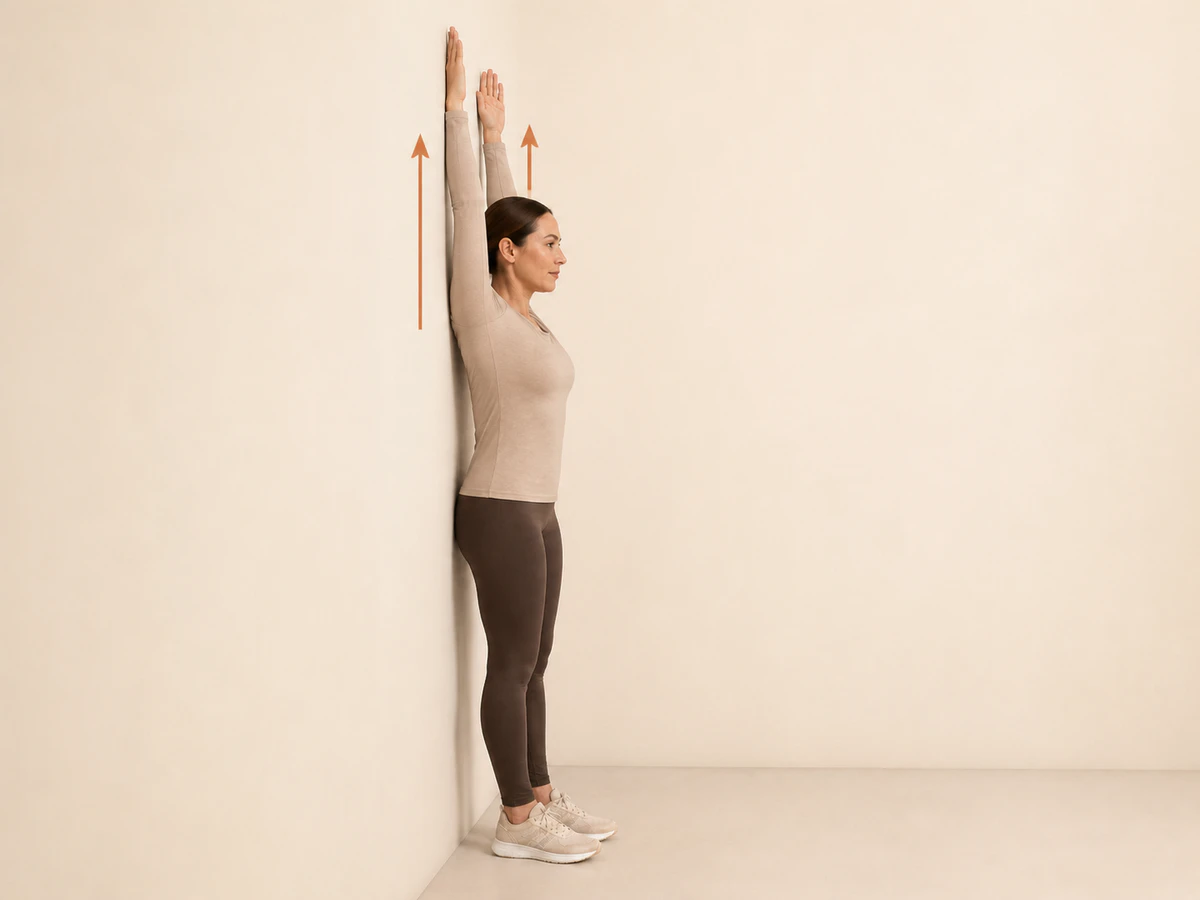
Back flat against a wall, arms in a goal-post shape, slide them up and down only as high as is comfortable, keeping wrists and elbows near the wall. It trains the shoulder blade to rotate up as the arm lifts.
10 slow repsIf the first three moves feel easy, put more of your time into the rows and wall angels. The NHS suggests keeping shoulder exercises going for six to eight weeks to stop the pain returning.
Small changes that help a sore shoulder
- Sleep on the other side, with a pillow to hug so the sore arm rests on it rather than falling forward.
- Keep reaching low and close for now. Store everyday things between waist and shoulder height, and step closer instead of reaching far.
- Keep moving it. A sling or holding the arm still for weeks can let the shoulder stiffen.
- Use heat for a stiff, achy shoulder, and ice for a fresh flare after too much use, about 15 minutes at a time.
Why rest alone rarely fixes it
Resting a sore shoulder makes sense for a few days. After that, a shoulder that is never asked to lift or reach loses strength and range, and the next time you reach for the top shelf, it hurts again. Most tendon pain in the shoulder improves with gradually loading the tendon, not avoiding it.
The shoulder blade matters as much as the shoulder. When the muscles that move the shoulder blade are weak or the upper back is stiff, the shoulder joint loses room and the tendons get pinched. That is why the routine includes rows and wall angels.
When shoulder pain needs a doctor
Get an assessment if shoulder pain is not easing after about two weeks, the timeline the NHS uses, or keeps coming back. See a physician promptly if you cannot lift your arm after a fall or injury, the shoulder looks deformed, or it is hot, red and swollen with a fever.
Call 911 for shoulder or arm pain with chest pain or pressure, shortness of breath, sweating or nausea. Pain, numbness or weakness down the arm with neck pain also deserves a prompt check.
Whether it is the gym, the pickleball court at the Rec-Plex or reaching the top shelf, we assess and treat shoulder pain at our Cottleville clinic, minutes from St. Peters, O’Fallon and Wentzville.
What a visit here looks like
Dr. Andersen starts by finding which part of the shoulder is the problem: she checks how far the arm moves on its own and when she moves it, tests the rotator cuff, looks at how the shoulder blade moves, and screens the neck. If anything points to a tear, fracture or something that needs imaging, we send you to your physician first.
Care usually pairs hands-on work, such as Pin & Stretch for tight muscles and precision spinal adjustments for a stiff neck or upper back, with a progressed version of this routine. Stubborn tendon pain can also respond to shockwave therapy. How quickly a shoulder settles varies from person to person; most ease within a few weeks, while frozen shoulder takes months.
Book an assessment and find out which part of your shoulder is the problem.
Frequently asked questions
- What is the most common cause of shoulder pain?
- Problems with the rotator cuff tendons, such as irritation or impingement, are among the most common. Other frequent causes are frozen shoulder, arthritis, an AC joint sprain after a fall, and pain sent from the neck. Where it hurts and which movements set it off help tell them apart.
- Should I worry about left shoulder pain?
- Usually it comes from the same muscles, tendons and joints as right shoulder pain. But heart attack pain can spread to the arm, back, neck and jaw, so call 911 for left shoulder or arm pain with chest pressure, shortness of breath, sweating, nausea or lightheadedness.
- What exercises help shoulder pain?
- Start gently with pendulum swings, table slides and wall walks, then build shoulder-blade strength with band rows and wall angels. Keep each move comfortable to mildly achy, never sharp, and keep the exercises going for six to eight weeks to stop the pain returning.
- How long does shoulder pain take to go away?
- Most shoulder pain starts to ease within about two weeks of self-care and exercise, and settles over a few weeks. Tendon problems can take longer, and frozen shoulder usually takes months. If it has not started improving after two weeks, get it assessed.