Do posture correctors work? What a brace can and cannot do.
A strap that pulls your shoulders back sounds like a simple fix. What posture correctors actually do, why posture matters less for pain than the ads suggest, and a 5-minute routine that works better.

Posture correctors can work as a reminder to sit up, but they do not build the strength that holds you upright. Evidence for bracing is low quality, while structured exercise has better support, and posture itself is weakly linked to pain. A daily routine of chin tucks, wall angels, rows and chest stretches, plus regular movement breaks, does more.
Posture correctors promise a simple fix: strap on a brace, and it pulls your shoulders back while you work. Many people buy one after a week of a sore neck or a photo where their shoulders look rounded. Most end up in a drawer.
Here is the short version: a posture corrector can work as a reminder, but it does not build the strength that holds you upright, and posture itself is a weaker cause of pain than most people think. A few minutes of strength work and more movement through the day do more than any strap.
Do posture correctors work?
They do one thing reasonably well: when the strap tightens as you slump, you notice and sit up, and for some people that short-term cue is useful. What a brace does not do is make the muscles of your upper back stronger. While it holds you, those muscles have less to do.
The research is thin. A 2021 review of treatments for a rounded upper back found low to moderate quality evidence that structured exercise reduced the rounding, while the evidence for bracing was low quality and limited to older adults wearing one for three months or more.
Is bad posture really what causes the pain?
Less than the ads suggest. A 2023 review of the tech neck research found no scientific evidence linking head-forward posture with neck pain, and its authors advise against calling any posture "incorrect." People with very different postures have the same rates of neck and back pain.
What does seem to matter is staying in one position for hours, whatever that position is, and having little strength to handle a long day. That is why the answer is movement and capacity, not a perfect shape.
The best posture is the next one. A brace holds you in one position; your body wants you to keep changing it.
What works better than a posture corrector: a 5-minute routine
These five moves build the upper-back and neck strength that a brace tries to replace, and open a tight chest. Do them once a day, slowly, and keep each one comfortable; stop any move that brings on sharp pain or tingling into an arm.
Chin Tuck
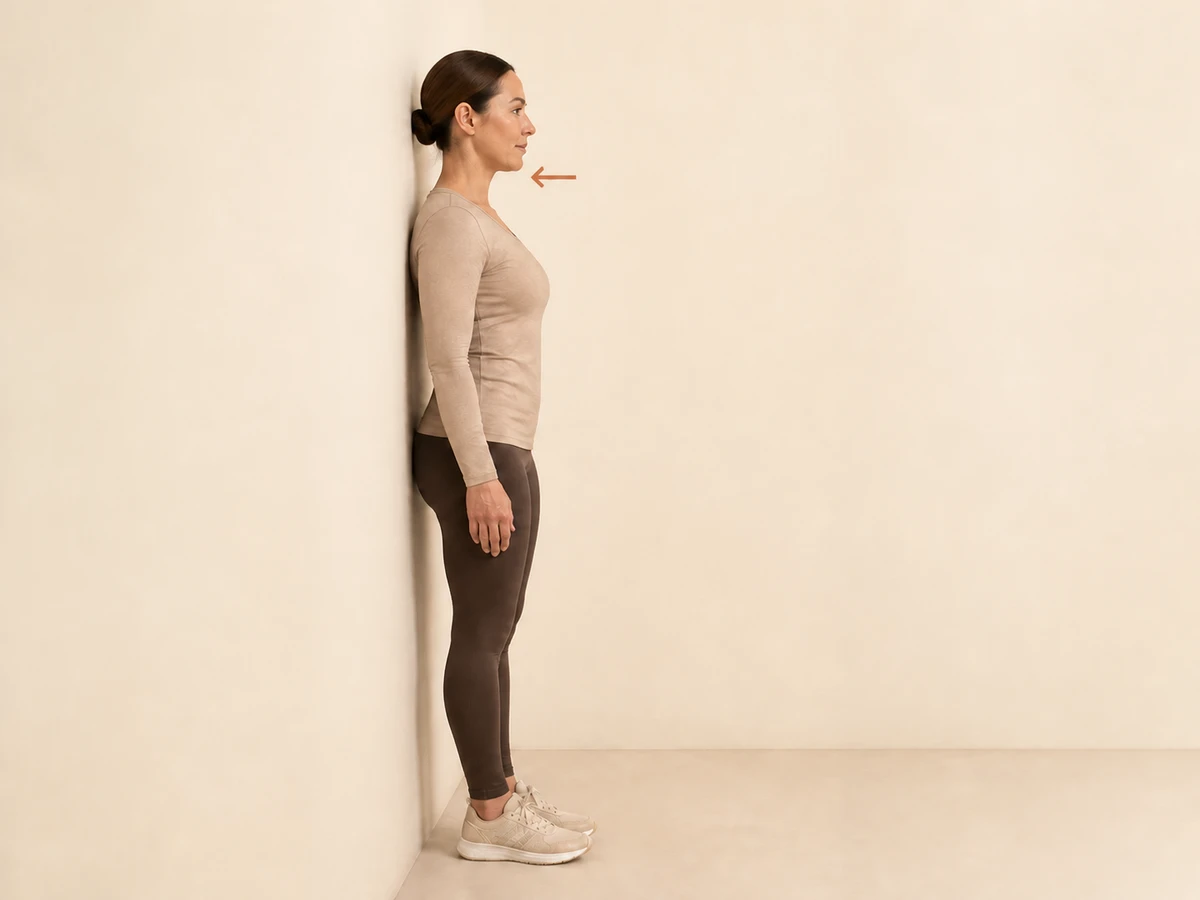
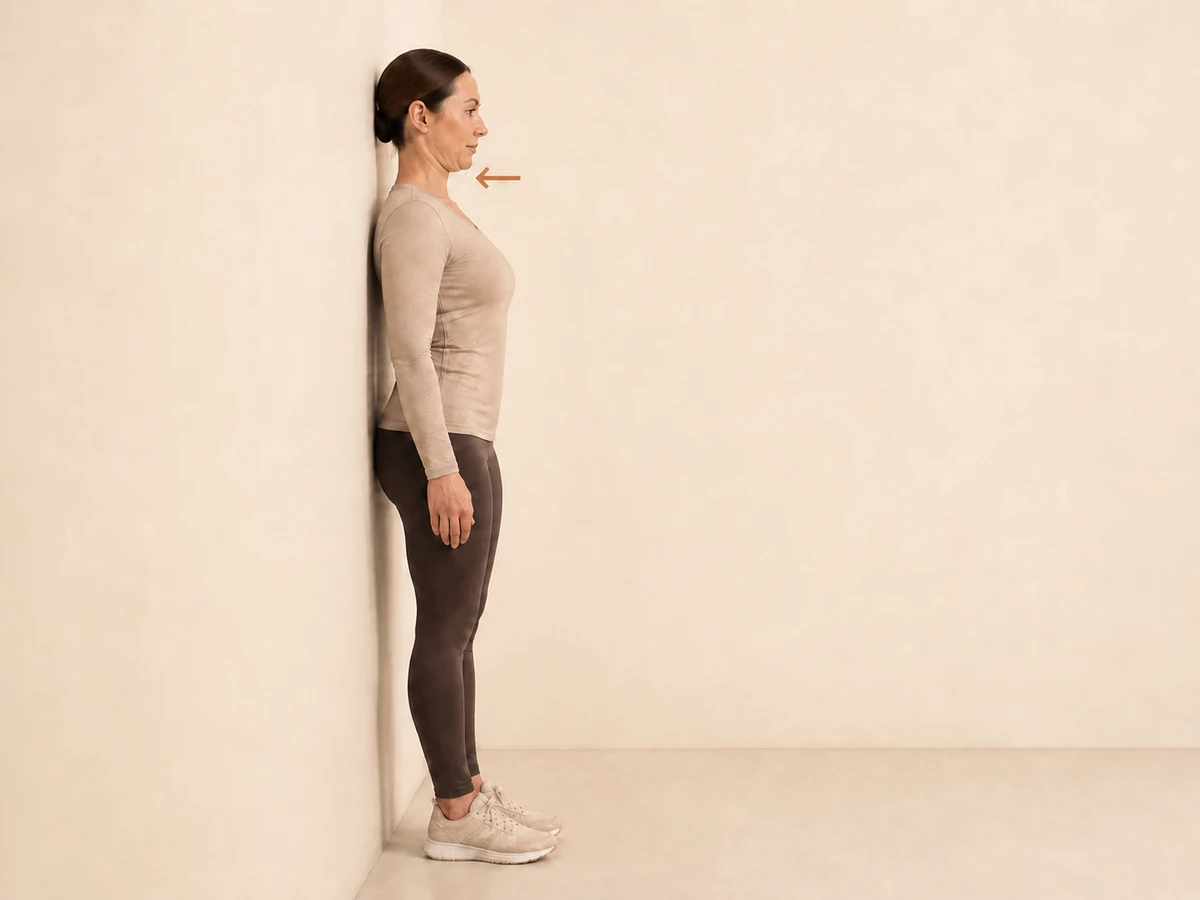
Stand against a wall, heels an inch out. Draw your chin straight back until the back of your head touches the wall, without tipping your chin up. It trains the deep neck muscles that hold your head over your shoulders.
10 reps/Hold 5sWall Angels
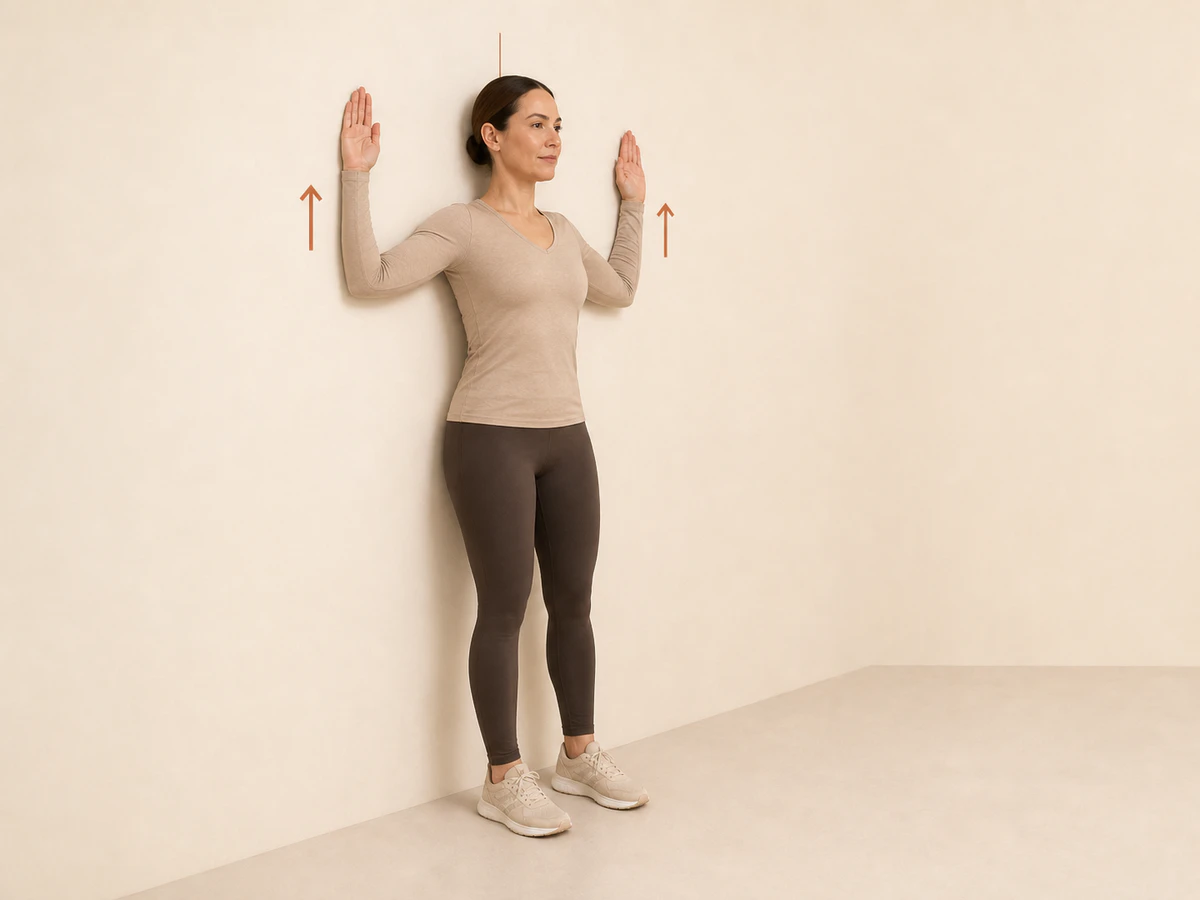
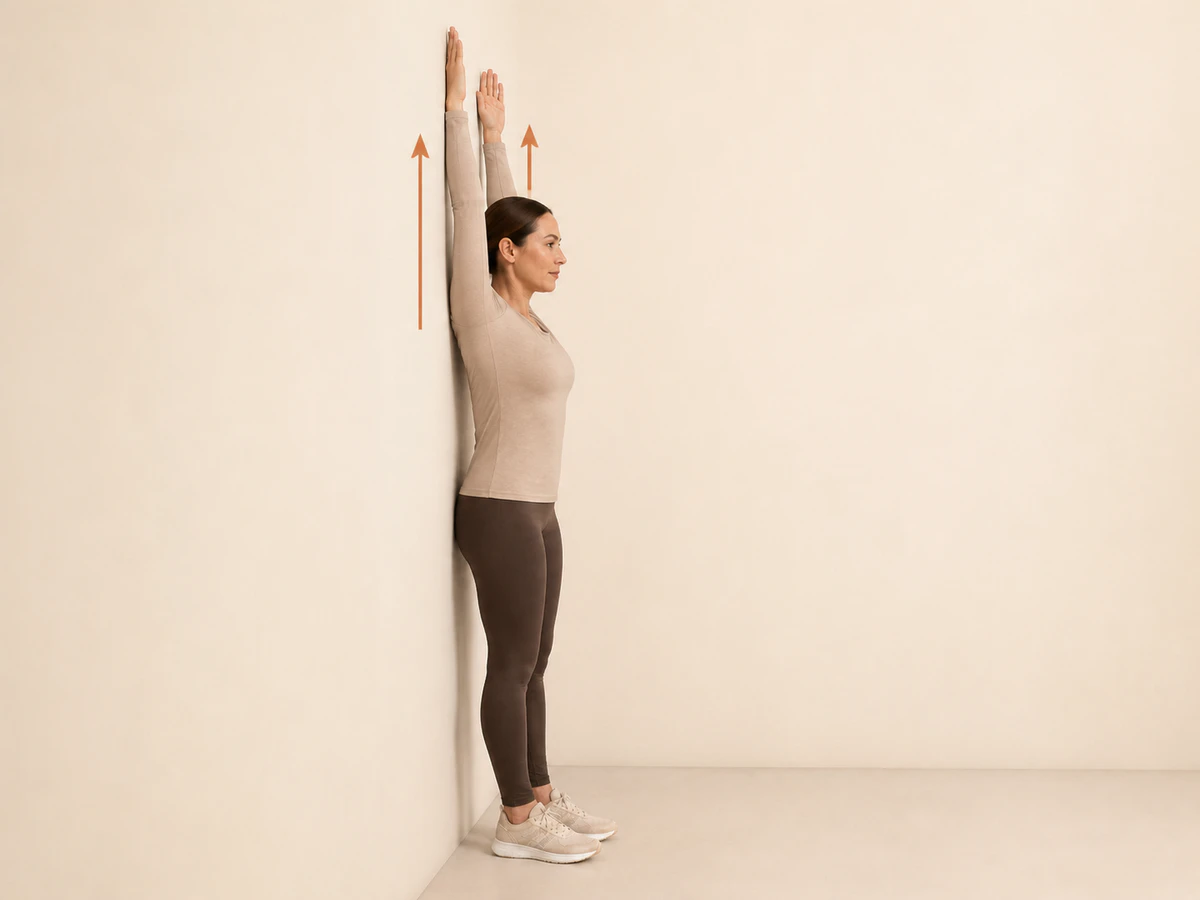
Back flat against a wall, arms in a goal-post shape, slide them up and down while keeping wrists and elbows on the wall. It trains the mid-back muscles that draw your shoulder blades down and back, the job a brace tries to do for you.
10 slow repsBand Rows
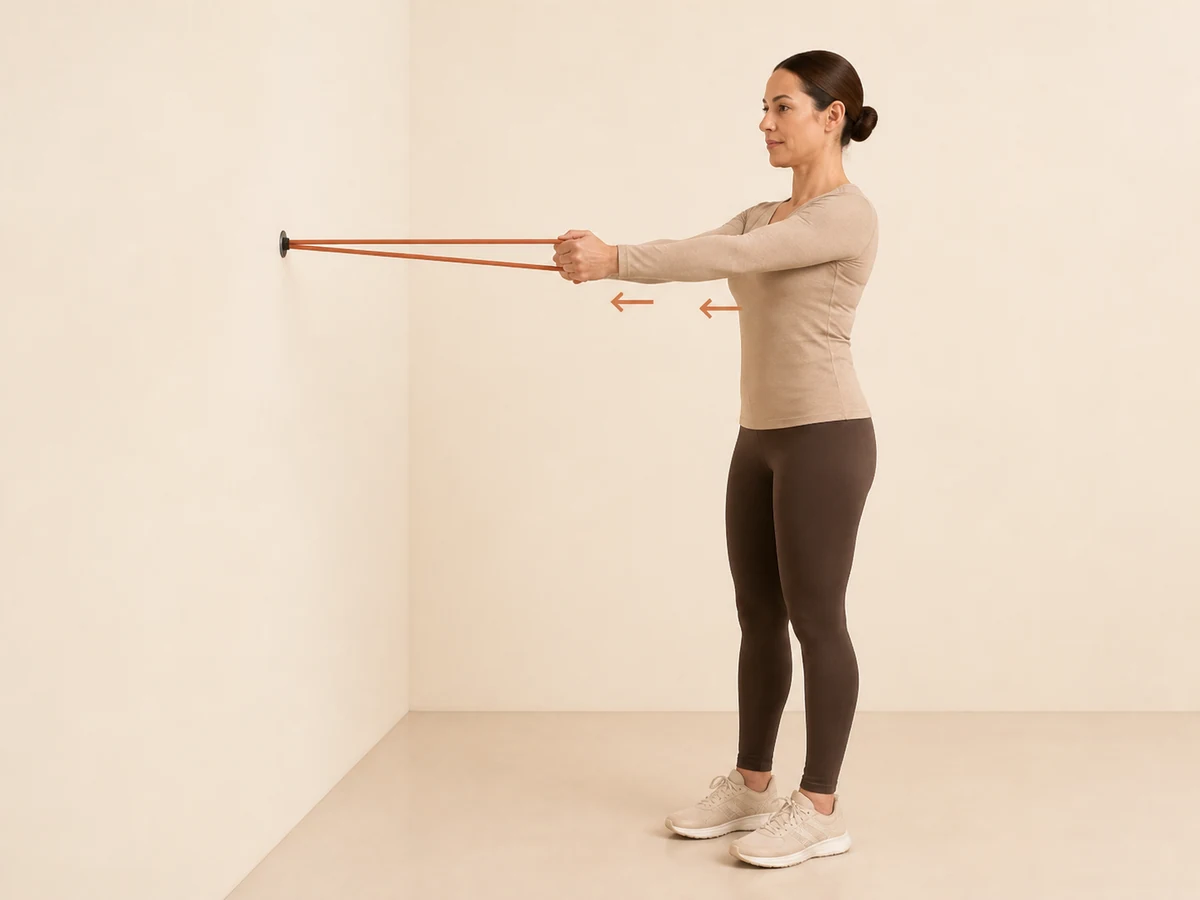
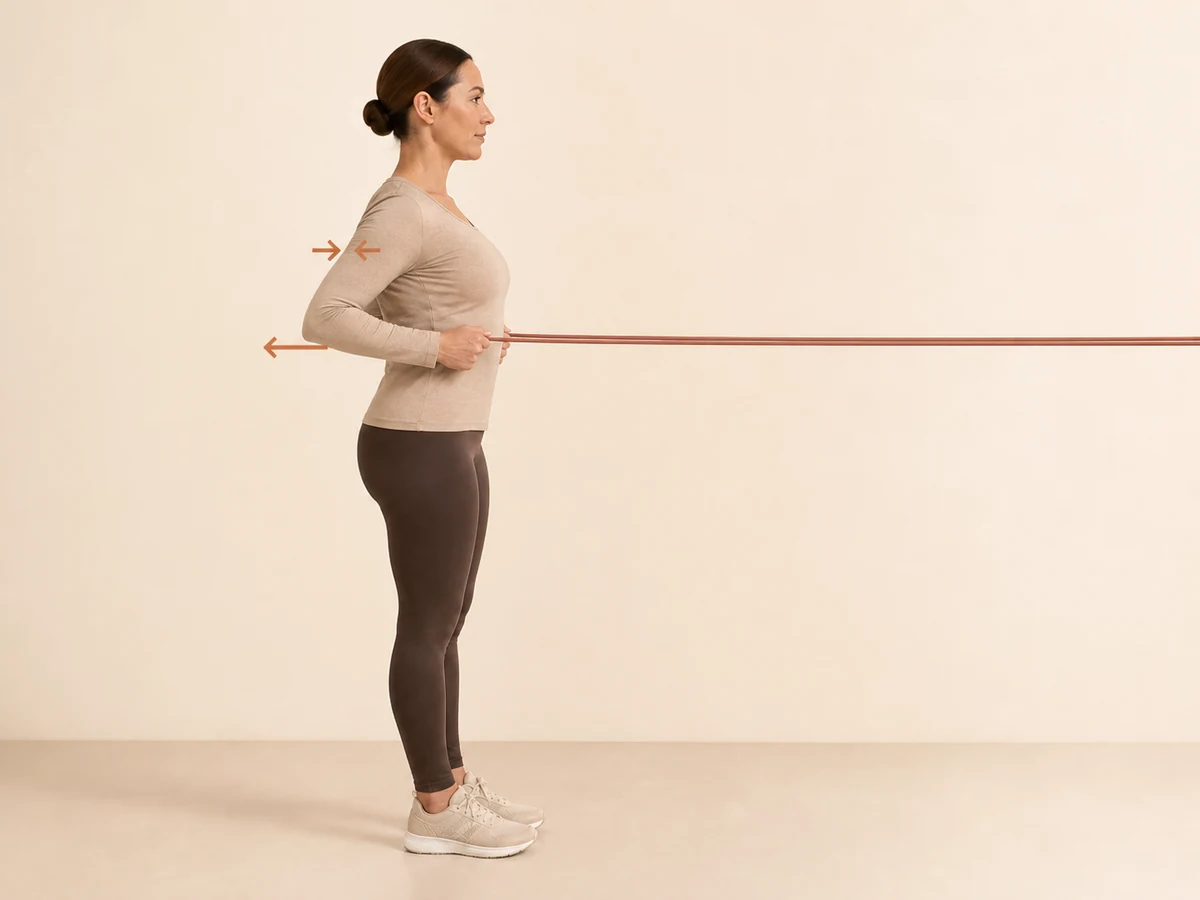
Anchor a resistance band at chest height and row your elbows back past your ribs, drawing the shoulder blades together, then return slowly. Rows build the muscles that hold you tall without a strap.
12–15 reps/2 roundsDoorway Pec Stretch
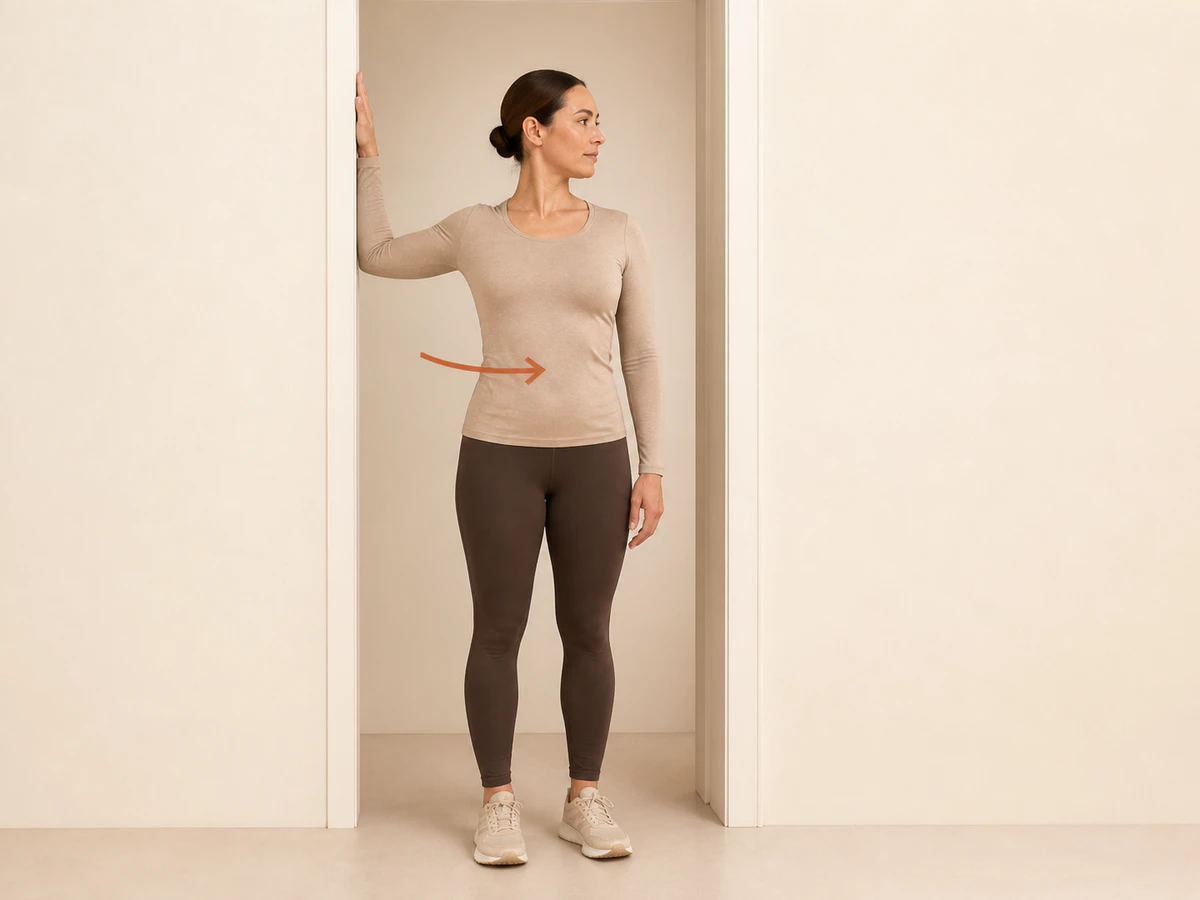
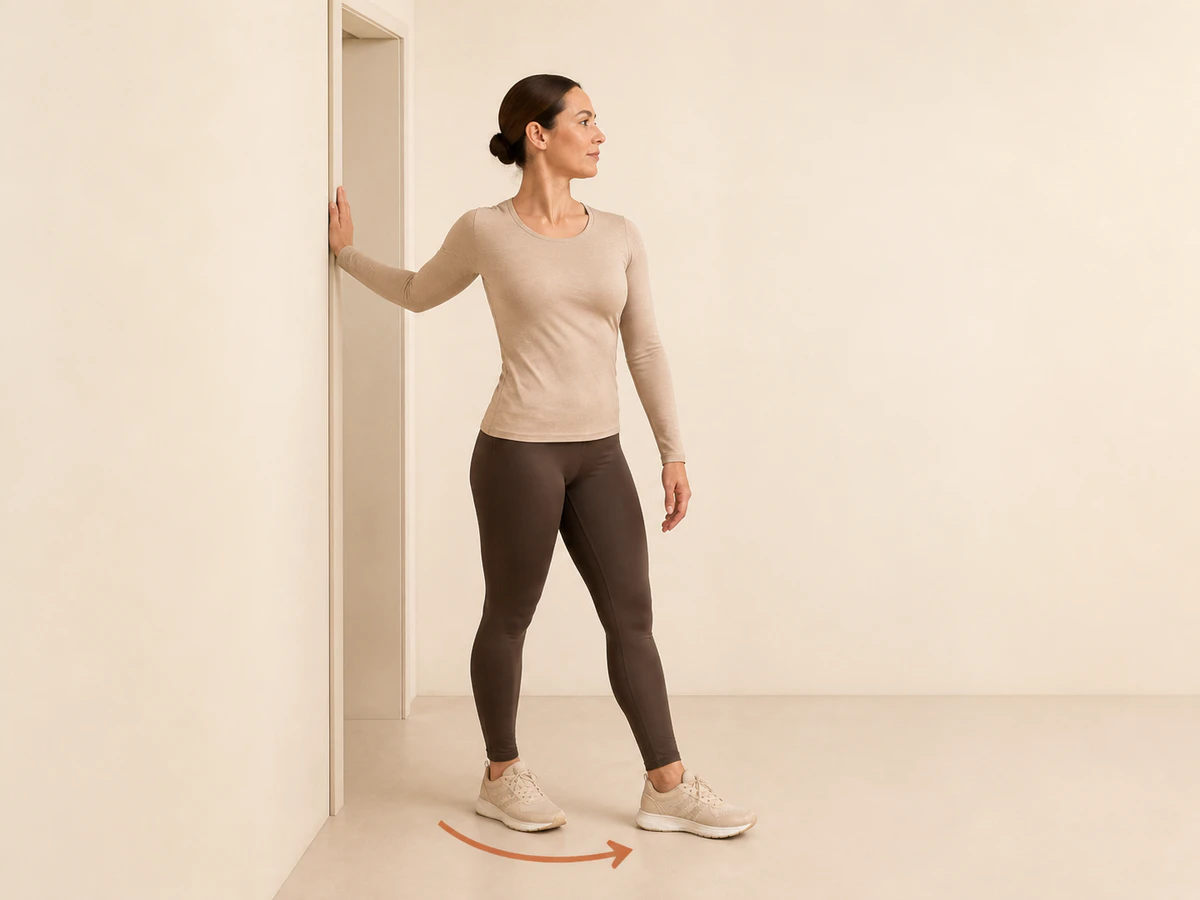
Forearm on a doorframe at shoulder height, step through until you feel a stretch across the chest. A tight chest pulls the shoulders forward; this lets them sit back on their own.
30s each sideProne Back Extension
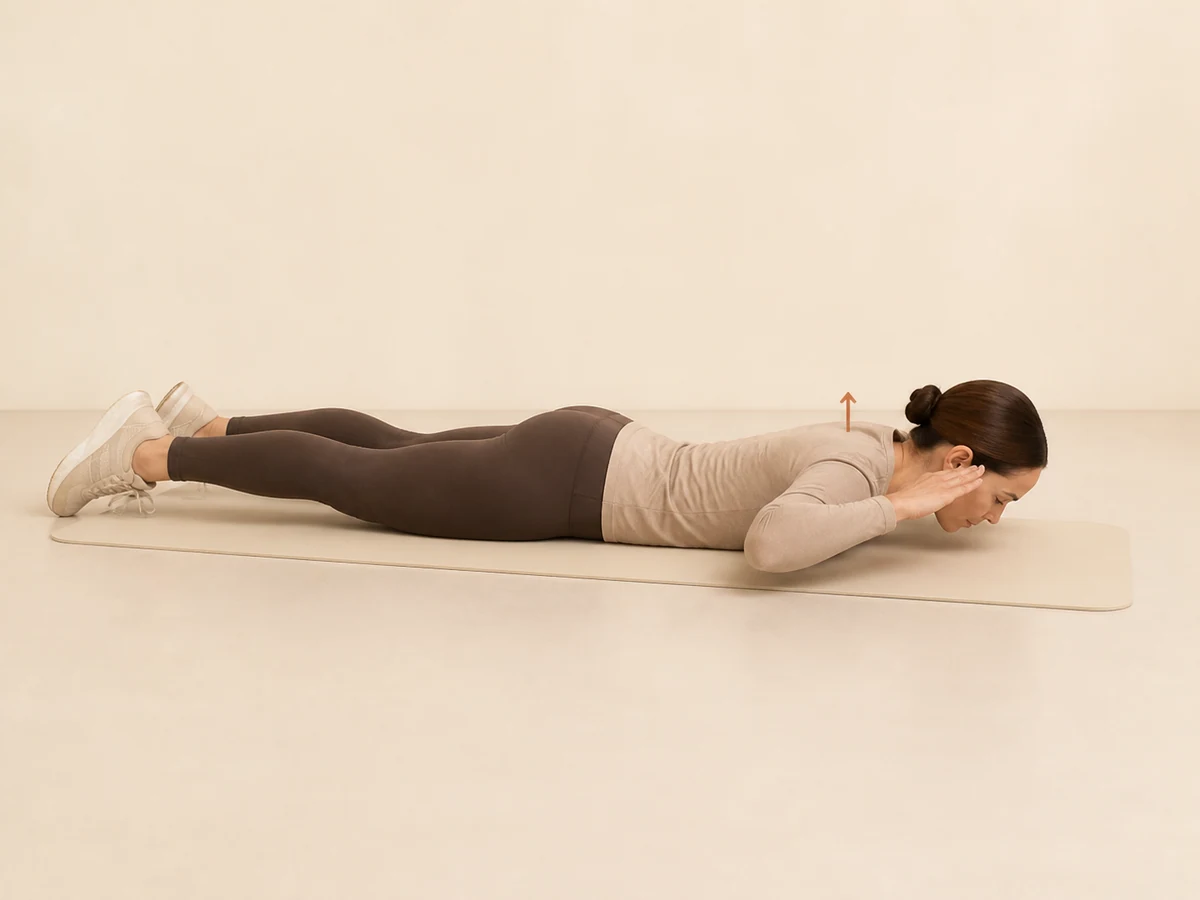
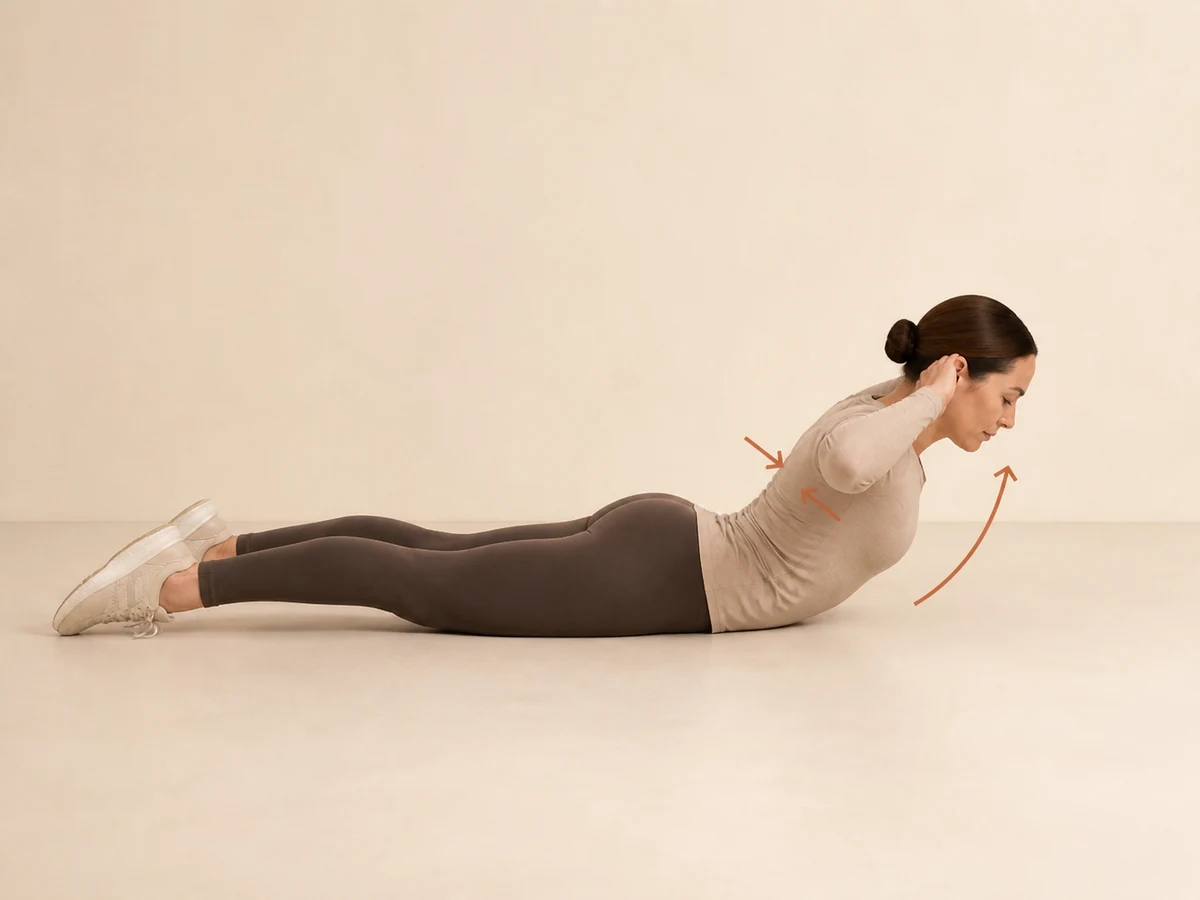
Lie face down, hands by your temples, and gently lift your chest and upper back off the floor, squeezing the shoulder blades down and together. Lower with control. It strengthens the upper back that counters a rounded posture.
10–12 repsDo the set most days for a few weeks. As it gets easy, add a second round of the rows and wall angels rather than holding the stretches longer.
If you still want to use one
- Use it as a reminder, not a support. Wear it for short stretches, such as the first 20 to 30 minutes of a work session, rather than all day.
- Pair it with the routine above, so your muscles take over the job the strap is doing.
- Make sure it is comfortable. A strap that digs into the armpits, causes tingling in the hands or makes it hard to breathe deeply is too tight. Take it off.
- Check your setup instead. A screen at eye level and a chair that lets your feet rest flat do more than a strap. Our guide to desk setup for back pain covers the details.
Why the slouch keeps coming back
Slumping is what bodies do when they are tired, and a rounded posture after hours at a desk is a sign of fatigue more than of a flaw. Holding yourself rigidly upright all day is tiring too, and usually lasts about as long as the reminder does.
The fix is to break up the hours: get up every 30 to 45 minutes, walk, reach overhead, and come back. A stronger upper back then lets you sit tall more easily when you want to, without having to force it. Our tech neck exercises fit into those breaks.
When to get checked
Get an assessment if neck or upper-back pain is not easing after two to three weeks of exercise and movement breaks, keeps coming back, or wakes you at night. See a physician promptly for pain, numbness or weakness traveling into an arm.
A rounded upper back that is getting more pronounced, especially with back pain in someone over 50, deserves a check for bone density. Our guide to curves in the spine explains what is behind a rounded back.
If your neck and upper back still ache after a few weeks of this, we can find out why. We see patients from Cottleville, St. Peters, O’Fallon and St. Charles.
What a visit here looks like
Dr. Andersen starts with what your posture is actually doing: she checks how your neck and upper back move, tests the strength of the muscles around your shoulder blades, and looks at how you sit and work. Care usually pairs precision spinal adjustments for stiff joints in the upper back with Pin & Stretch for a tight chest and a progressed version of this routine. How quickly it helps varies from person to person.
Book an assessment and build the strength that holds you tall.
Frequently asked questions
- Do posture correctors actually work?
- Only as a reminder. A brace can cue you to sit up when you slump, but it does not strengthen the muscles that hold you upright. A 2021 review found low-quality evidence for bracing, limited to older adults wearing one for months, and better evidence for structured exercise.
- How long should you wear a posture corrector a day?
- If you use one, keep it short: 20 to 30 minutes at a time as a reminder, not all day. Pair it with strengthening exercises so your muscles take over the job. Take it off if it digs into your armpits, causes tingling in your hands or makes it hard to breathe deeply.
- Can bad posture cause neck and back pain?
- Less than most people think. A 2023 review found no scientific evidence linking head-forward posture with neck pain. Staying in any one position for hours and having little strength for a long day seem to matter more than the shape of your posture.
- What is the best way to fix rounded shoulders?
- Strengthen the upper back and open the chest: band rows, wall angels, prone back extensions and a doorway pec stretch, done most days for a few weeks. Break up long sitting every 30 to 45 minutes. Exercise has better evidence than braces for reducing a rounded upper back.