Tension headaches: the tight band, and how to loosen it.
A steady squeeze across the forehead and temples that builds through a long day. What triggers tension headaches, a 5-minute routine for the neck and shoulders, and the signs a headache needs a doctor instead.
Related guide Headaches & jaw pain

A tension headache feels like a tight band of pressure around the forehead and temples, usually on both sides. It is the most common type of headache, and the usual triggers are stress, long hours in one position, eye strain, poor sleep and jaw clenching. Gentle neck and shoulder stretches and regular breaks often help. A sudden, severe headache needs the ER.
A tension headache feels like a tight band wrapped around your head: steady pressure across the forehead and temples, sometimes reaching down into the back of the neck. It is not the throbbing, light-sensitive pain of a migraine. It is a dull squeeze that builds through a long day and can hang on for hours.
Here is the short version: tension headaches are the most common type of headache, and the usual triggers are things you can change. A few minutes of neck and shoulder work, a screen setup that lets you move, and steadier sleep and meals often do more than another round of painkillers.
What does a tension headache feel like?
Most people describe pressure rather than pain: a band, a vise or a heavy hat. It usually affects both sides of the head, stays mild to moderate, and does not get worse with normal activity like walking up stairs. The muscles of the neck, shoulders and scalp often feel tight and tender to the touch.
Doctors call it a tension-type headache and sort it by how often it happens. The Cleveland Clinic describes three patterns: infrequent (one day a month or fewer), frequent (one to 14 days a month), and chronic (15 or more days a month for three months).
What causes tension headaches?
There is rarely one cause. The common triggers stack up over a day:
- Stress. The most common trigger, and the reason these are often called stress headaches.
- Long hours in one position. Head forward over a laptop, a phone or a steering wheel loads the neck and shoulders without a break. Our guide to tech neck covers that pattern.
- Eye strain from screens or close reading.
- Short or broken sleep, and skipped meals.
- Jaw clenching or teeth grinding, which keeps the muscles at the temples working. See jaw pain and the neck.
A tension headache is usually the end of a long day of small loads, not one big cause. Taking a few of those loads away is what makes them less frequent.
Is it a tension headache, a neck headache or a migraine?
- Tension headache. Both sides, band-like pressure, builds through the day, and does not change much when you move your neck.
- Headache from the neck. Usually one side, starts at the base of the skull and pulls forward, and flares with certain neck movements. Clinicians call it a cervicogenic headache; our guide to headaches from the neck explains how to tell it apart.
- Migraine. Throbbing, often one side, with nausea or sensitivity to light and sound, and it often gets worse with activity.
Stretches for tension headaches: a 5-minute routine
This routine eases the neck, shoulder and upper-back muscles that tighten with tension headaches and gives a stiff upper back some movement back. Do it once or twice a day, and again at the first sign of a headache building. Move slowly and keep every stretch gentle; if a move makes the headache sharper, skip it.
Chin Tuck
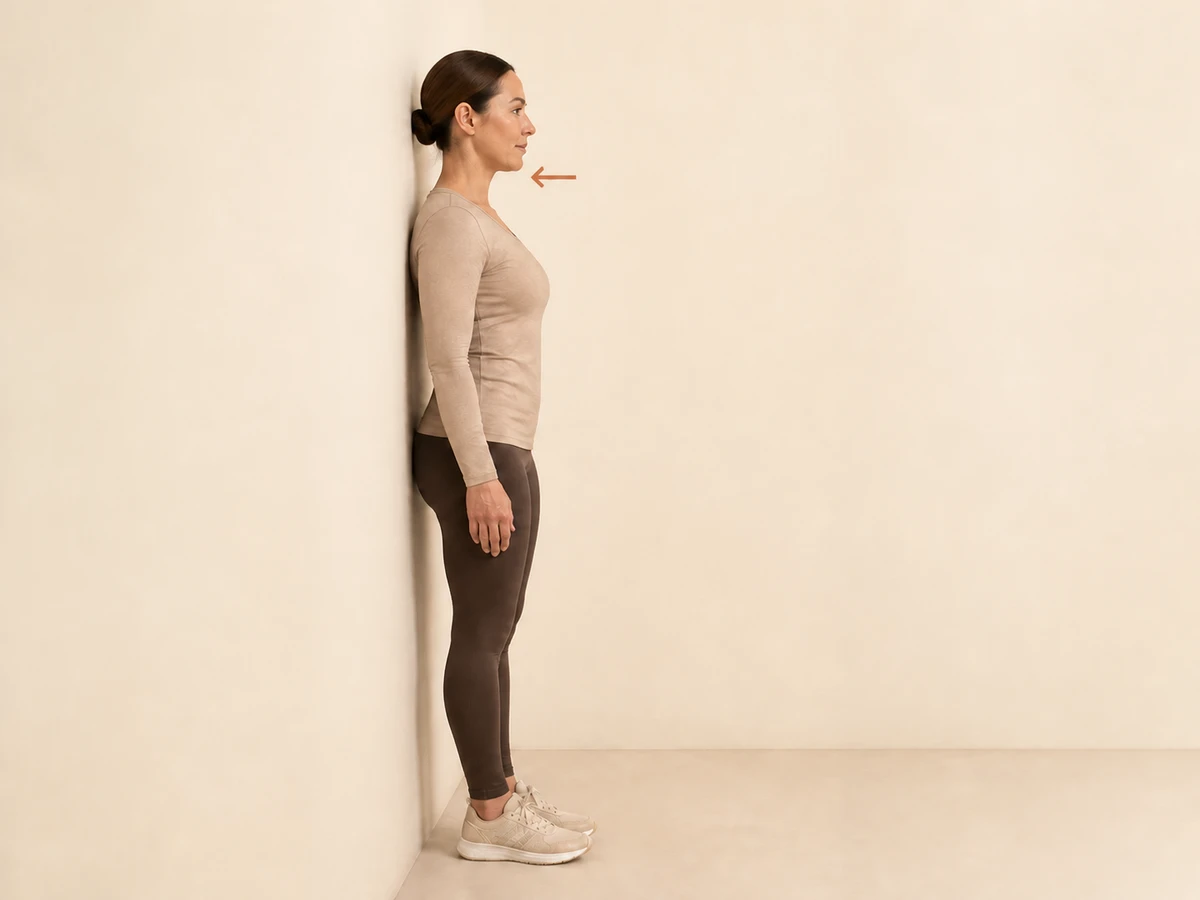

Stand against a wall, heels an inch out. Draw your chin straight back until the back of your head touches the wall, without tipping your chin up. It works the deep muscles at the front of the neck that screen days leave idle.
10 reps/Hold 5sSub-Occipital Release
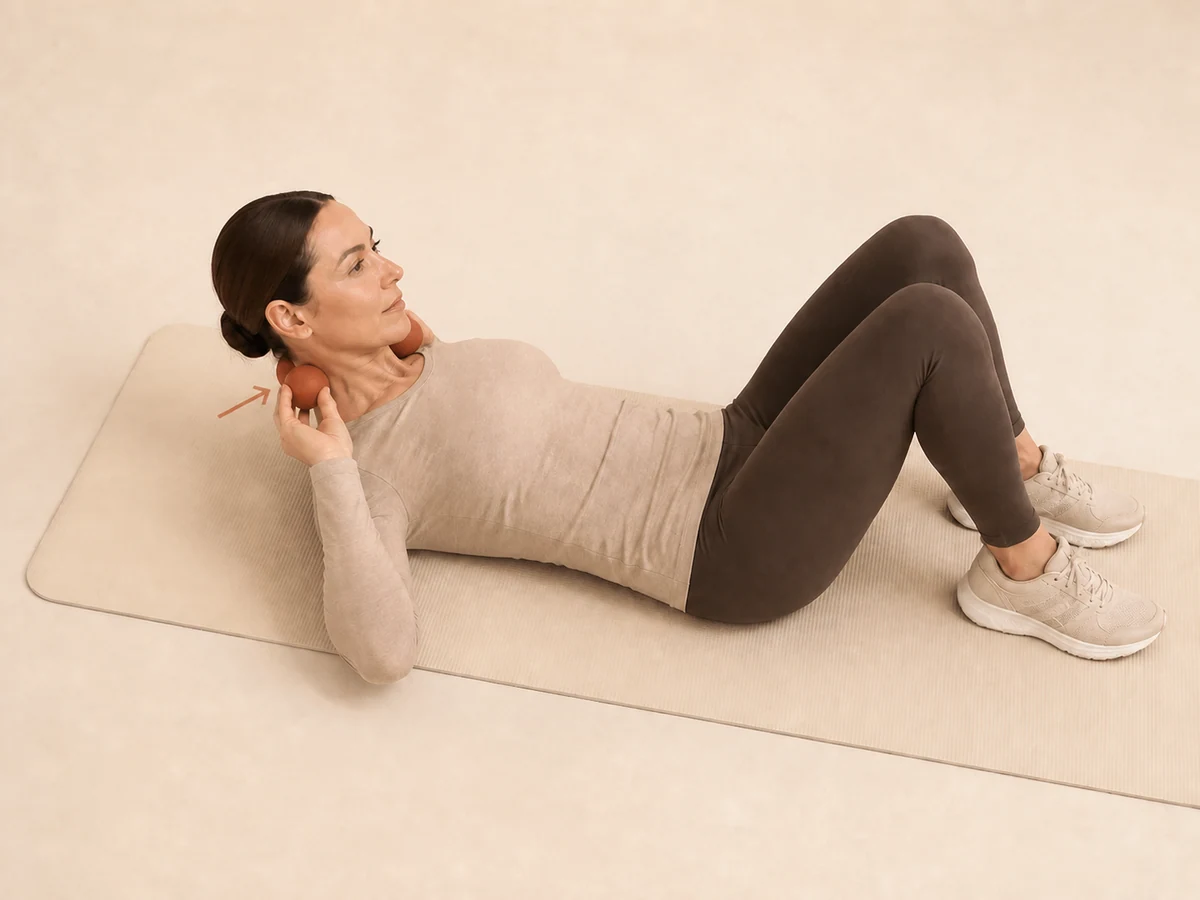
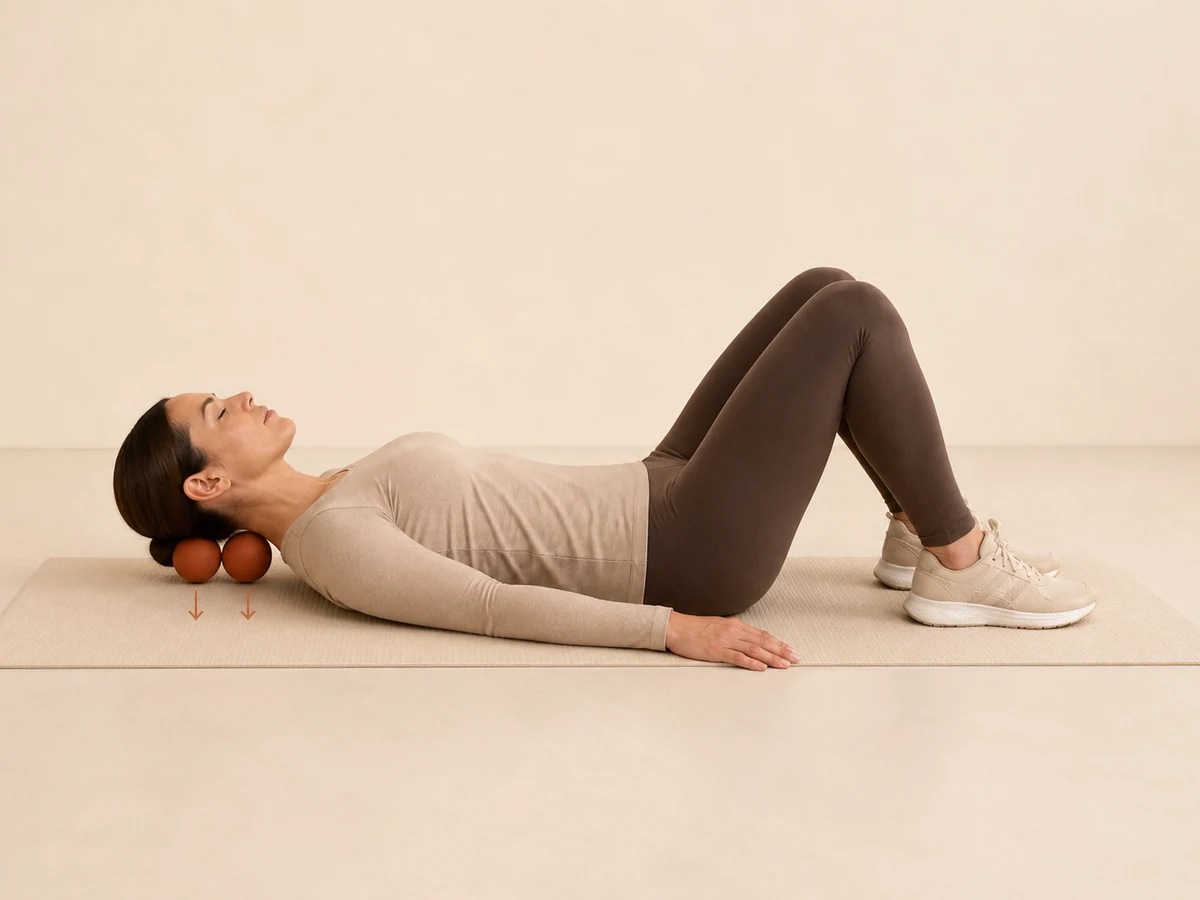
Lie on your back and rest the ridge at the base of your skull on two tennis balls, one on each side of the spine. Let your head sink into them and breathe slowly. These small muscles under the skull are often tender in people with tension headaches.
1–2 minutesUpper-Trap Stretch
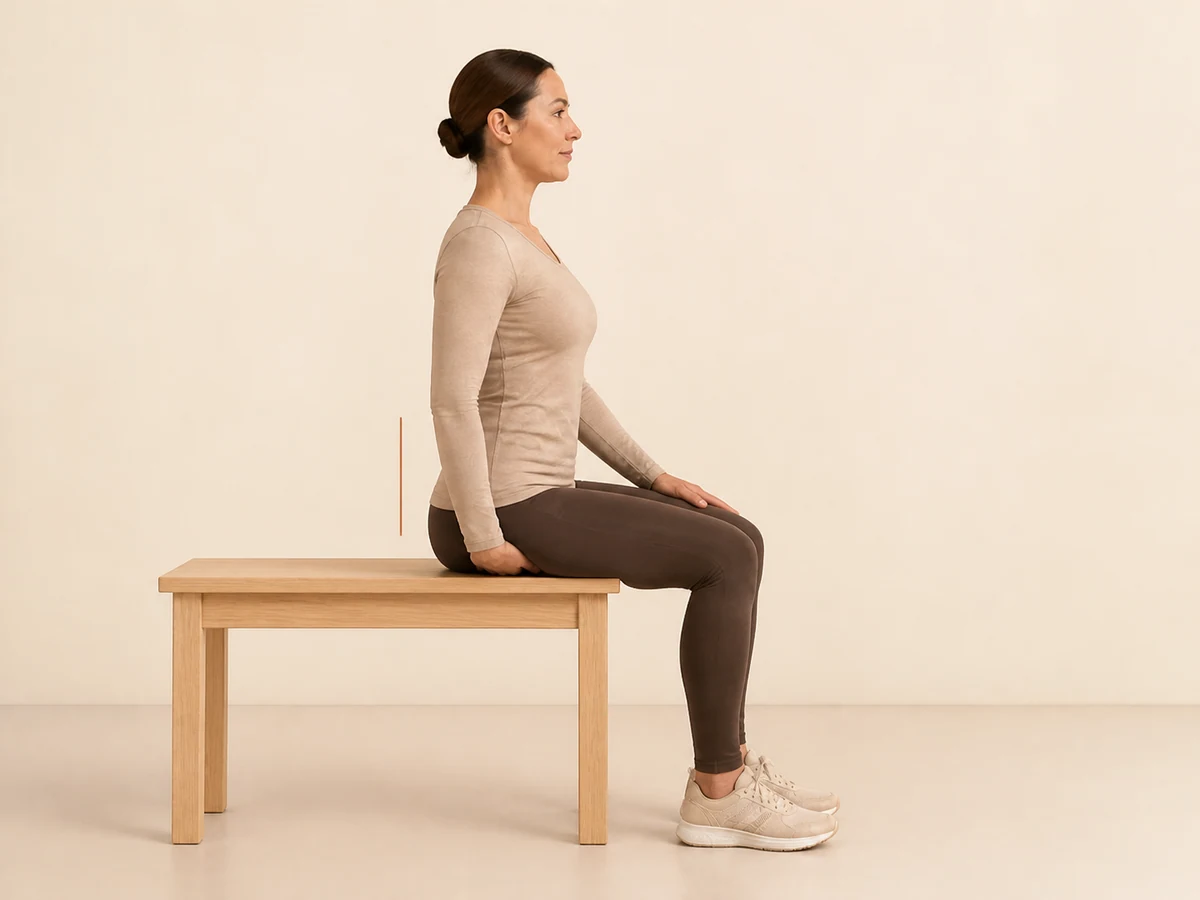
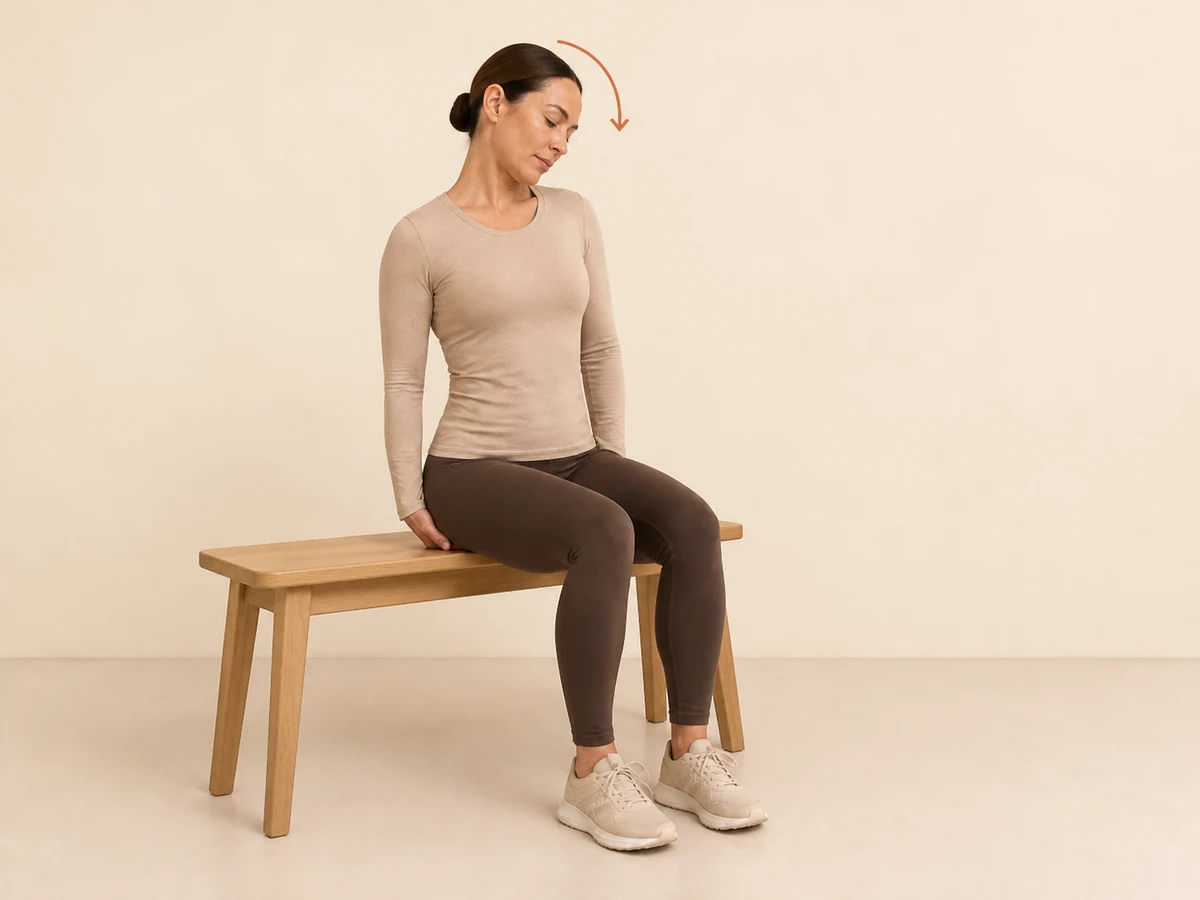
Sit tall and anchor one shoulder by sitting on that hand. Gently tilt your ear toward the opposite shoulder until you feel a stretch down the side of the neck. Ease off if it sharpens the headache.
30s each sideDoorway Pec Stretch
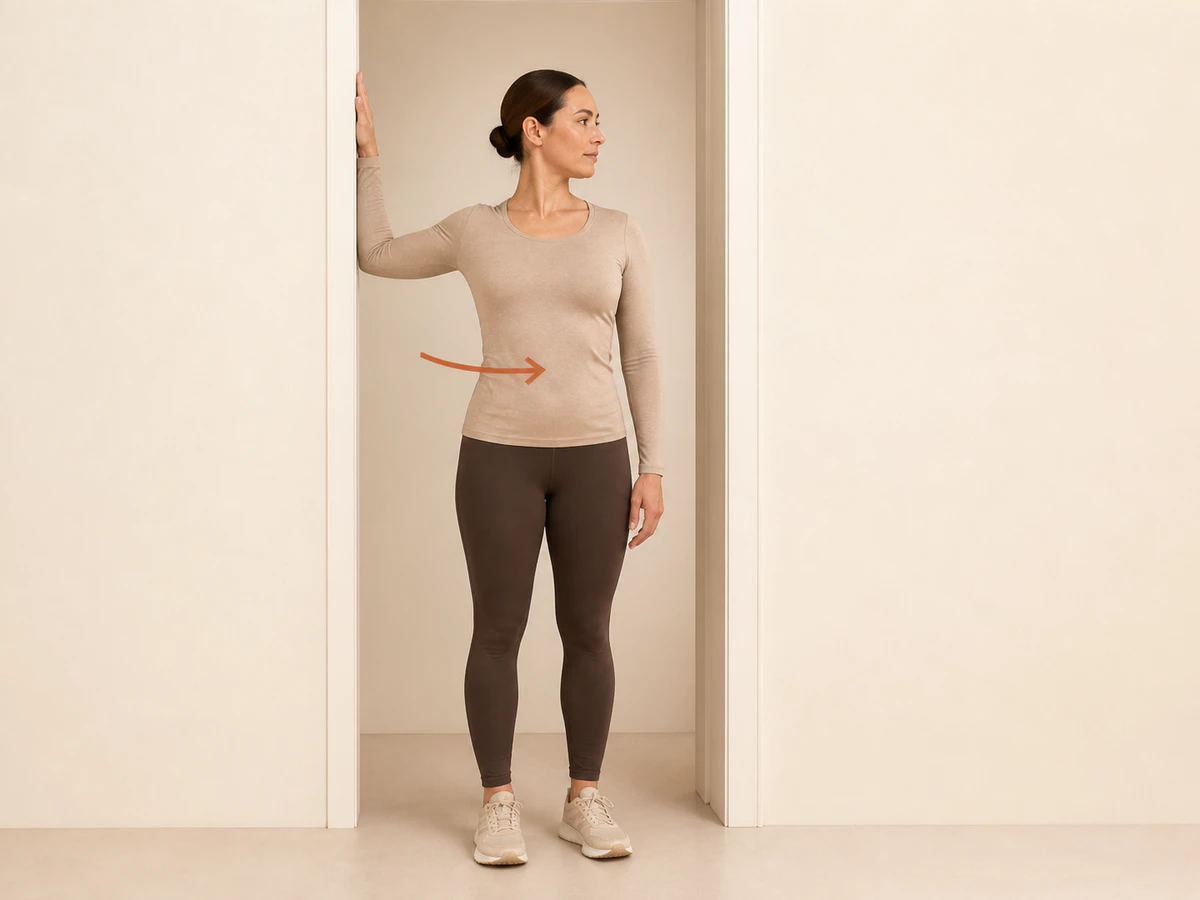
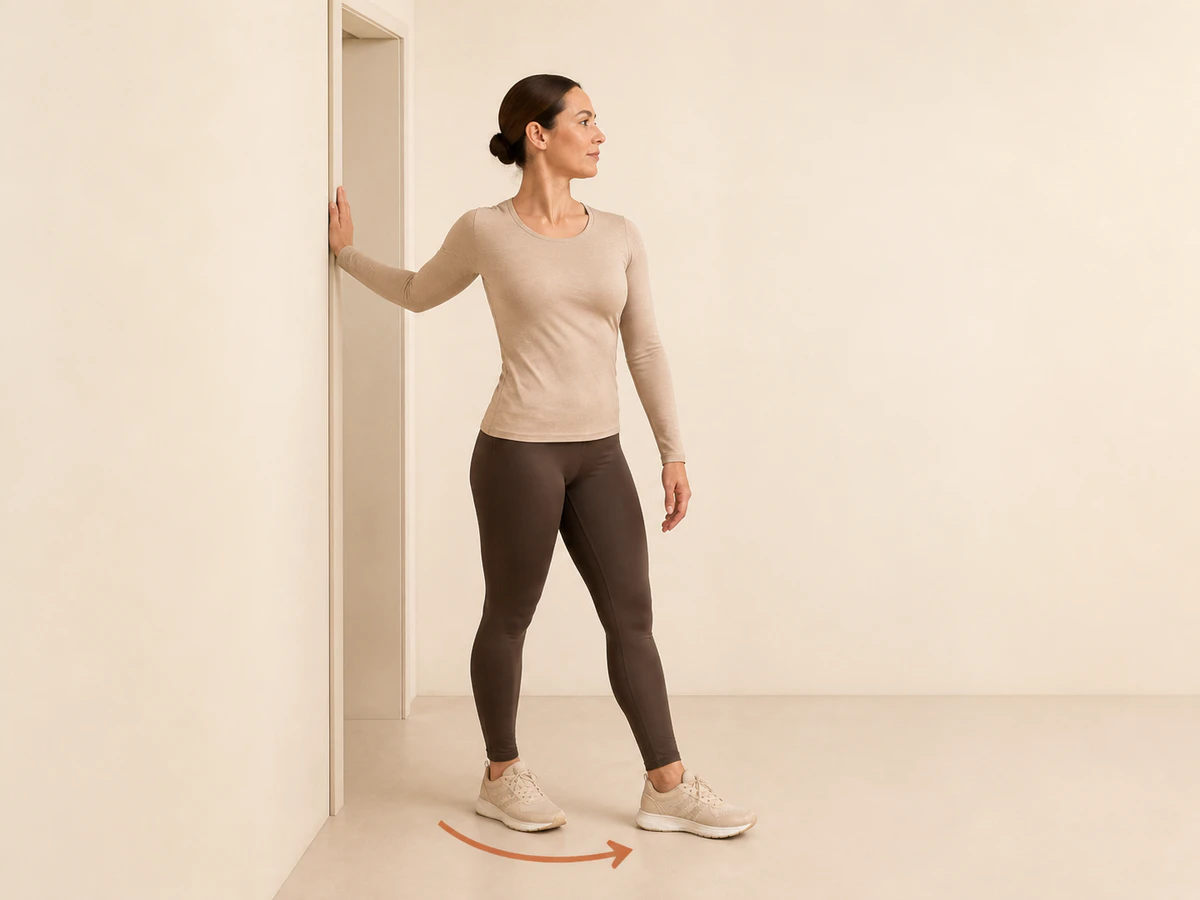
Forearm on a doorframe at shoulder height, step through until you feel a stretch across the chest. It opens the front of the shoulders after hours of reaching toward a keyboard or wheel.
30s each sideThoracic Extension Over a Chair
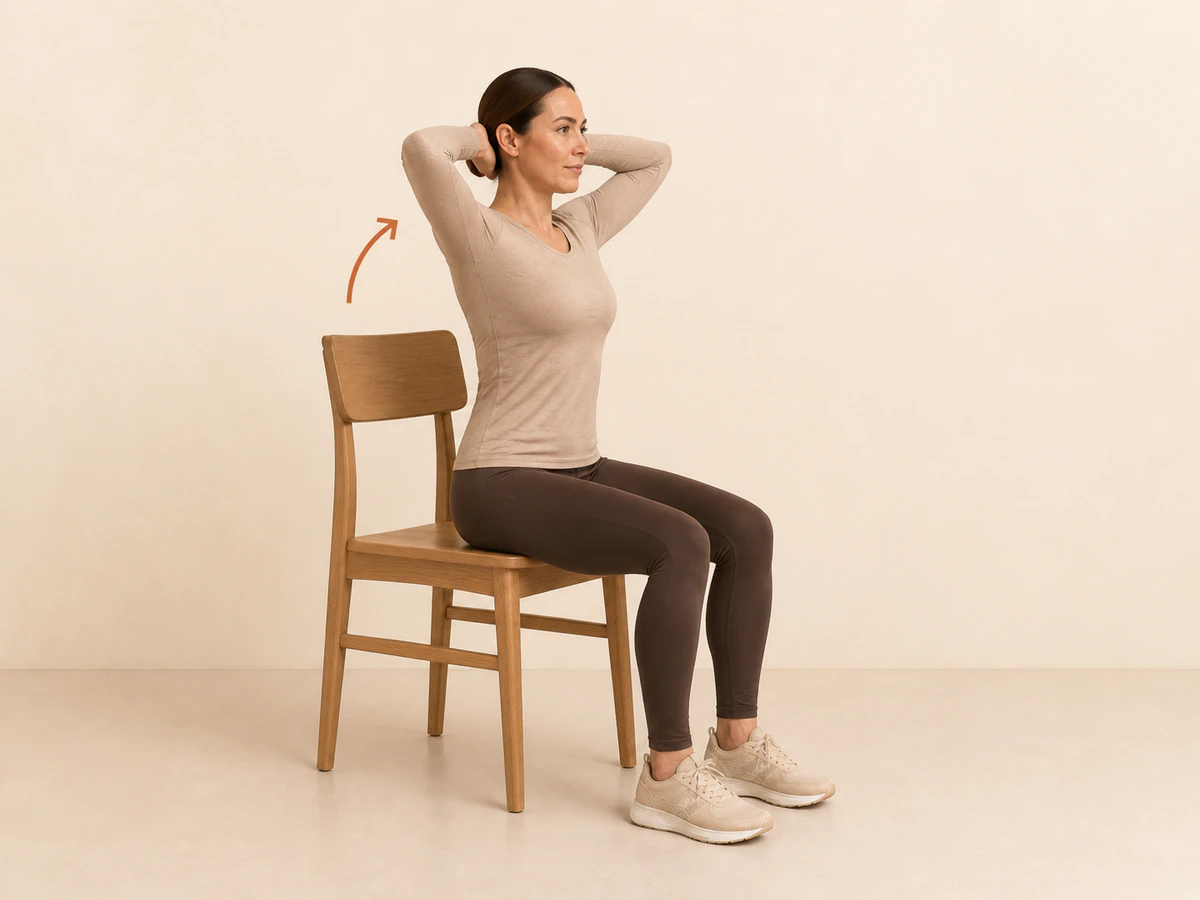
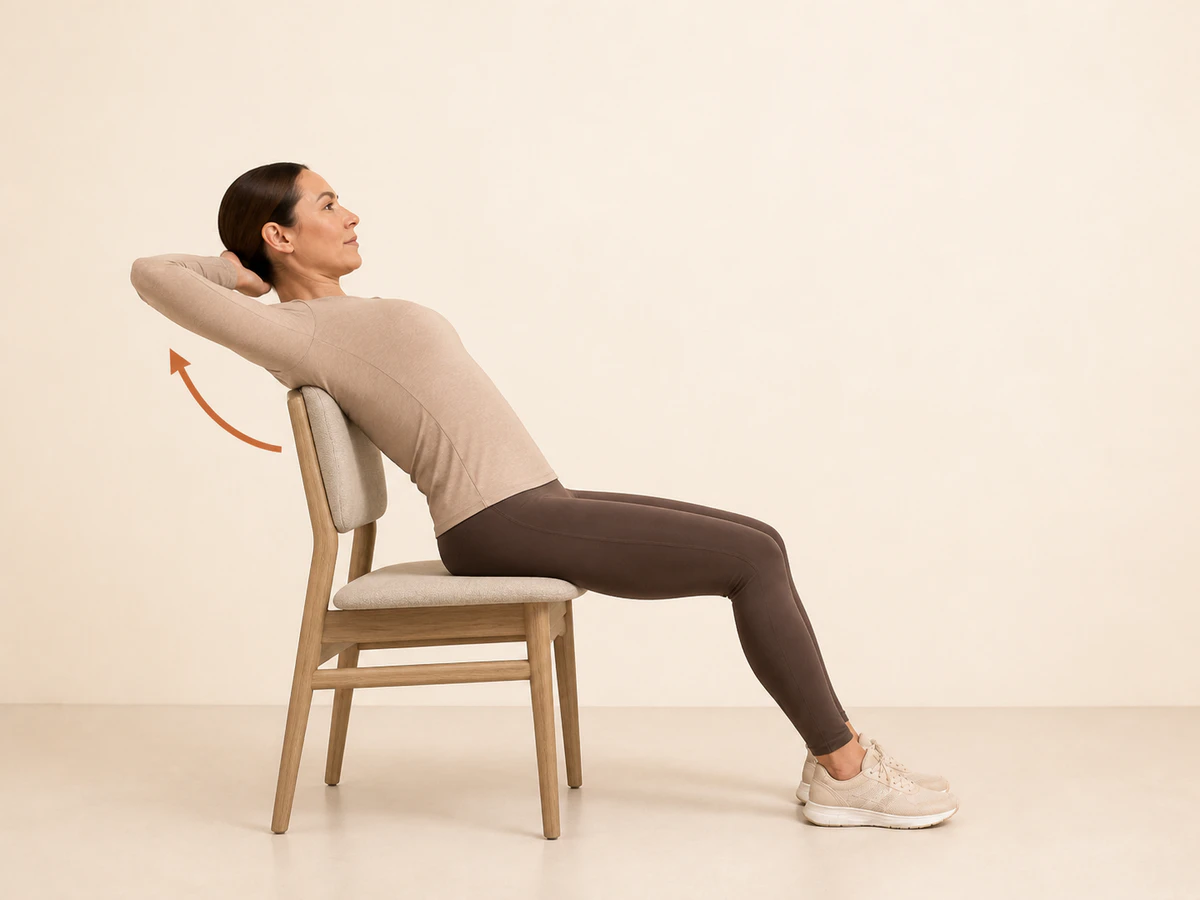
Sit tall, hands behind your head, and arch your upper back gently over the top edge of the chair, opening your chest toward the ceiling. A mid-back that moves more often leaves the neck and shoulders carrying less.
8 slow repsRun the whole set in about five minutes. The goal is to interrupt the hours of stillness before the band tightens, not to stretch as hard as possible.
How to fit it into a screen-heavy day
- Break the position every 30 to 45 minutes. Stand, roll your shoulders and do a set of chin tucks. Short and often beats one long session.
- Raise the screen so the top sits near eye level, and bring the laptop or monitor close enough that you do not lean in to read.
- Keep sleep and meals regular. Irregular sleep and skipped meals are two of the easiest triggers to remove.
- Be consistent with caffeine. Both too much and suddenly cutting back can bring on headaches. Our guide to coffee and headaches covers the balance.
- Use heat. Ten to fifteen minutes of warmth across the back of the neck and shoulders often eases the tightness.
Why painkillers alone do not fix it
Over-the-counter pain relievers are fine for an occasional tension headache. The trouble starts when they become a daily habit. The Cleveland Clinic warns that overusing pain medicine can cause rebound headaches, which are harder to treat than the original problem.
Painkillers also leave the triggers untouched. If the same headache returns most afternoons, the useful question is what is building it every day, and that answer is usually in the neck, the desk, the jaw or the schedule.
When a headache needs a doctor, not a stretch
See a doctor if your headaches are becoming more frequent, are changing pattern, or you are reaching for pain relievers most days. According to the Cleveland Clinic, a headache that comes with any of these needs medical attention: a stiff neck, numbness or weakness, pain or tenderness in the jaw when chewing or at the temple, a fever that will not go away, or pain that only happens in certain positions.
Go to the emergency room for a sudden, severe headache that peaks within a minute (often called the worst headache of your life), a headache after a blow to the head, or a headache with confusion, trouble speaking, vision loss or weakness on one side.
If the routine above helps but the headaches keep coming back, the stiff joints and tight muscles behind them may need hands-on care. We see patients from Cottleville, St. Peters, O’Fallon and St. Charles.
What a visit here looks like
Dr. Andersen starts by confirming what kind of headache it is: she asks about the pattern and triggers, checks how your neck and upper back move, presses on the muscles of the neck, shoulders and jaw, and screens for anything that belongs with your physician first.
Care usually pairs precision spinal adjustments for stiff joints in the neck and upper back with Pin & Stretch for tight muscles and a home routine like the one above. Acupuncture is also an option: a Cochrane review found that 51% of people with frequent tension headaches who had acupuncture cut their headache days at least in half, against 43% with sham needling.
More in our guide to acupuncture for headaches. How quickly headaches ease varies from person to person.
Book an assessment and find out what keeps building your headaches.
Frequently asked questions
- What does a tension headache feel like?
- Usually like a tight band or steady pressure around the forehead and temples, on both sides of the head. It is mild to moderate, does not throb like a migraine, and does not get worse with normal activity. The neck and shoulder muscles often feel tight and tender too.
- How do you get rid of a tension headache fast?
- Step away from the screen, put heat on the back of your neck and shoulders for ten to fifteen minutes, and do a few gentle stretches such as chin tucks and an upper-trap stretch. An occasional over-the-counter pain reliever is fine, but using them most days can cause rebound headaches.
- What stretches help tension headaches?
- Chin tucks, a sub-occipital release with two tennis balls at the base of the skull, an upper-trap stretch, a doorway pec stretch and thoracic extensions over a chair. Do them once or twice a day and at the first sign of a headache, and keep each one gentle.
- Can a chiropractor help with tension headaches?
- Hands-on care for stiff joints and tight muscles in the neck and upper back, combined with home exercise, is a common approach for tension headaches. Acupuncture has good evidence too: a Cochrane review found it halved headache days for about half of people with frequent tension headaches. A good first visit also screens for anything that needs a physician.