Upper and middle back pain: what it usually is, and what helps.
A burn between the shoulder blades, a stiff mid-back by the end of the day, a catch when you breathe in. What usually causes upper and middle back pain, a 5-minute routine, and the signs that need a doctor.
Related guide Neck pain & tech neck

Most upper and middle back pain comes from muscles and joints that have been held still too long or loaded more than usual, and it responds to movement and strength work. One-sided pain that changes with movement is usually a muscle or rib joint. Upper back pain with chest pain, shortness of breath or sweating needs 911.
Upper and middle back pain sits in the part of the back most people never think about until it aches: a dull burn between or below the shoulder blades, a stiffness that is worse by the end of a desk day, or a sharp catch when you twist or take a deep breath.
Here is the short version: most pain in the upper and middle back comes from muscles and joints that have been held still for too long or loaded more than they are used to. It usually responds to movement and strength work. A few patterns need a doctor instead, and they are worth knowing.
What causes upper and middle back pain?
The upper and middle back is called the thoracic spine: twelve vertebrae, each attached to a pair of ribs. It is built to be steadier than the neck or low back, which is why serious problems here are less common, but its joints and muscles still stiffen and tire. The usual causes:
- Muscle strain and fatigue. Long hours at a desk or behind the wheel, or a new lift, carry or sport. The ache sits in the muscles beside the spine or between the shoulder blades. Our guide to pain between the shoulder blades covers that spot in detail.
- Stiff spinal joints. The small joints of the mid-back stiffen with long sitting. The pain is often central and eases once you move.
- A rib joint that is not moving well. Sharp pain beside the spine when you breathe in deeply, twist or cough. See rib restrictions.
- Pain from the neck. An irritated joint or nerve in the neck can send pain to the shoulder blade. Our guide to a pinched nerve in the neck explains how.
The middle of the back is built to rotate and breathe. Most of the aching starts when a long day gives it neither.
Upper back pain on the right or left side
One-sided upper back pain is usually a muscle or rib joint on that side, especially if it changes with movement, breathing or pressing on the spot. It tends to be on the side that does more: the mouse hand, the side you carry a bag on, or the shoulder you sleep on.
Pain that does not change with movement is different. Pain under the right shoulder blade after fatty meals can come from the gallbladder, and pain in the upper back with chest pain can come from the heart. Those belong with a doctor, not a stretch.
Stretches for upper and middle back pain: a 5-minute routine
This routine moves the stiff joints of the mid-back and strengthens the muscles that hold it up through a long day. Do it once a day, and the first two moves again during long sitting stretches. Keep every move comfortable; stop any move that makes the pain sharper or spreads it.
Thoracic Extension Over a Chair
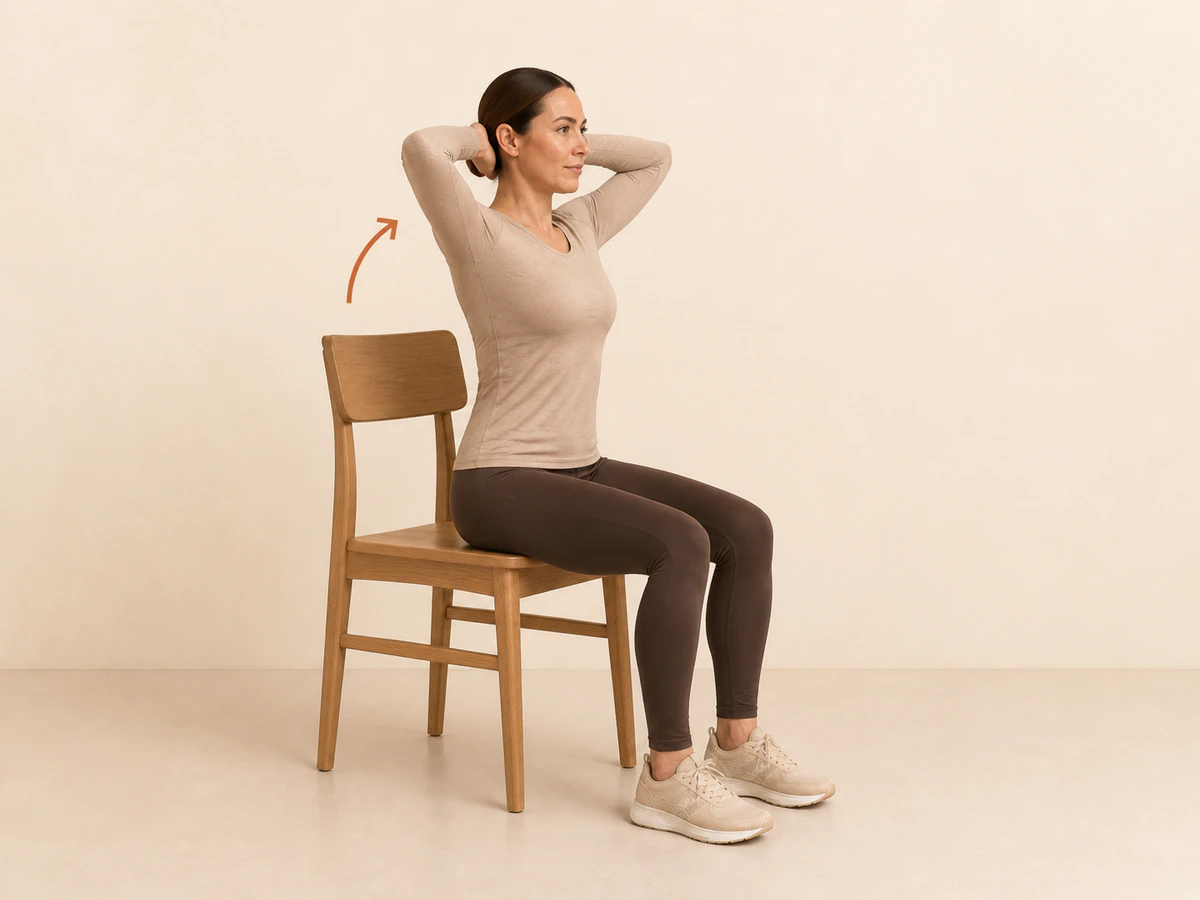
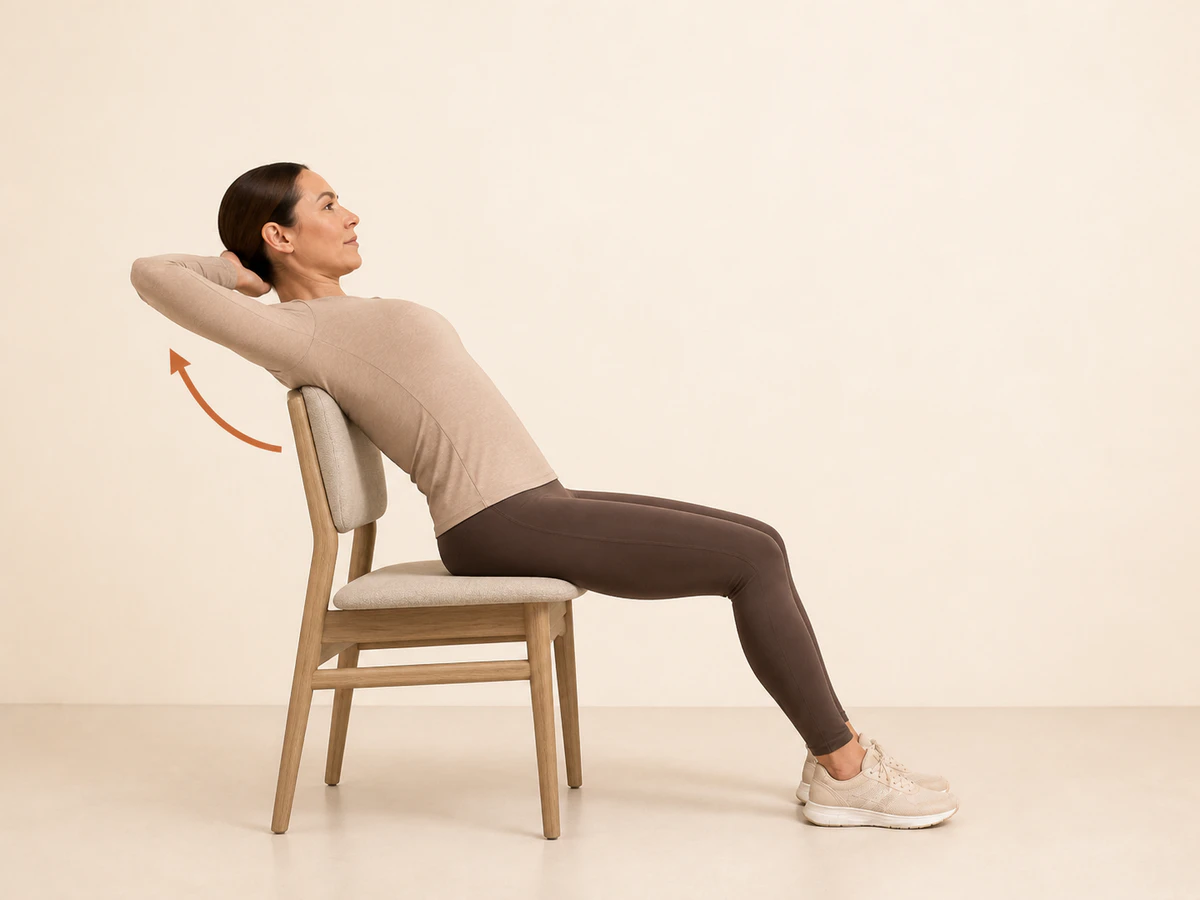
Sit tall, hands behind your head, and arch your upper back gently over the top edge of the chair, opening your chest toward the ceiling. Breathe in as you extend. It moves the mid-back joints that stiffen after hours of sitting.
8 slow repsDoorway Chest Opener


Forearm on a doorframe, elbow at shoulder height, then turn your body away. It opens the front of the chest and lets the upper back come out of its rounded position.
20–30s each sideStanding Side Bend


Reach one arm overhead and lean away to lengthen the side of the trunk and the mid-back, then switch. It moves the ribs and the middle of the back sideways, a direction desk days rarely use.
20–30s each sideProne Back Extension
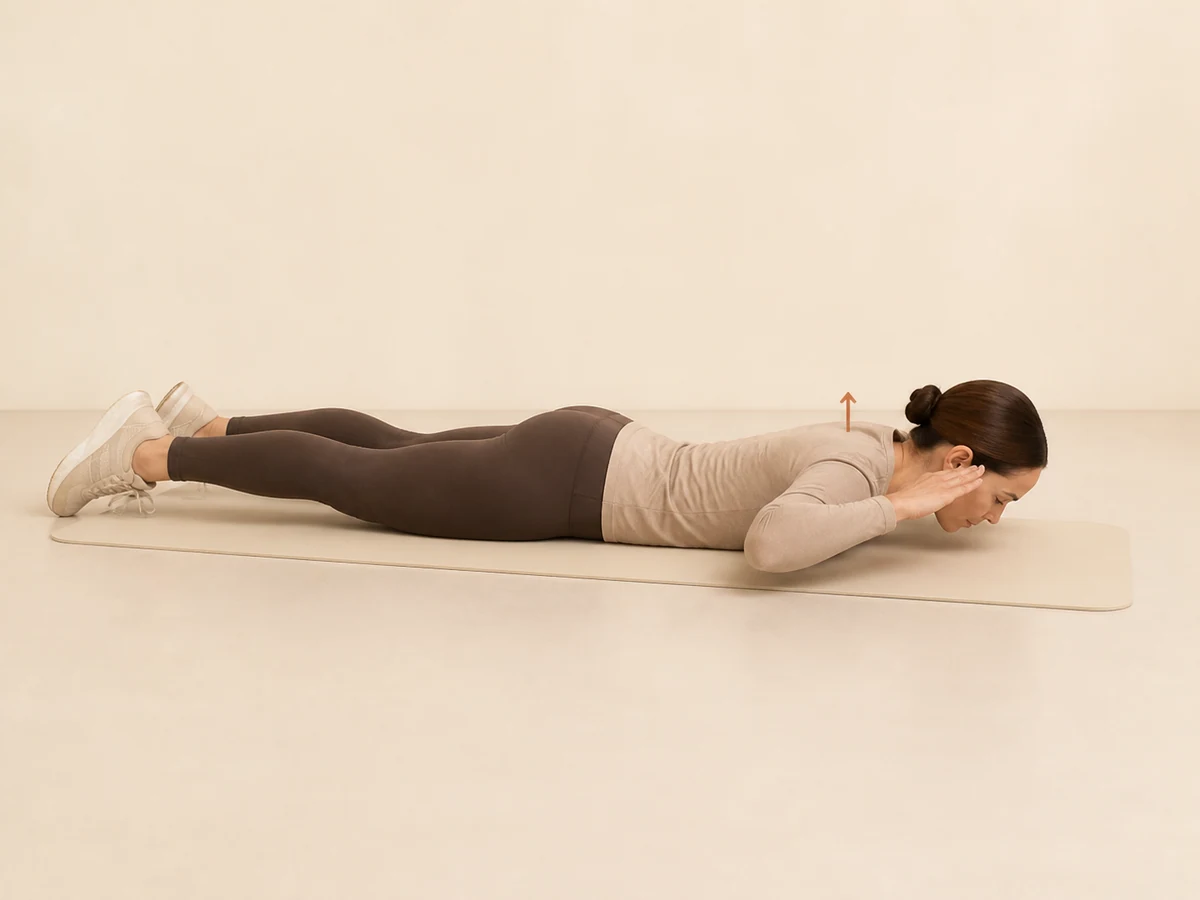
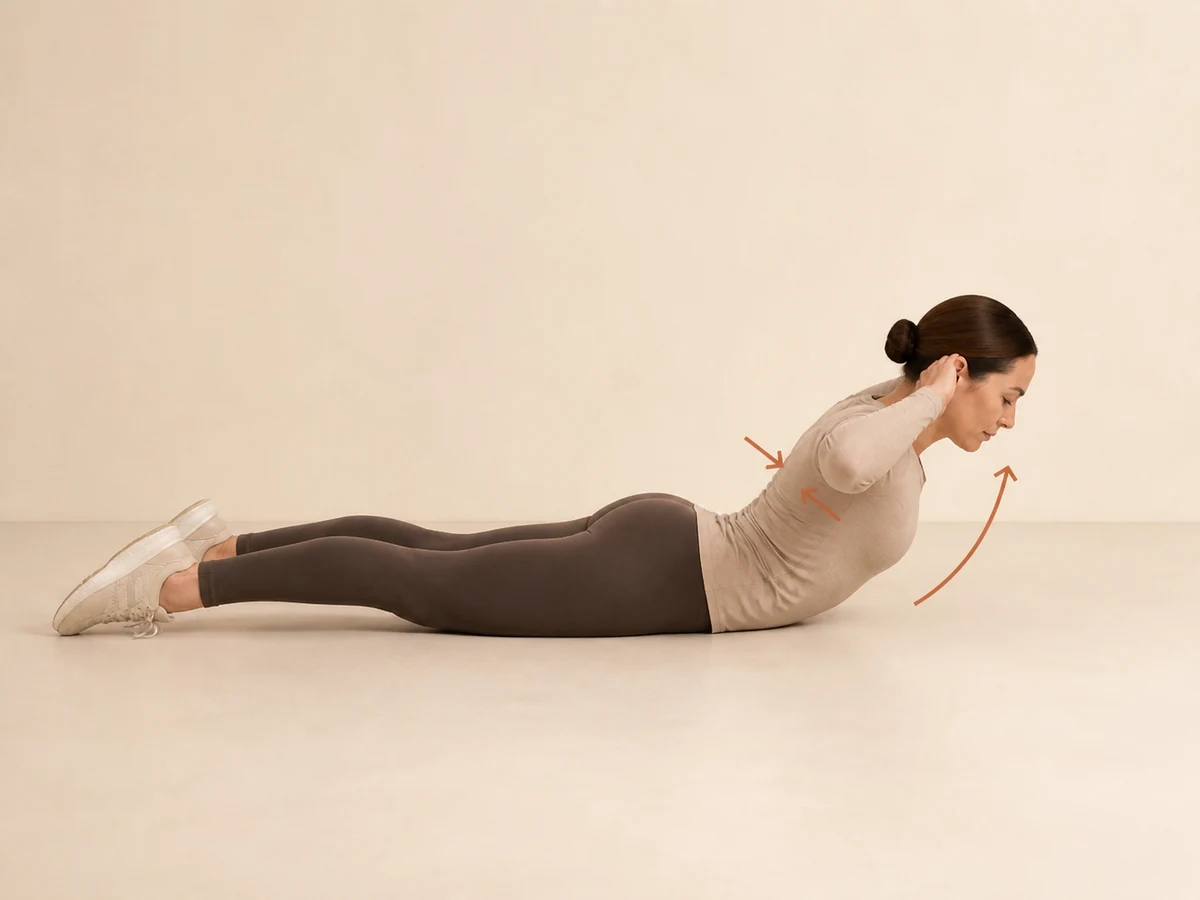
Lie face down, hands by your temples, and gently lift your chest and upper back off the floor, squeezing the shoulder blades down and together. Lower with control. It builds the upper-back muscles that tire first.
10–12 repsBand Rows
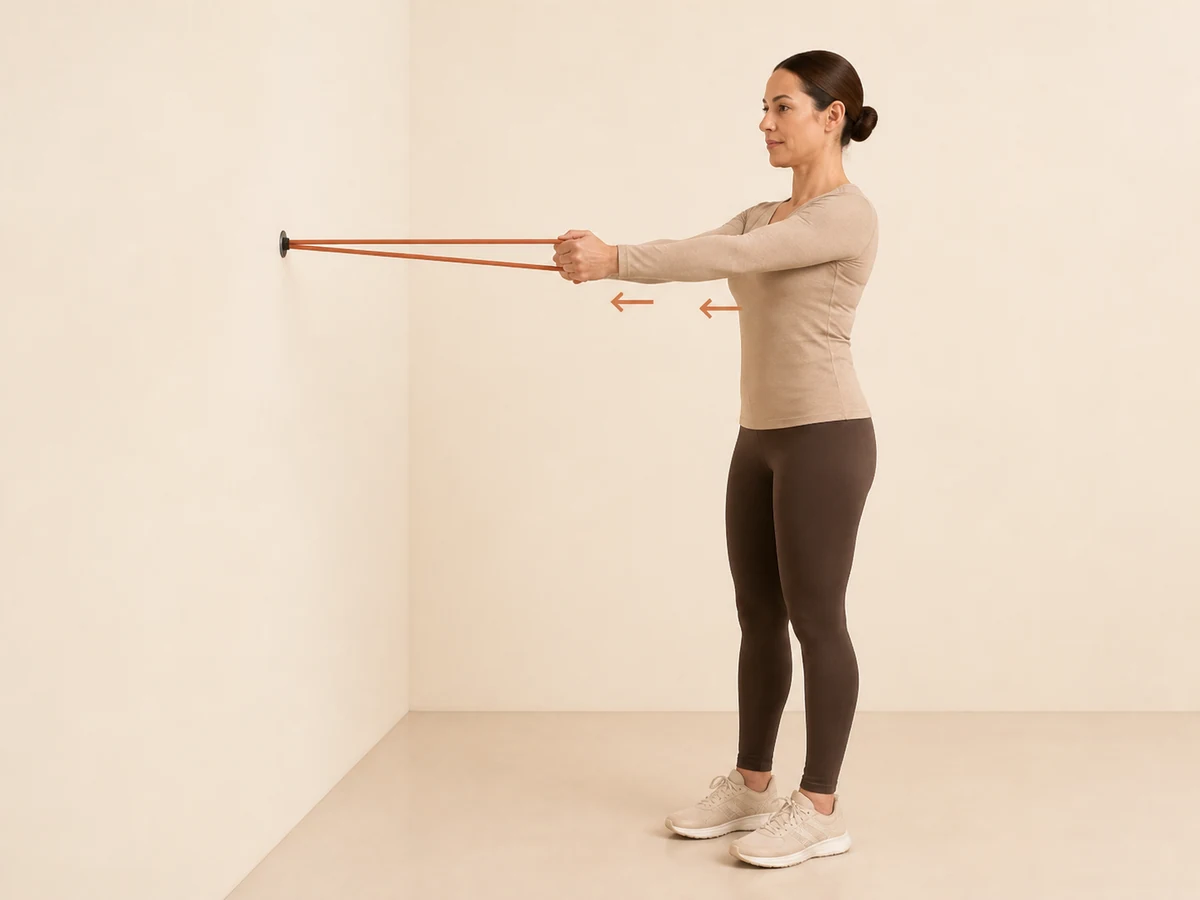
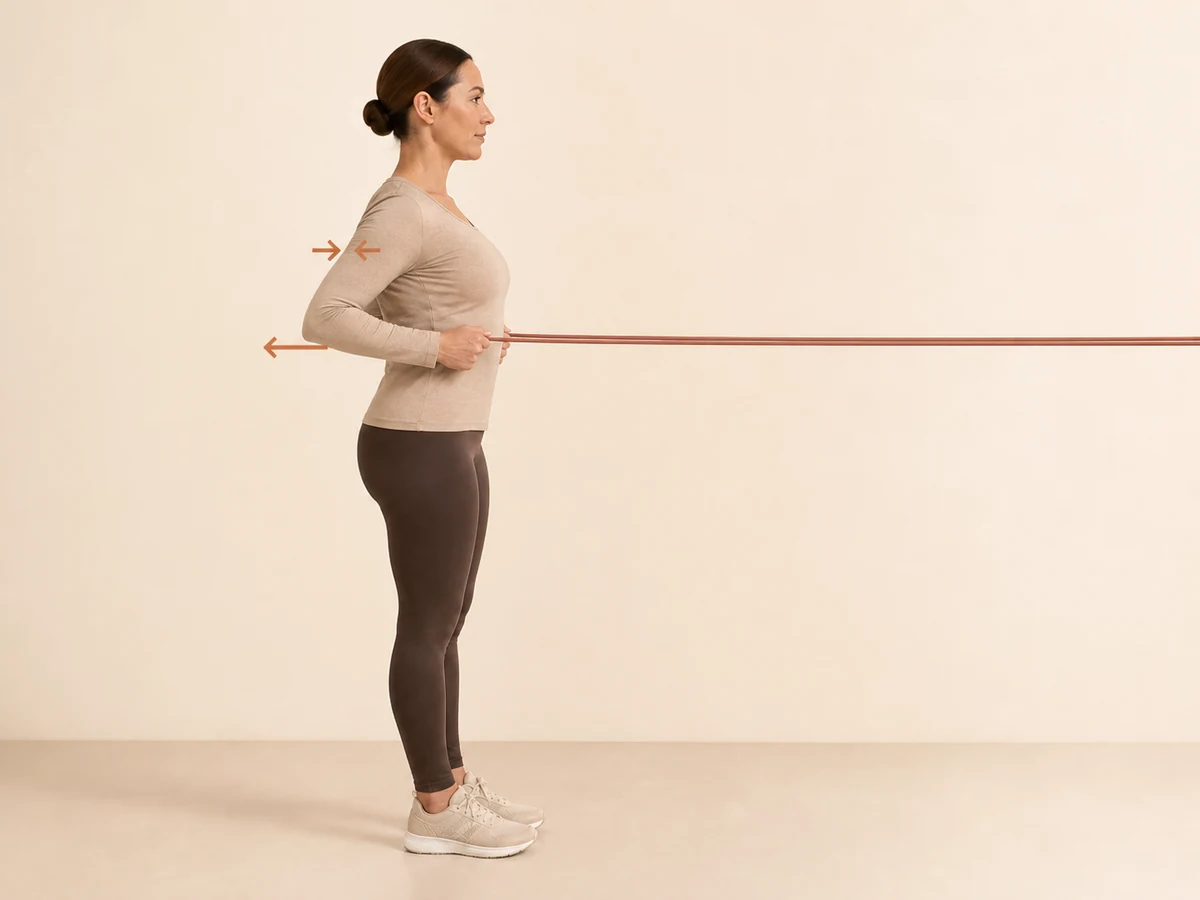
Anchor a resistance band at chest height and row your elbows back past your ribs, drawing the shoulder blades together, then return slowly. Stronger muscles between the shoulder blades handle a long day with less aching.
12–15 reps/2 roundsBreathe slowly through the stretches. The ribs move with every breath, and a few full breaths in the extension and side bend help the mid-back loosen.
How to fit it into a desk day
- Get up every 30 to 45 minutes. Walk, reach overhead and do a thoracic extension before you sit back down.
- Bring the work to you. A screen at eye level and a keyboard close enough that you do not reach take load off the upper back. See our guide to desk setup.
- Switch sides when you carry. Bags, children and grocery loads on the same side every day tire one side of the upper back.
- Use heat for the ache. Fifteen to twenty minutes of warmth on the sore area eases tight muscles.
Why massage alone does not keep it away
Rubbing the sore spot feels good and can ease it for a day. But the muscles between the shoulder blades are usually sore because they are tired, not because they are tight for no reason. Until they get stronger and the mid-back moves more, the ache comes back on the same schedule.
That is why the routine above includes rows and back extensions, not only stretches. Strength is what lets the upper back handle a long day.
When upper back pain needs a doctor
Get an assessment if the pain is not easing after two to three weeks, keeps coming back, or wakes you at night. See a physician promptly for upper back pain with fever, unexplained weight loss, a history of cancer, or after a fall, and for back pain that started after a minor bump or lift in someone with thin bones (osteoporosis), which can be a small fracture.
Call 911 for upper back pain with chest pain, pressure or tightness, shortness of breath, sweating or nausea. Heart attack pain can spread to the back, arms, neck and jaw, according to the NHS. Sudden, severe tearing pain in the upper back is also an emergency.
We are at 5285 State Route N, Suite 102, minutes from St. Peters, O’Fallon and Wentzville, with free parking at the door.
What a visit here looks like
Dr. Andersen starts by finding which structure is complaining: she checks how your mid-back and ribs move, presses on the muscles and joints on each side, and screens the neck and shoulders, since they often send pain to the upper back. If anything points away from muscles and joints, we send you to your physician first.
Care usually pairs precision spinal adjustments for stiff mid-back and rib joints with Pin & Stretch or Cupping & Scraping for tired muscles, and a progressed version of this routine. A strained muscle often settles in a few days to a couple of weeks; pain that has built for months usually takes a few weeks of care and exercise, and how quickly varies from person to person.
Book an assessment and get your mid-back moving again.
Frequently asked questions
- What causes upper and middle back pain?
- Usually muscle strain and fatigue from long sitting or a new activity, stiff joints in the mid-back, a rib joint that is not moving well, or pain sent down from the neck. Less often it comes from organs such as the heart or gallbladder, which is why pain that does not change with movement should be checked.
- How do I relieve upper back pain?
- Move it and strengthen it: thoracic extensions over a chair, a doorway chest opener, side bends, prone back extensions and band rows, done daily. Get up every 30 to 45 minutes, bring your screen to eye level, and use heat for the ache. Give it two to three weeks.
- When should I worry about upper back pain?
- Call 911 for upper back pain with chest pain or pressure, shortness of breath, sweating or nausea, or for sudden, severe tearing pain. See a physician for pain with fever, weight loss, a history of cancer, after a fall, or after a minor bump in someone with osteoporosis.
- Why does my upper back hurt on the right side?
- Most often a muscle or rib joint on that side doing more work, from a mouse hand, a bag on one shoulder or sleeping on that side. Pain under the right shoulder blade after fatty meals can come from the gallbladder, so pain that does not change with movement or breathing is worth checking with a doctor.