Calf strain: how to treat a pulled calf muscle and get back to running.
It feels like a kick to the back of the leg, then a limp. Most calf strains heal well with a few days of protection and gradual strength work. Here is the home plan, the clot signs to rule out, and realistic timelines.
Related guide Sports & running injuries

A calf strain is a tear in the fibers of the calf muscles, usually from a sudden push-off, felt as a sharp pain like a kick to the back of the leg. Most heal with two or three days of protection, then gradual calf-strengthening, over one to eight weeks depending on the grade. A swollen, warm, red calf without a clear injury can be a blood clot and needs same-day medical care.
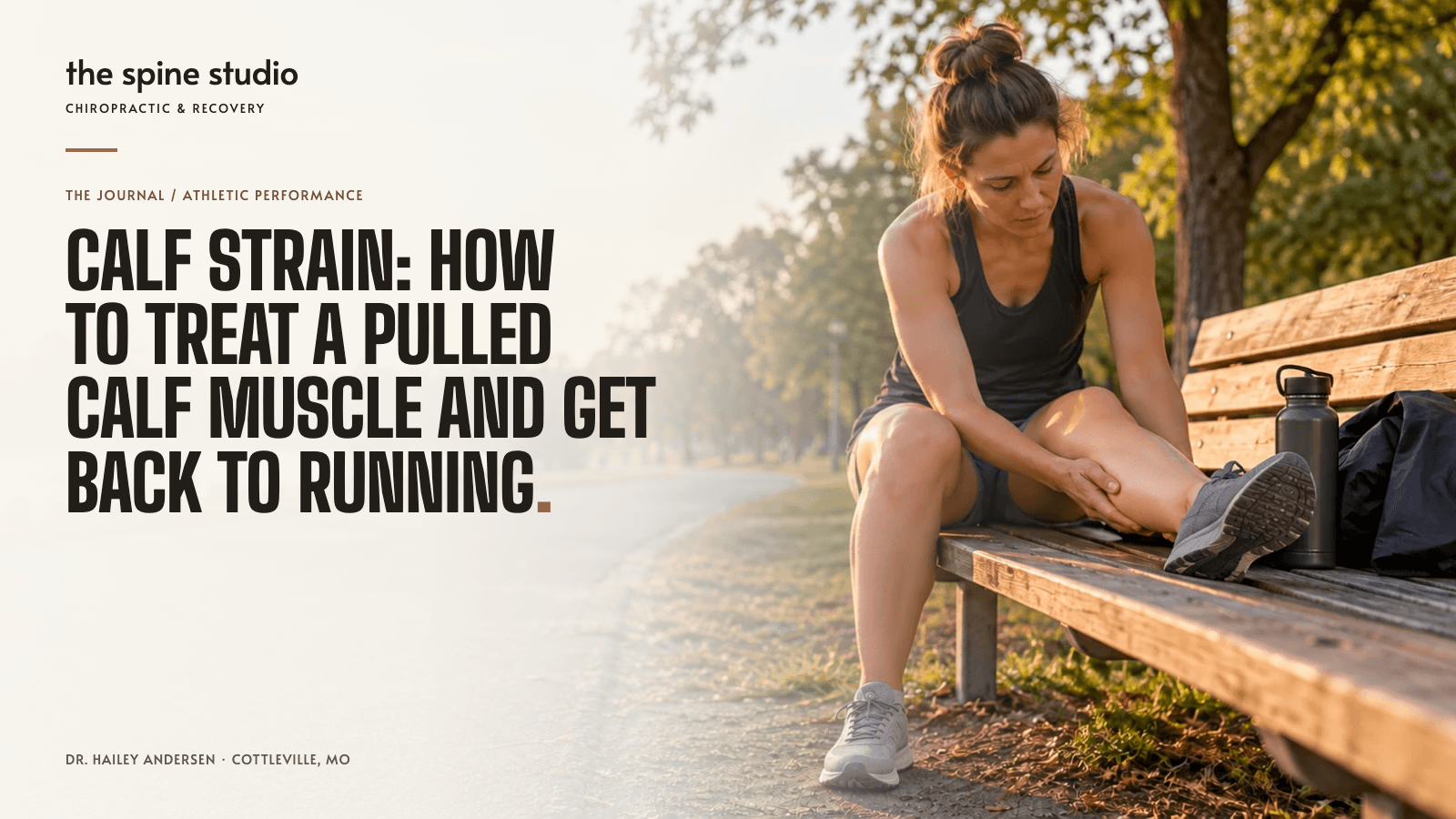
A pulled calf muscle often starts with a moment people describe the same way: it felt like someone hit or kicked the back of my leg. It happens on a quick push-off at the net, a sprint to first base, or a hill late in a run. Then comes a limp, a sore, tight calf and the question of how long it will take.
Here is the short version: most calf strains heal well with a few days of protection followed by gradual strength work. The two things worth knowing are how to tell a strain from a blood clot, and why the calf needs rebuilding rather than just rest.
What is a calf strain?
A calf strain, also called a pulled or torn calf muscle, is damage to the fibers of the muscles at the back of the lower leg. Two muscles do most of the work. The gastrocnemius is the bulky upper calf that crosses the knee; the soleus lies underneath and lower down. Both join the Achilles tendon at the heel.
Strains are graded by how much of the muscle is torn:
- Grade 1. A small number of fibers. Tight and sore, but you can walk with little or no limp.
- Grade 2. A partial tear. Sharp pain at the time, a limp, often some swelling or bruising, and calf raises hurt or feel weak.
- Grade 3. A complete or near-complete tear. Severe pain, major weakness, sometimes a visible gap, and walking is very difficult.
The classic sudden tear of the inner upper calf is nicknamed tennis leg, a strain of the inner head of the gastrocnemius. The Cleveland Clinic's calf muscle overview notes that strains are the most common calf injury.
What causes a pulled calf muscle?
- Sudden acceleration. Lunging for a ball, pushing off to sprint, or jumping. This is the typical gastrocnemius strain and the tennis leg pattern.
- Fatigue and volume. Soleus strains tend to build late in long runs or after mileage jumps. They feel lower and deeper, and hurt more with the knee bent.
- Age and history. Calf strains become more common from the late 30s on, and a previous strain is one of the strongest predictors of the next one.
- A cold start. Jumping into a game or sprint without building up, especially on cool mornings.
Our pickleball body maintenance guide covers how court sports load the calves and how to warm up for them.
The calf usually stops hurting before it is ready to sprint. The gap between those two days is where most re-injuries happen.
Calf strain or blood clot? How to tell
This is the look-alike that matters most. A deep vein thrombosis (DVT) is a blood clot in a deep leg vein, and it can cause calf pain and tightness that feels a lot like a strain.
- A strain usually starts at a clear moment of effort, with a sharp pain at that instant, and the tenderness sits in one area of the muscle.
- A clot more often comes on without any injury, with swelling of the calf or whole lower leg, warmth, redness or a darker skin color, and an ache that builds rather than starting suddenly. Long car or plane trips, recent surgery, a leg in a cast, pregnancy, hormone medicines and a past clot raise the risk.
If your calf is swollen, warm and red without a clear injury, get urgent medical care the same day rather than treating it as a strain. Sudden shortness of breath or chest pain with a sore leg means calling 911.
Other look-alikes: a cramp, or charley horse, releases within minutes (see muscle spasms and cramps). A pop at the back of the ankle with trouble rising onto your toes points to the Achilles; our Achilles tendonitis guide covers the signs of a tear.
Calf strain treatment at home
For the first two or three days, protect the muscle. Cut activity enough to walk without a heavy limp, use ice for 10 to 15 minutes at a time, a compression sleeve and elevation, and skip hard stretching or deep massage on the sore spot. A small heel lift in your shoe can take strain off the calf while walking.
Then start reloading. Pain during these exercises should stay mild, and the calf should feel no worse the next day:
Ankle Pumps
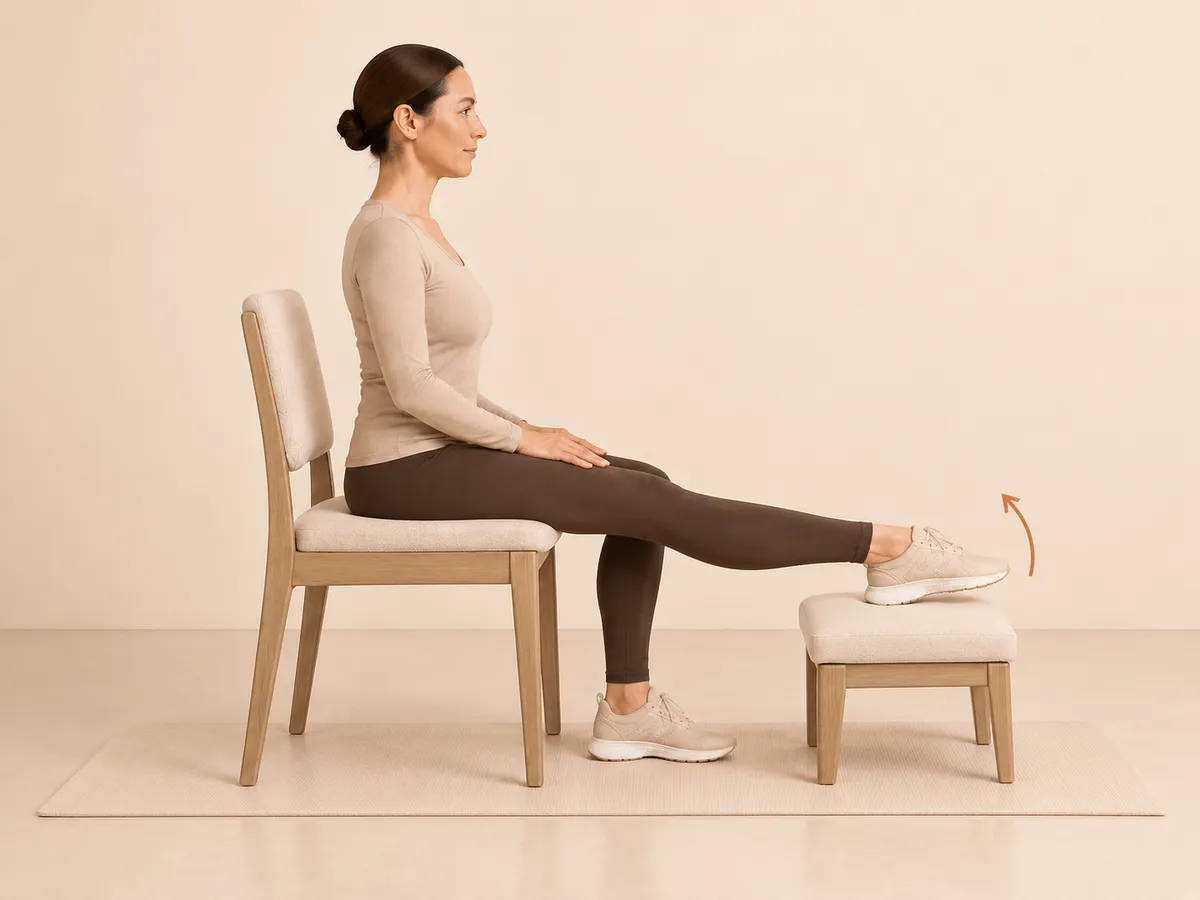
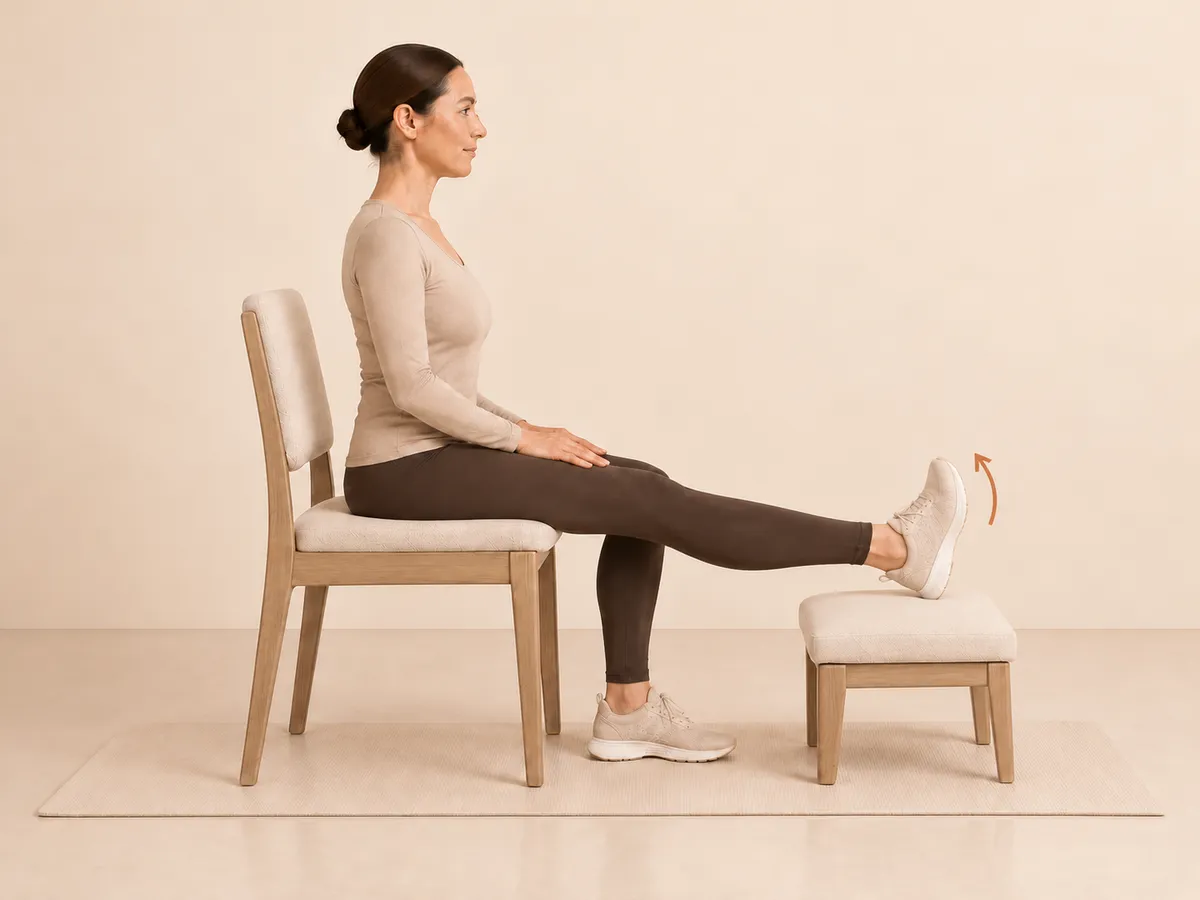
Sit with the heel supported and slowly point the toes away, then pull them back toward the shin. Gentle motion in the first days keeps the calf from stiffening without stretching the injured fibers.
10–15 slow reps, a few times a dayTowel Calf Stretch
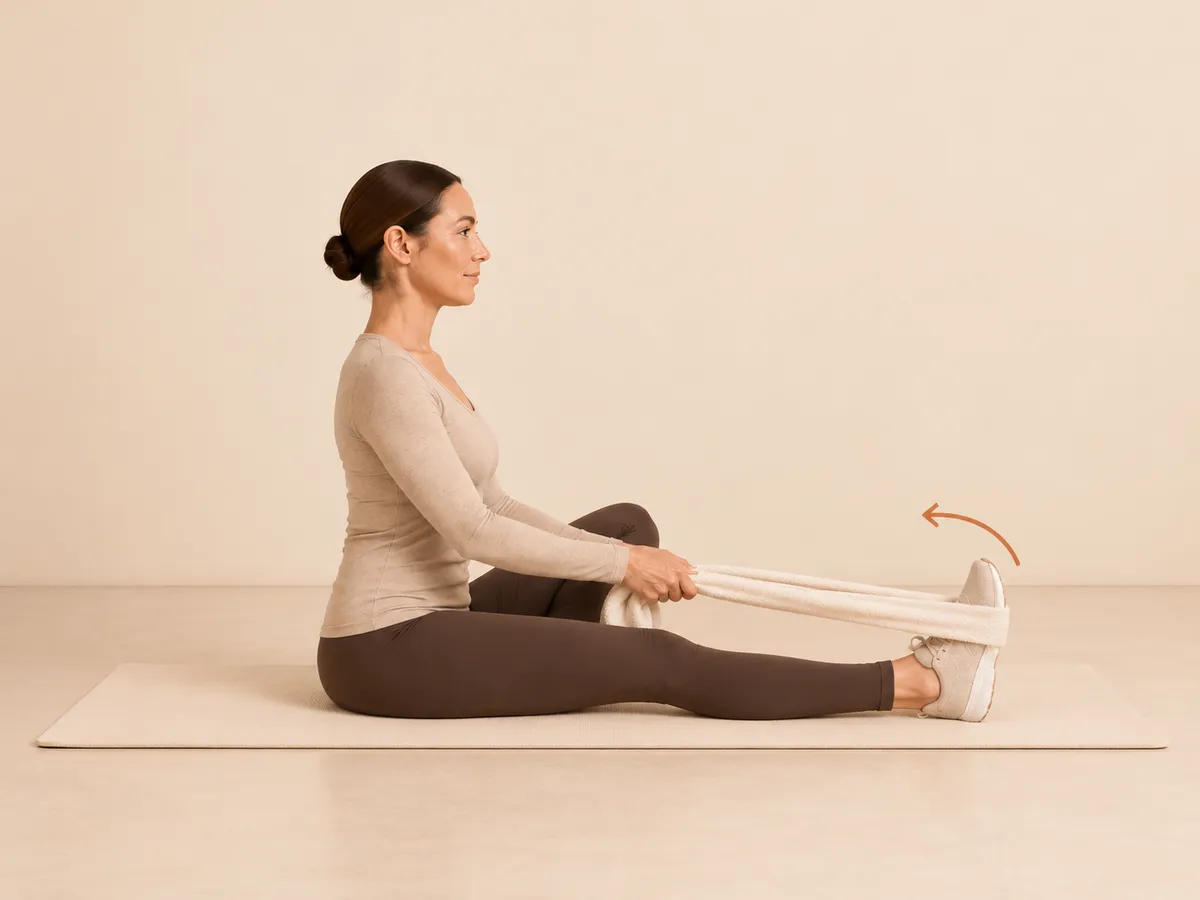
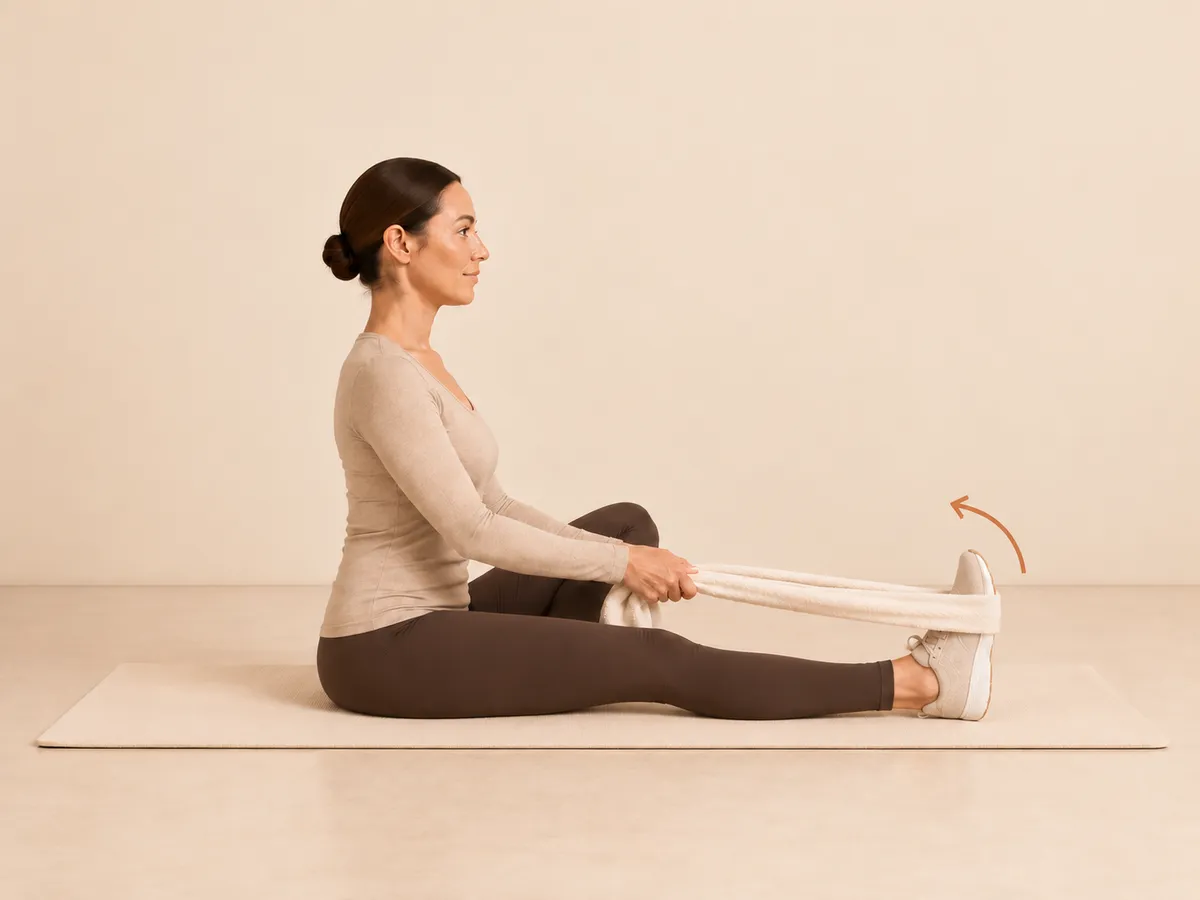
Once walking is comfortable, loop a towel around the ball of the foot and draw the toes toward you until you feel a light pull. It restores range gradually; a mild pull is the target, never a sharp one.
2–3 holds of 20sStraight-Knee Calf Raise
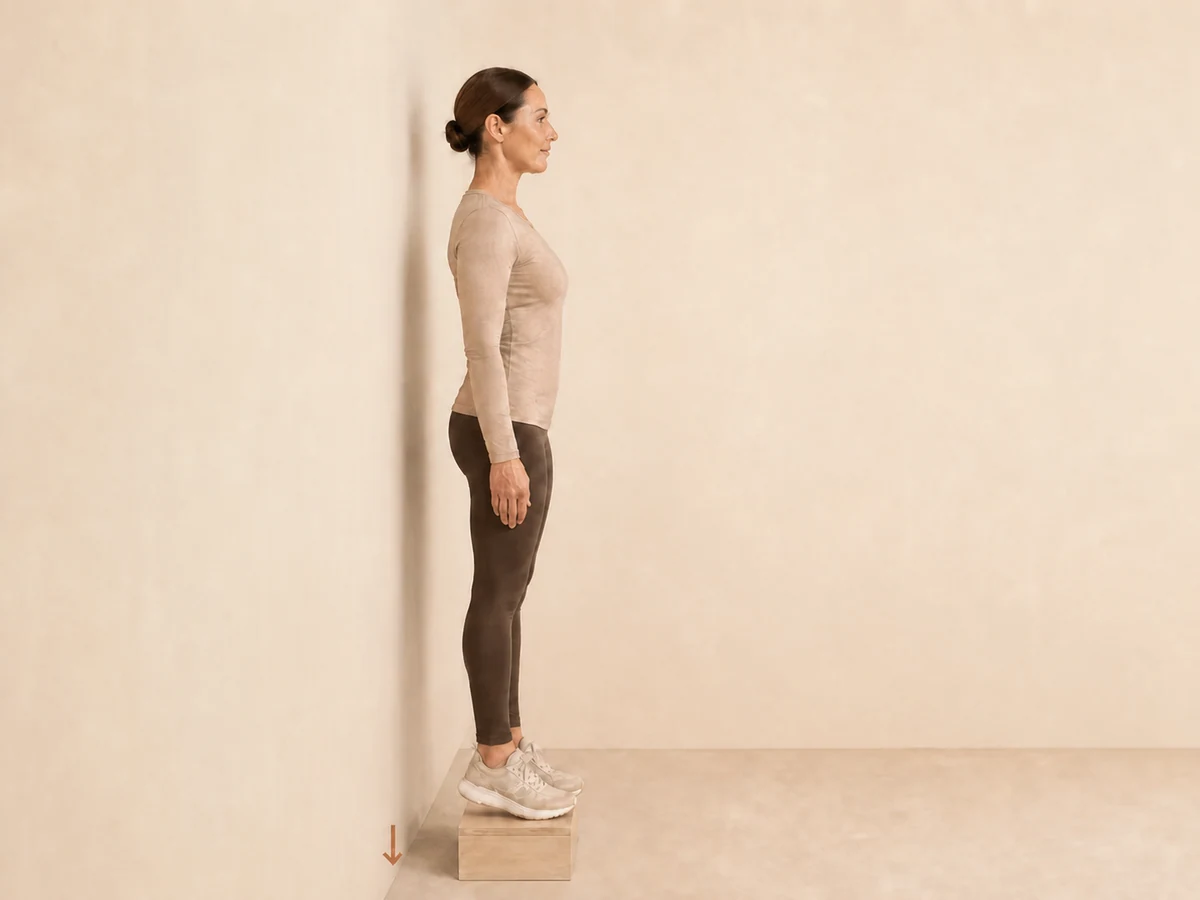
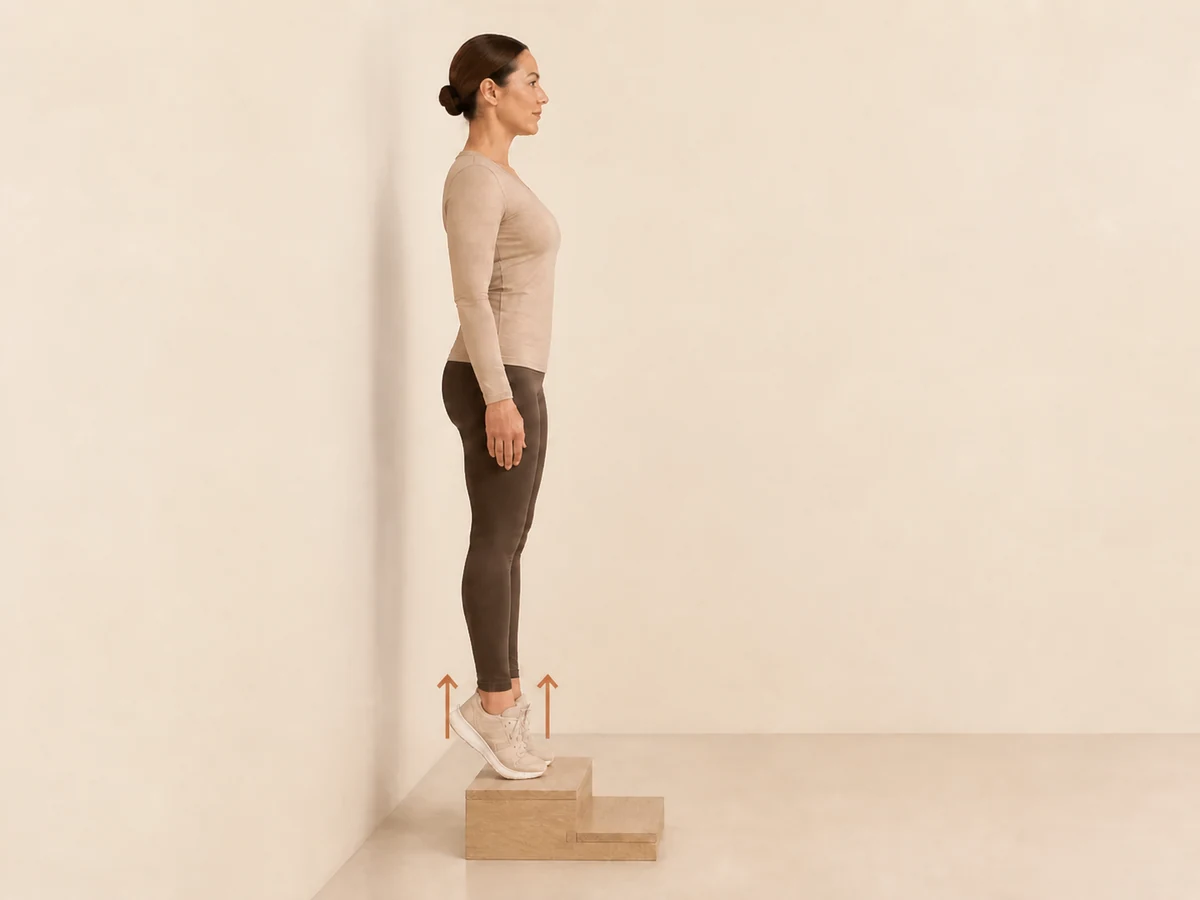
On flat ground with a hand on the wall, rise onto the balls of both feet and lower slowly. The photographed step comes later. It reloads the gastrocnemius, the muscle most often strained in a sudden push-off.
2–3 sets × 10–15Bent-Knee Calf Raise
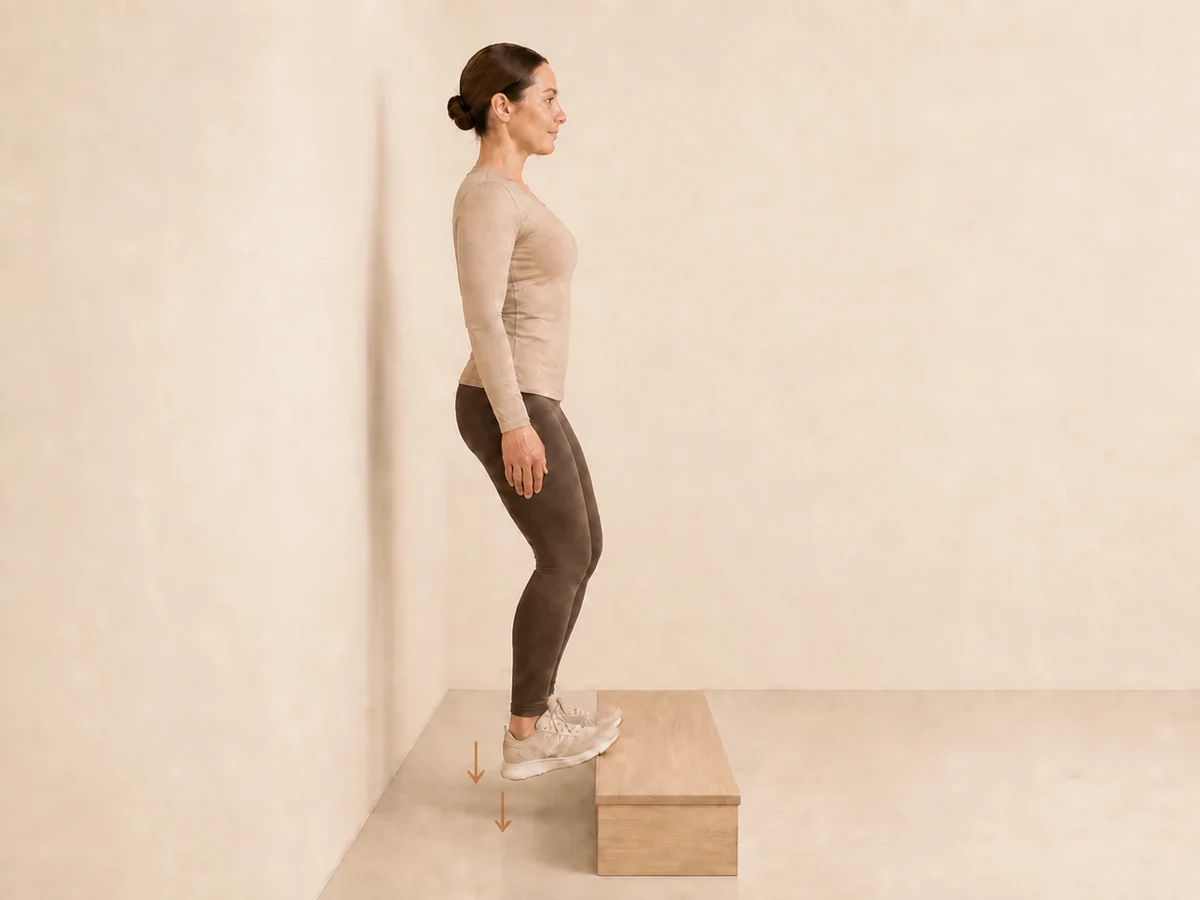
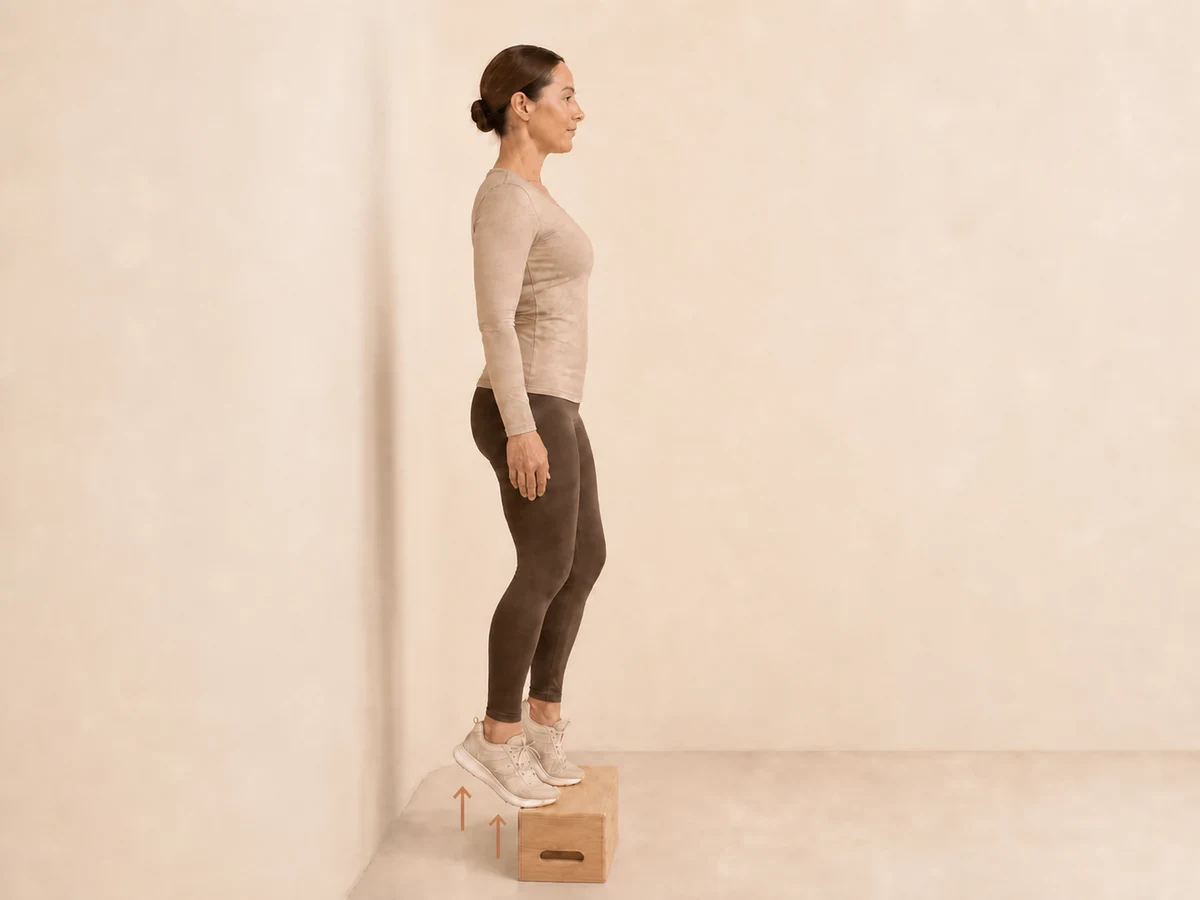
The same slow raise with the knees softly bent, on flat ground first. It targets the deeper soleus, which runners strain more often and which needs its own strength work.
2–3 sets × 10–15Heel Raises on a Step
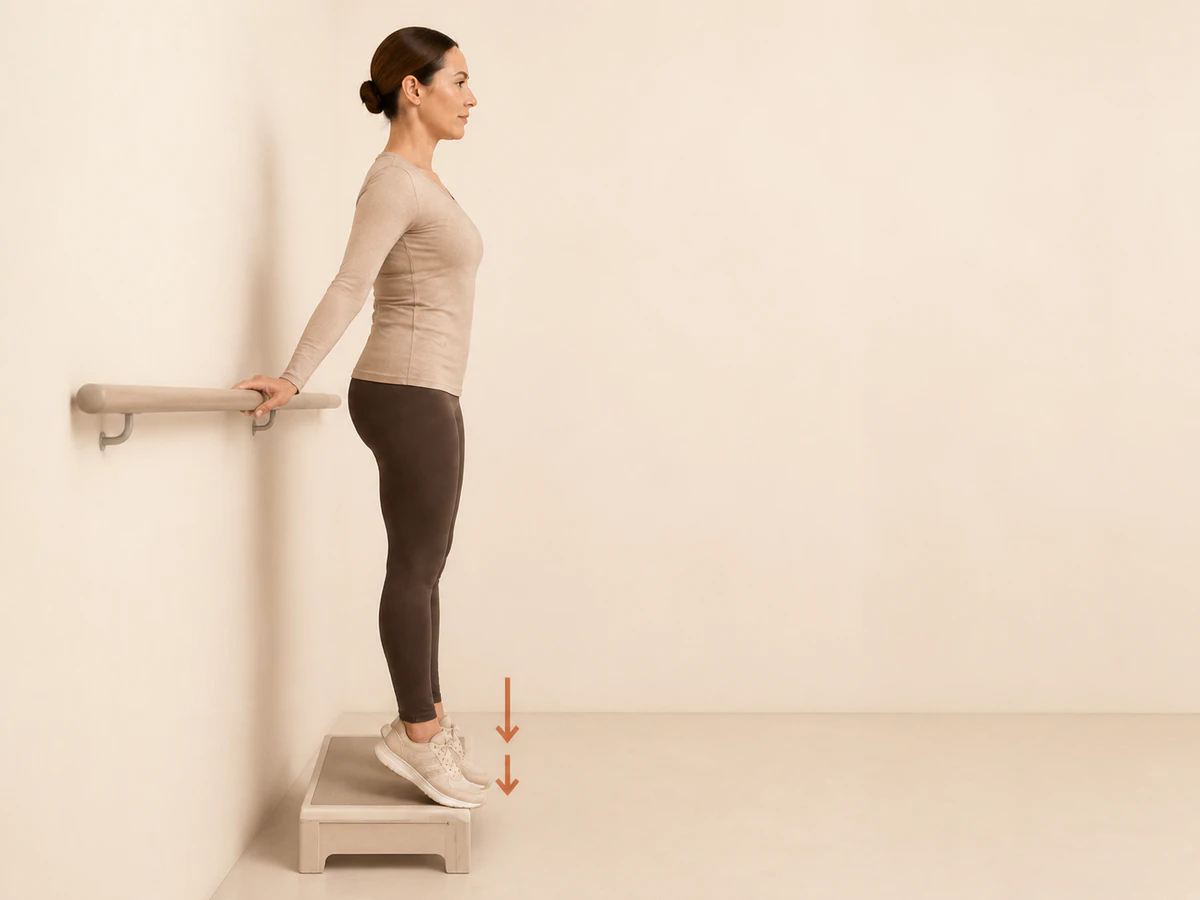
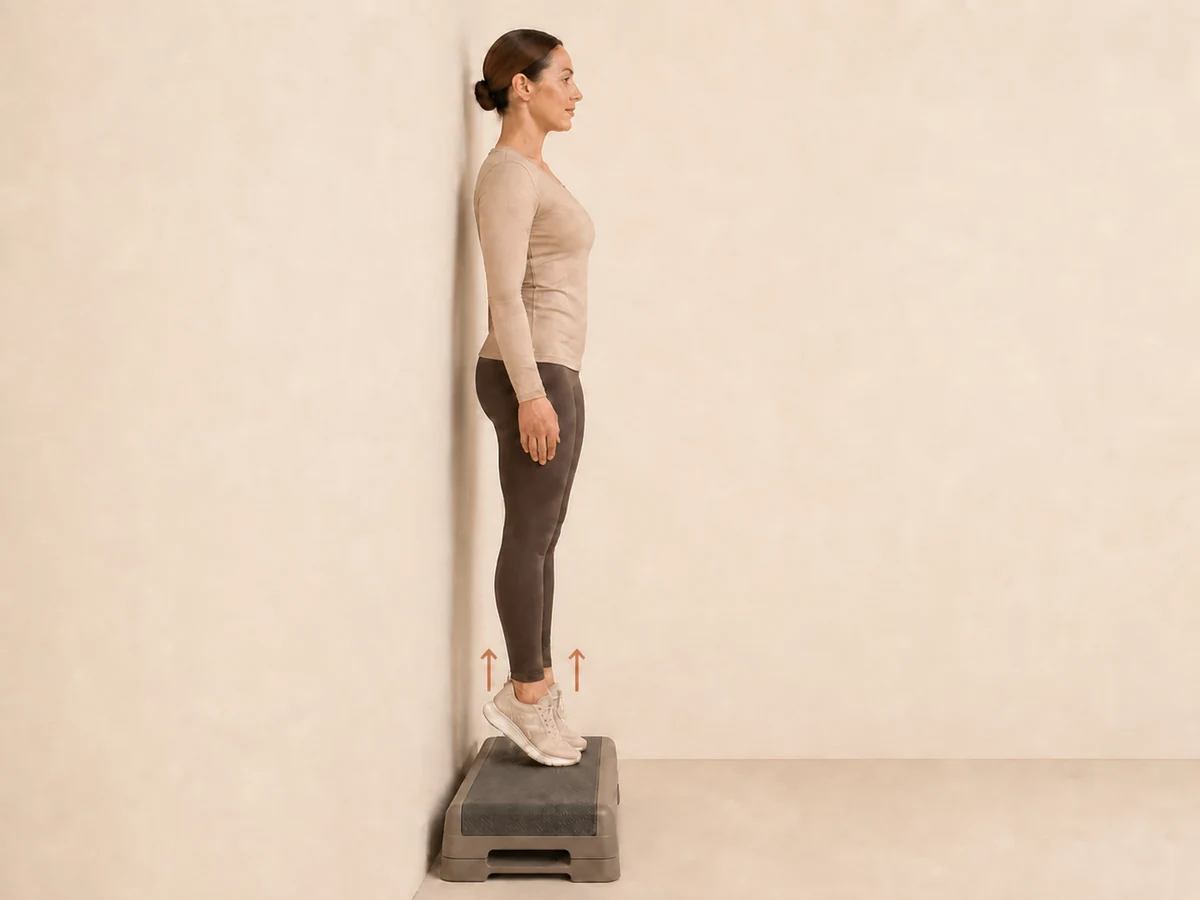
Holding a rail at the edge of a stair, rise up, then lower slowly until the heels dip just below the step. Add it only when flat raises are easy; working toward single-leg raises is what prepares the calf for running and quick push-offs.
3 sets × 10, slow loweringReturn to running starts when you can walk briskly without pain and do single-leg calf raises close to the other side. Begin with short, flat jogs, then add speed, hills and cutting last.
Why rest alone often leads to a second strain
Waiting until the calf stops hurting feels sensible. But pain settles before strength and tolerance for speed come back, and a calf that has spent three weeks unloaded is weaker than the one that got hurt. The first quick push-off can tear it again.
Rebuilding strength through the full range, then practicing the movements of your sport, closes that gap.
When is a calf strain worth getting checked?
It is worth an assessment if you cannot walk without a limp after a few days, if there was a pop with major weakness or a visible dent in the muscle, if the calf keeps re-straining, or if it is not clearly improving after two weeks. Tingling, numbness or pain traveling from the back into the calf points to a nerve and deserves a check too.
What a visit here looks like
Dr. Andersen asks how and when it happened, checks where the muscle is tender, and tests strength and range with the knee straight and bent to separate the two calf muscles. She screens for signs of a clot, an Achilles tear or a nerve source, and refers to a physician when any appear.
For a straightforward strain, treatment can include Pin & Stretch and Cupping & Scraping once the acute phase has passed, adjustments where the ankle or foot is stiff, and a staged loading plan. All of that is part of a follow-up visit, with return-to-run steps built around your sport.
How long does a calf strain take to heal?
A mild grade 1 strain often settles in one to three weeks. A grade 2 tear commonly takes four to eight weeks, and a severe tear can take several months. How quickly varies from person to person, and soleus strains often take longer to return to running than their mild symptoms suggest.
Quick push-offs at the net make pickleball, at the Rec-Plex or the Cottleville Community Center, a common setting for tennis leg, especially after 40. If yours happened at the net, tell us the shot; it helps us build the return around it.
Rebuild the calf properly before the next push-off.
Frequently asked questions
- How long does a pulled calf muscle take to heal?
- A mild strain often settles in one to three weeks, a partial tear in four to eight weeks, and a severe tear can take several months. Soleus strains, the deeper lower calf muscle, often take longer to return to running than their mild symptoms suggest. How quickly varies from person to person.
- Should I walk on a pulled calf muscle?
- Yes, as much as you comfortably can without a heavy limp. For the first two or three days, cut back activity, use ice, compression and elevation, and a small heel lift if it helps. Gentle movement such as ankle pumps keeps the calf from stiffening. If you cannot bear weight at all, get it checked.
- How do I know if my calf pain is a blood clot?
- A strain usually starts at a clear moment of effort with a sharp pain. A clot more often appears without an injury, with swelling of the calf or lower leg, warmth, redness and a building ache, especially after long travel, surgery or time in a cast. A swollen, warm, red calf needs same-day medical care, and shortness of breath or chest pain means calling 911.
- What is tennis leg?
- Tennis leg is the nickname for a sudden strain of the inner upper calf, the medial head of the gastrocnemius. It typically happens on a quick push-off in tennis, pickleball or running, most often in players from their late 30s on, and feels like being hit in the back of the leg.