Achilles tendonitis: why it lingers and what actually helps.
Stiff first steps, a tendon that warms up and then aches all evening. Achilles tendonitis needs the right load, not just rest. Here is how to tell the type, the calf routine that helps, and the signs of a tear.
Related guide Sports & running injuries

Achilles tendonitis is an overloaded, painful Achilles tendon, usually from a jump in running or activity, felt as stiffness on the first steps and an ache after exercise. Most cases improve over 6 to 12 weeks with reduced aggravating load and slow calf-strengthening work, not complete rest. A sudden pop with trouble pushing off can be a tear and needs a physician the same day.

Achilles tendonitis usually announces itself on the first steps out of bed. The back of the ankle is stiff and sore, it loosens up as you walk, and by the next run it feels almost fine, until the evening, when it aches again.
Here is the short version: a sore Achilles tendon needs the right amount of load, not complete rest. Calm the activity that flares it, build the calf back up with slow strength work, and know the few signs that point to a tear instead.
What is Achilles tendonitis?
The Achilles is the thick cord at the back of your ankle that joins the calf muscles to the heel bone. It takes several times your body weight with every running stride. When the load you put through it outpaces its ability to recover, the tendon gets painful, stiff and sometimes visibly thickened. Most people call that Achilles tendonitis; clinicians increasingly use the term Achilles tendinopathy, because in longer-standing cases the problem is a disorganized, overloaded tendon more than ongoing inflammation.
Where it hurts matters, because the two types are handled differently:
- Mid-portion. Pain and tenderness a few centimeters above the heel, in the cord itself, sometimes with a tender, thickened spot you can pinch. This is the more common type, especially in runners.
- Insertional. Pain right where the tendon attaches to the back of the heel bone, sometimes with a bony bump or spur. Deep stretches and heel drops off a step press the tendon against the bone and often make this type worse.
The Mayo Clinic overview of Achilles tendinitis describes both and the usual symptoms: morning stiffness, pain that builds after activity, and tenderness when you squeeze the tendon.
What causes a sore Achilles tendon?
The usual story is a change in load that came on faster than the tendon could adapt:
- Too much, too soon. A jump in weekly mileage, a new race block, or adding hills and speed work in the same few weeks.
- A calf that tires early. When the calf muscles lack strength or endurance, the tendon takes more of each stride. Tight calves and stiff ankles add to it.
- Sport and footwear changes. A new pickleball or tennis league, a switch to flatter or much lighter shoes, or a summer of running on hard surfaces.
- Age and health factors. It is most common from the 30s on. Certain antibiotics, the fluoroquinolones, are linked to tendon problems; if Achilles pain started while taking one, tell your prescriber.
A sore Achilles is rarely asking for rest. It is asking for a calf strong enough to share the load.
Achilles tendonitis or a torn Achilles?
Tendonitis builds over days or weeks. A rupture, a torn Achilles, is sudden: a pop or snap, and a feeling as if someone kicked or hit the back of your ankle. Afterward it is hard to push off, walk normally or rise onto your toes on that side. Pain can be surprisingly mild, so a tear is easy to miss.
Other look-alikes are worth ruling out. Pain under the heel and into the arch is more often plantar fasciitis. Pain at the back of the heel in a growing child between about 8 and 14 is usually Sever's, covered in our guide to Osgood-Schlatter and Sever's. A strain higher in the meat of the calf is a different injury again, covered in pulled calf muscle.
Achilles tendonitis exercises and home care
For the first couple of weeks, the aim is to settle the tendon without letting it decondition. A practical rule: pain during exercise up to about 3 out of 10 is acceptable, as long as the tendon is no stiffer the next morning. Morning stiffness that climbs means the day before was too much.
- Trim the aggravating load. Cut running volume by about a third, drop hills and speed work, and keep fitness with cycling or the pool.
- Do the calf routine below. Once a day, most days. The strength moves matter more than the stretches.
- Use a small heel lift for insertional pain. A gel heel cup or a shoe with a bit more heel takes compression off the attachment while it settles.
Towel Calf Stretch
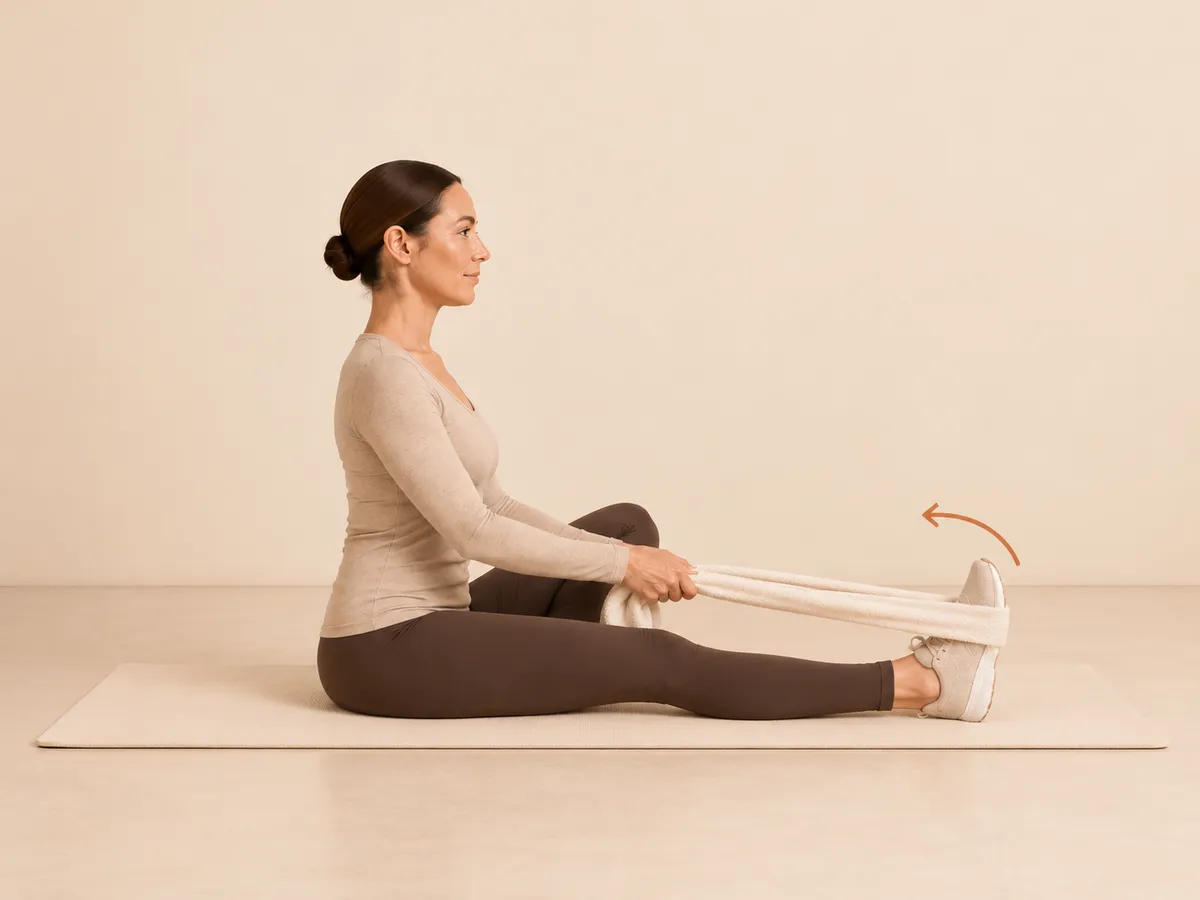
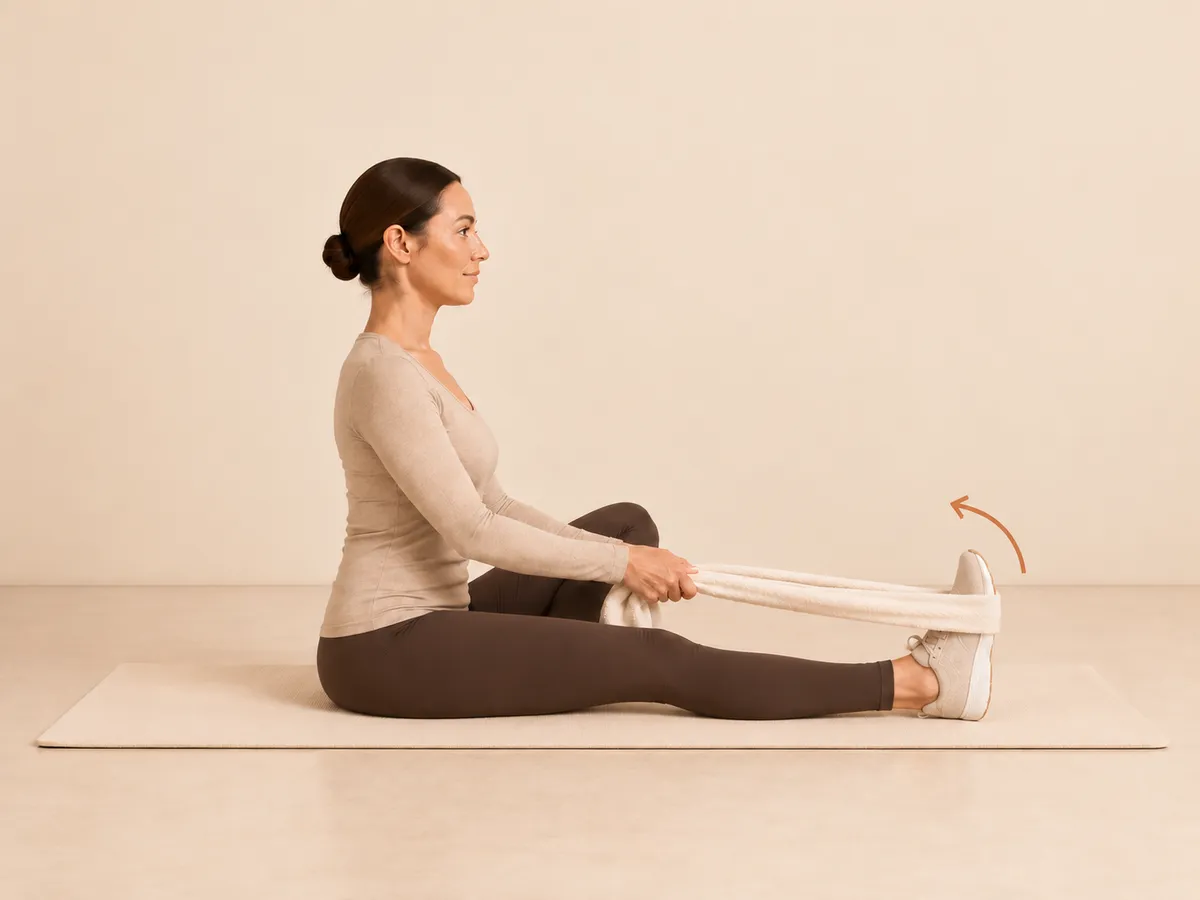
Sit with the leg straight, loop a towel around the ball of the foot and draw the toes gently toward you, holding a light pull in the calf. It eases morning stiffness; with pain right at the heel bone, keep the pull very light.
2–3 holds of 20sWall Calf Stretch
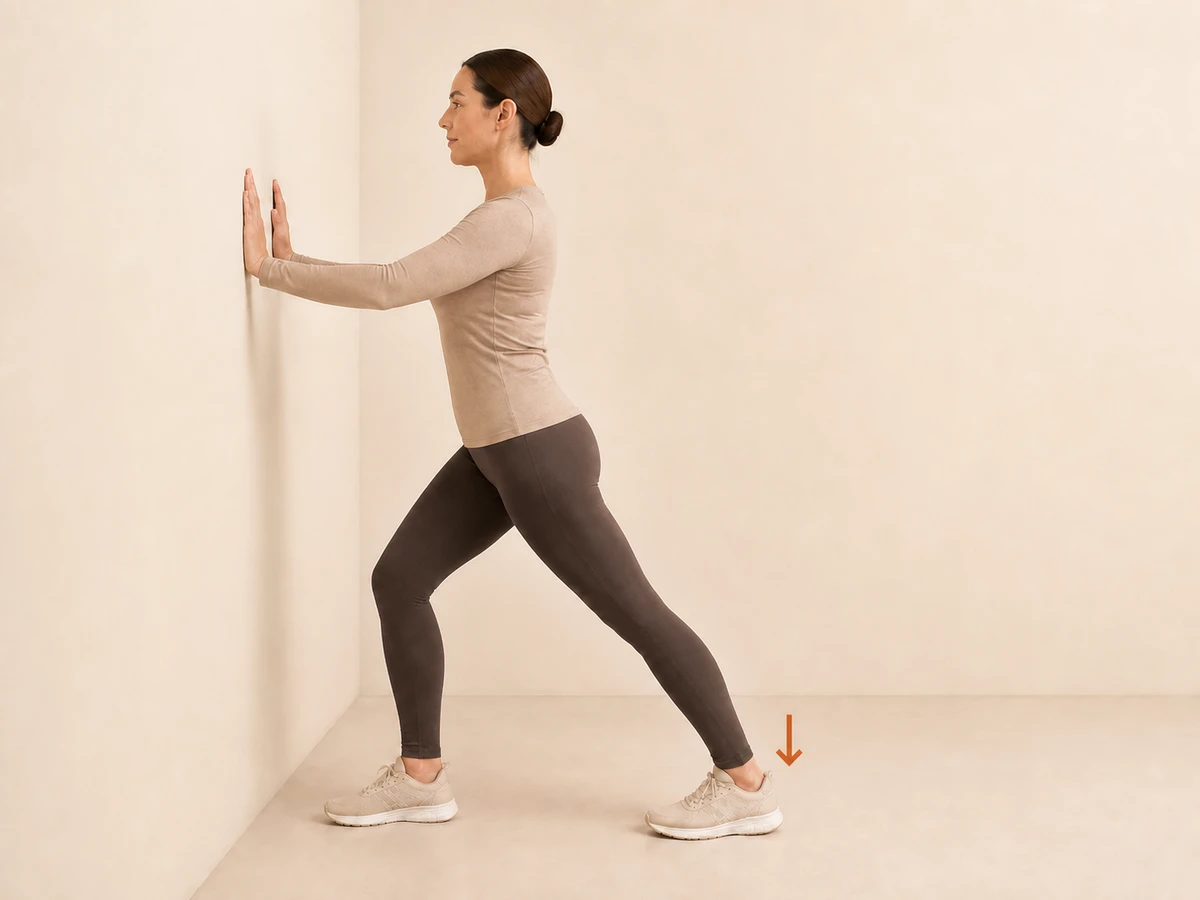
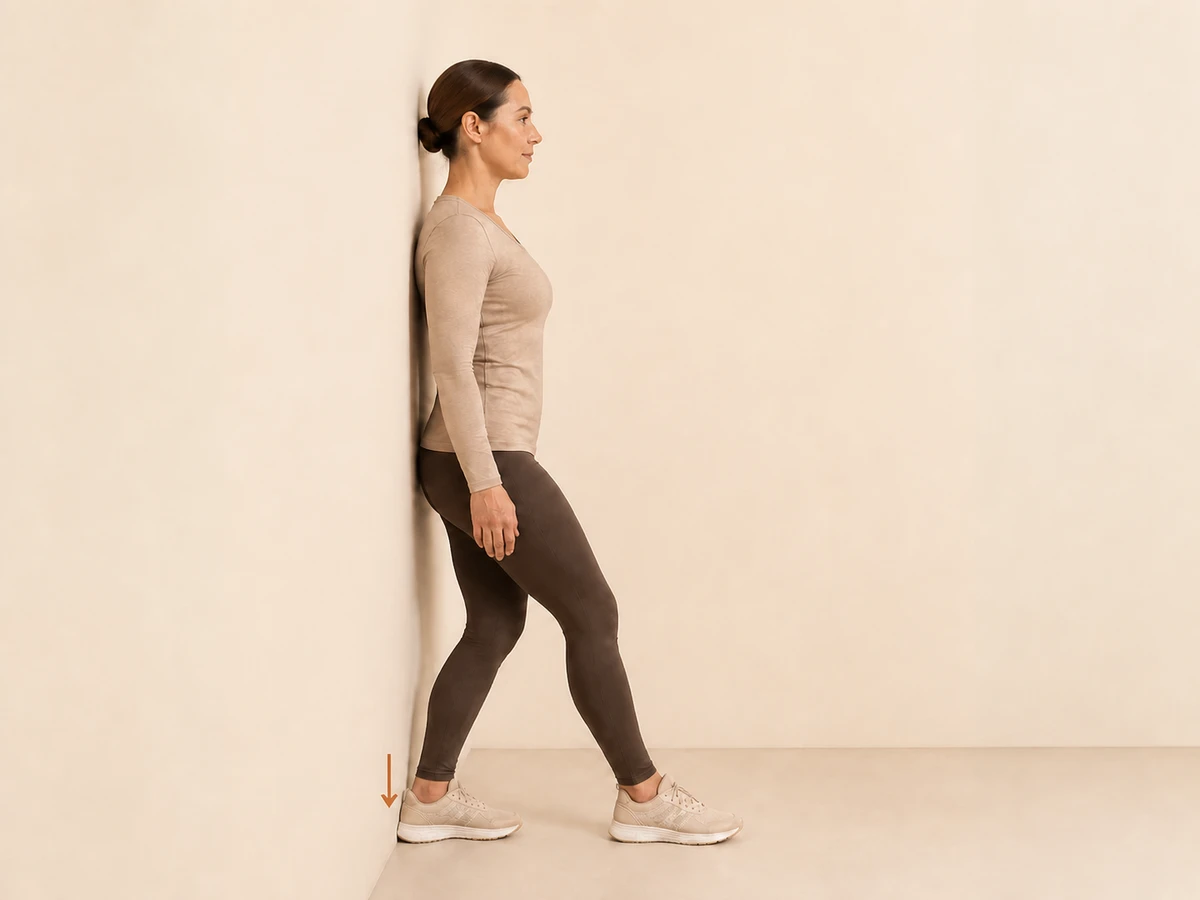
Hands on the wall, sore leg back with the heel down and the knee straight, then repeat with the knee slightly bent. It keeps both calf muscles moving; stop short of any sharp pull.
30s each, knee straight and bentStraight-Knee Calf Raise
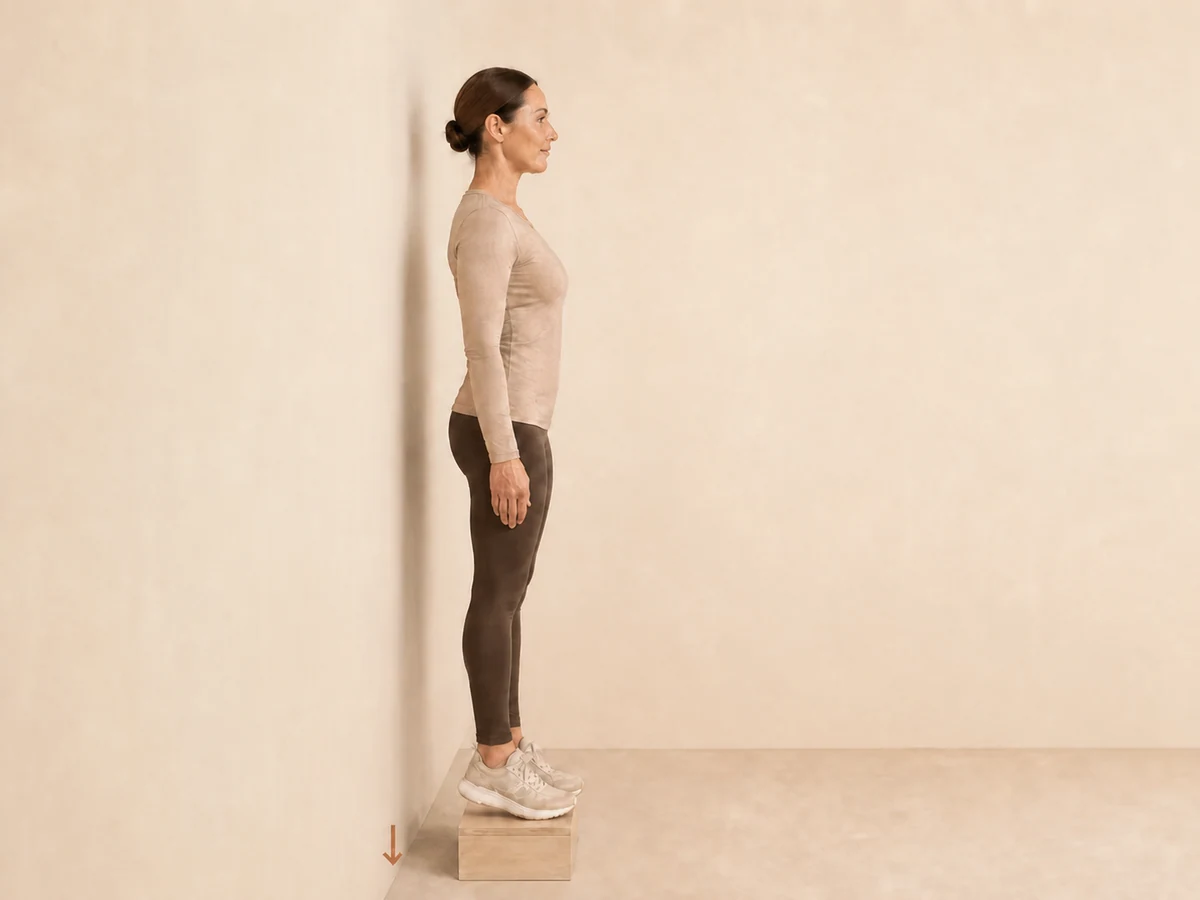
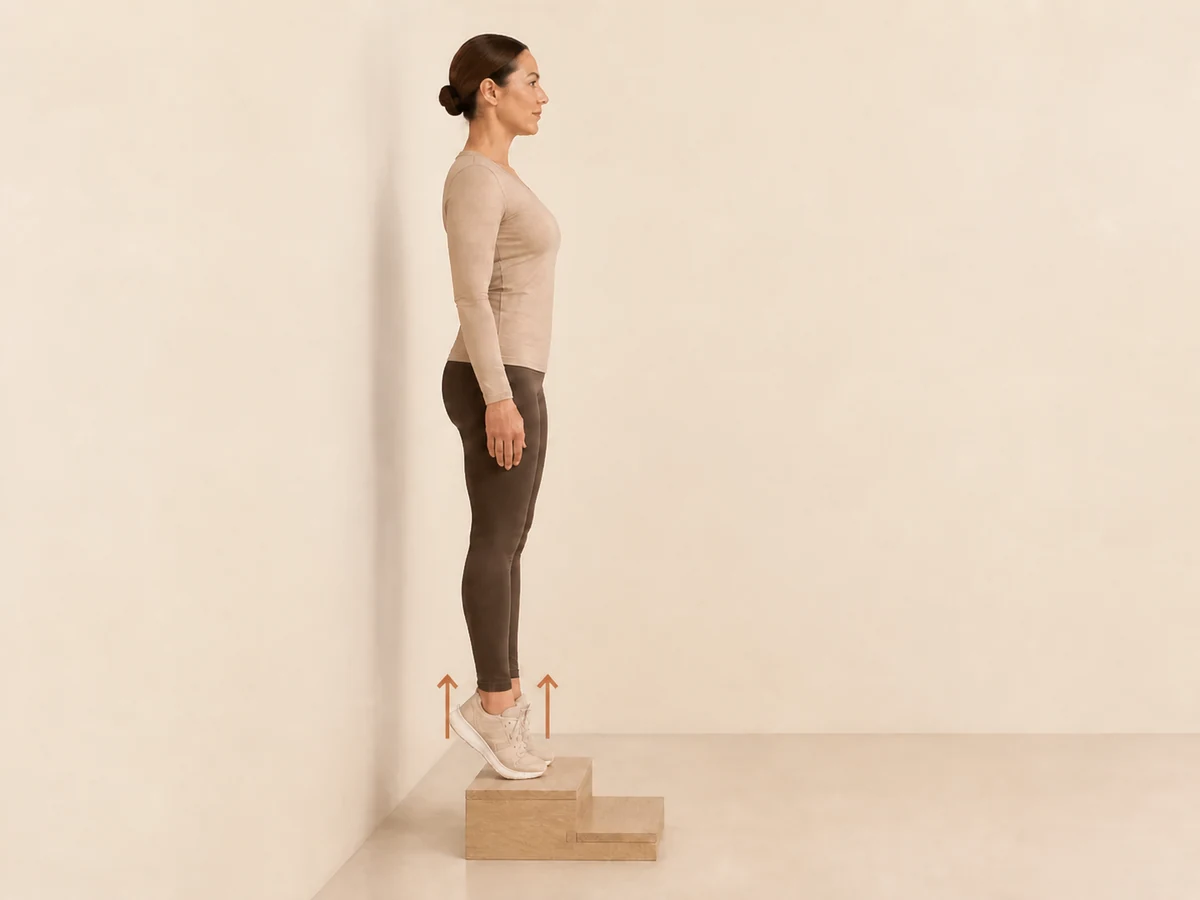
Rise onto the balls of both feet and lower slowly, keeping the knees straight and a hand on the wall for balance. Start on flat ground; the photographed step is a later progression for mid-portion pain only. It loads the main calf muscle and the tendon.
3 sets × 12–15, slowBent-Knee Calf Raise
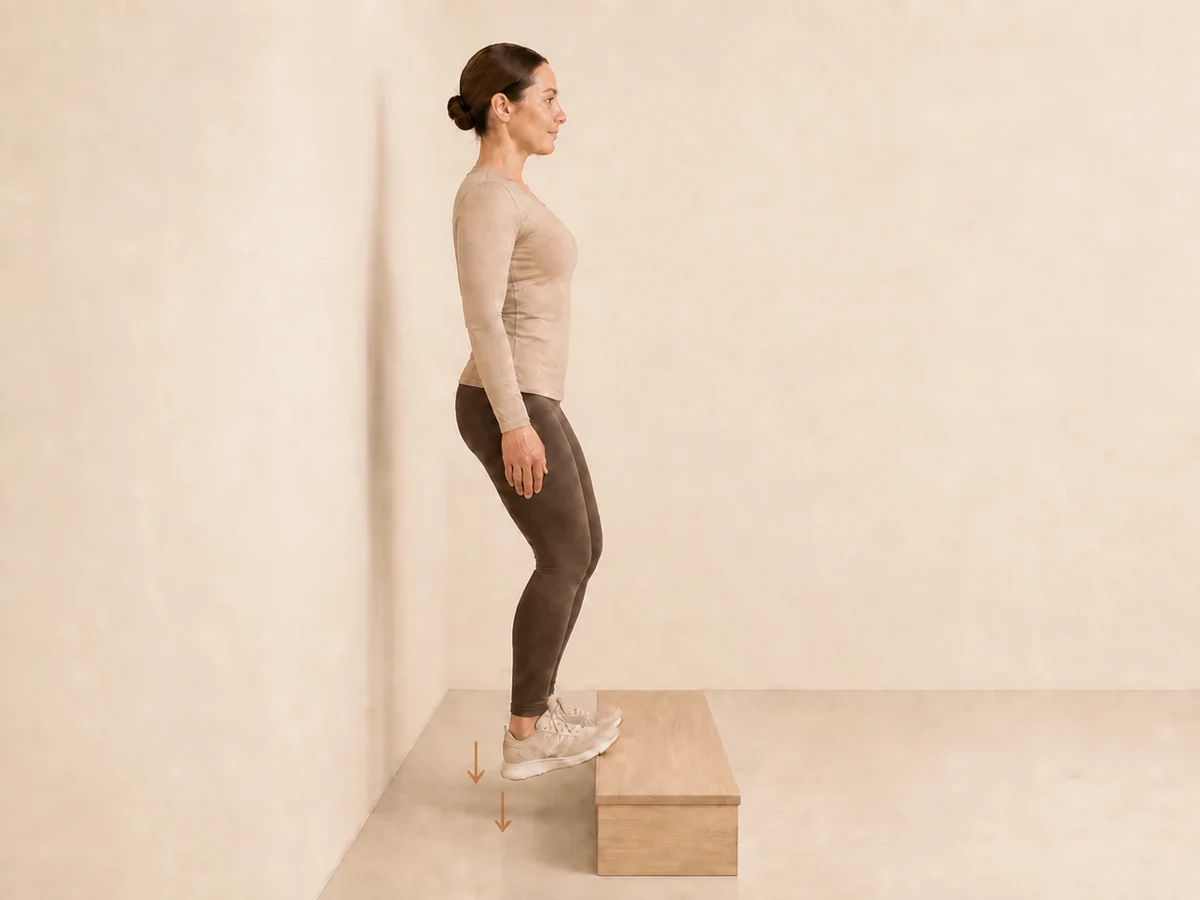
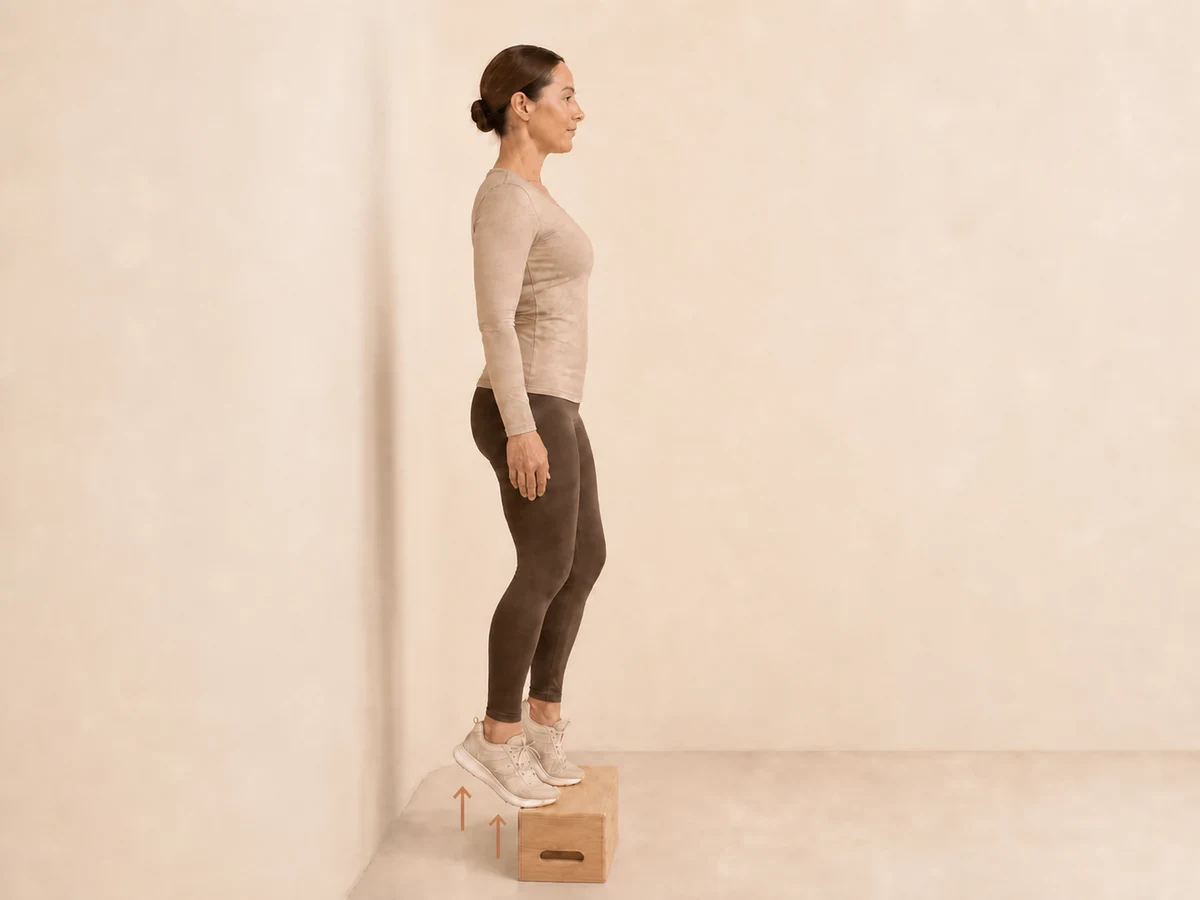
The same slow raise with the knees softly bent throughout, again starting on flat ground. Bending the knee shifts the work to the deeper soleus, which carries much of the running load.
3 sets × 12–15, slowHeel Drops off a Step
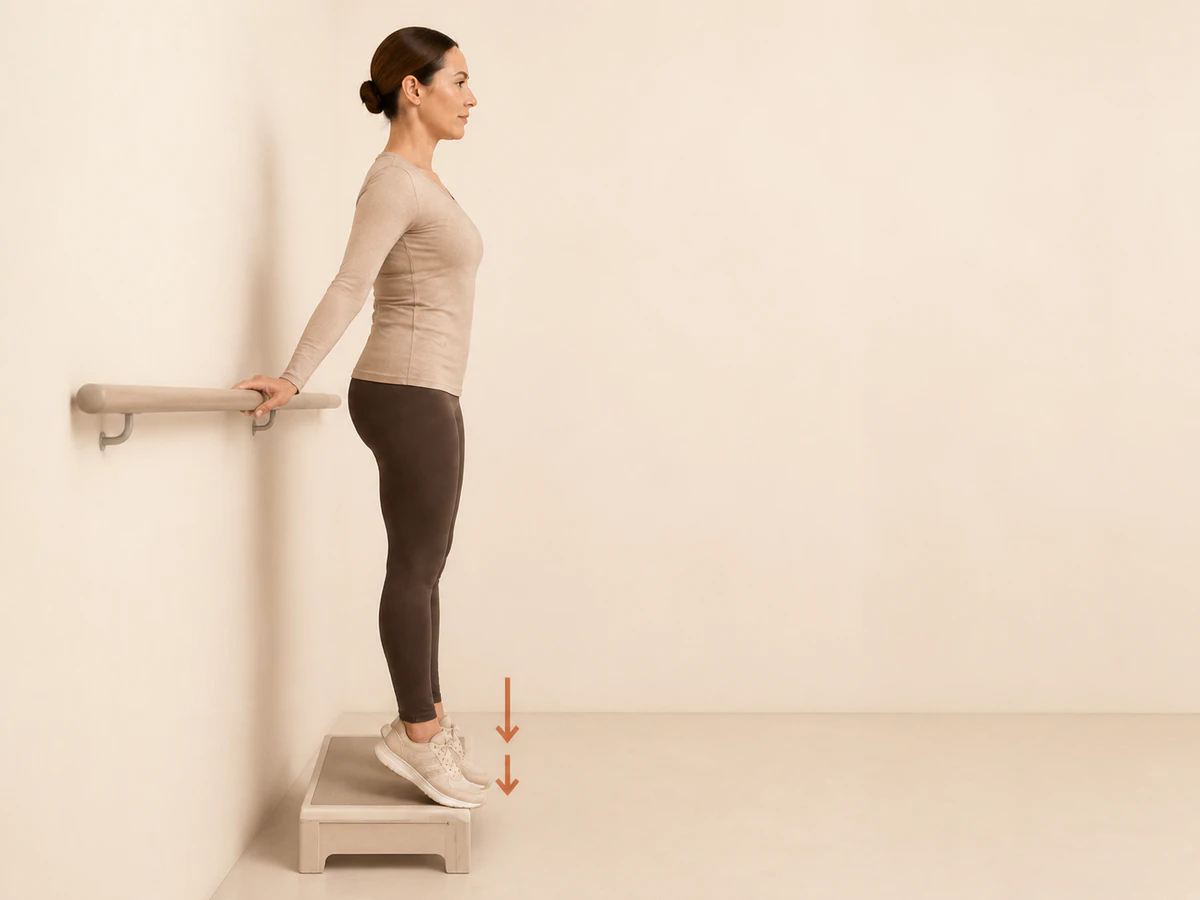
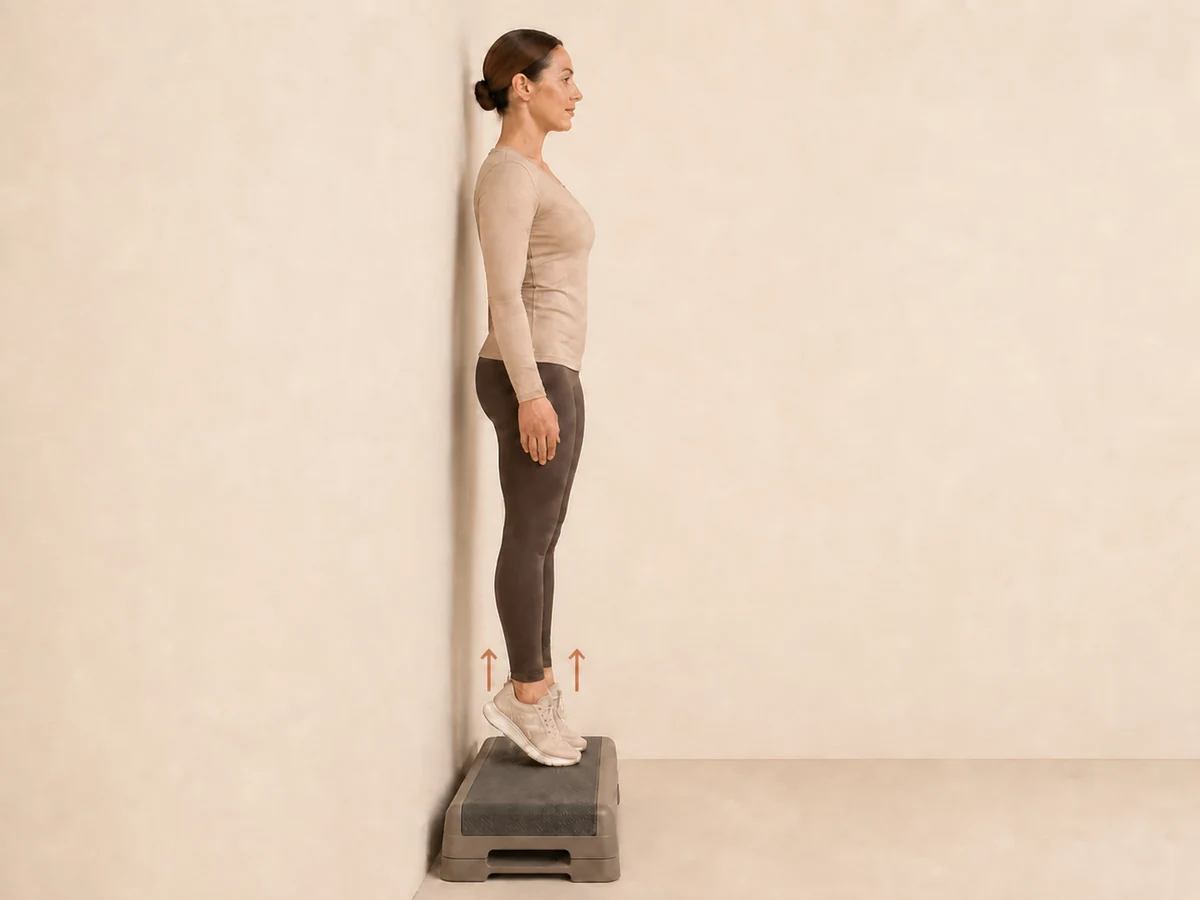
Holding a rail, rise on both feet at the edge of a stair, then lower slowly on the sore side until the heel dips below the step. It is the progression for mid-portion pain once flat raises feel easy; skip it if the pain sits at the heel bone.
3 sets × 10–15, 3s downProgress one thing at a time: more reps, then a light backpack, then the step. Stop if the pain turns sharp or the tendon swells.
Why rest alone does not fix Achilles tendonitis
A week off does quiet the pain. But a tendon adapts to the load it gets: rested for weeks, it loses capacity, and the first normal run back hits a weaker tendon than the one that got sore.
Aggressive stretching has the opposite problem, especially at the heel bone, where it adds compression. Slow, heavy calf work is the approach with the most support, because it is what rebuilds the tendon's tolerance for load.
When should a sore Achilles be checked?
It is worth an assessment if the pain is not easing after two to three weeks of the steps above, if it hurts at rest, if the tendon looks swollen or lumpy, or if it flares every time you build your running back up.
Get urgent medical care for:
- A sudden pop, snap or kicked feeling at the back of the ankle, followed by trouble pushing off or rising onto your toes. That can be a rupture, which needs a physician the same day.
- A calf that is swollen, warm, red and tender, especially without a clear injury or after a long trip or surgery. That can be a blood clot (DVT), and shortness of breath or chest pain alongside it means calling 911.
What a visit here looks like
A first visit is a 40-minute assessment. Dr. Andersen asks how your training or activity changed, finds exactly where the tendon is sore, and checks that it is intact with a simple calf squeeze test. She compares single-leg heel raises side to side, then checks ankle mobility, the foot, and how the hip controls the leg as you land.
Treatment can start the same visit. Depending on the findings, it can include Pin & Stretch and Cupping & Scraping for the calf, adjustments where the ankle or foot joints are stiff, and a loading plan matched to your type as part of corrective exercise programming. For a tendon that has stalled for months, she will talk through whether shockwave for stubborn Achilles pain fits; it is offered as a $375 three-session package.
How long does Achilles tendonitis take to heal?
With consistent loading, many people notice real improvement over 6 to 12 weeks. Insertional cases and tendons that have been sore for many months often take longer, sometimes three to six months. How quickly varies from person to person.
Pain usually eases before the tendon's strength fully returns, which is why the calf work continues after you are back to normal activity. Keeping it going two or three times a week makes the next mileage build less likely to restart the cycle.
Fall race blocks on the Katy Trail and pickleball leagues at the Rec-Plex start many of the Achilles flares we see. Bring a rough log of your last month of running or play; it shows where the load jumped.
Get your Achilles assessed and leave with a loading plan that fits.
Frequently asked questions
- What is the fastest way to heal Achilles tendonitis?
- Reduce the activity that flares it without stopping completely, and start slow calf raises with the knee straight and bent, most days. Pain up to about 3 out of 10 during exercise is acceptable if the tendon is no stiffer the next morning. A small heel lift helps when the pain sits right at the heel bone. Most people improve over 6 to 12 weeks.
- Why does my Achilles hurt in the morning?
- Morning stiffness is the classic sign of an irritated Achilles tendon. The tendon stiffens overnight and loosens as you walk. How stiff it is the next morning is also a useful gauge: if it is worse after a run, that run was too much for the tendon right now.
- Can you run with Achilles tendonitis?
- Often, yes, at a reduced volume. Drop hills and speed work, cut weekly distance by about a third, and keep pain during the run mild. If the next morning is no worse than usual, the dose is about right. If you felt a pop or cannot rise onto your toes, do not run; get it checked the same day.
- How do I know if I tore my Achilles?
- A tear usually comes with a sudden pop or snap and a feeling like being kicked in the back of the ankle. Afterward it is hard to push off, walk normally or stand on your toes on that side, and pain can be surprisingly mild. That needs a physician the same day. Tendonitis, by contrast, builds gradually over days or weeks.