Hip flexor pain: pulled, tight, or something else?
A sharp grab at the front of the hip mid-sprint and a hip that feels locked after a day of sitting are both called hip flexor pain. They need different handling. Here is how to tell, and a routine that helps.
Related guide Sports & running injuries

Hip flexor pain is usually either a strain, a sudden pull at the front of the hip during a sprint or kick, or tightness from long hours of sitting. A strain needs a few calm days and then gradual strength work rather than hard stretching. Tightness responds to moving more often, a hip flexor stretch and stronger glutes. A pop with weakness or a hip you cannot bear weight on needs a physician.

Hip flexor pain usually shows up in one of two ways. Either something grabbed at the front of your hip during a sprint, a kick or a hard stride and now it hurts to lift your knee, or the front of the hip just feels tight and achy after a long day of sitting. People search both as tight hip flexors, sore hip flexors or a pulled hip flexor, and they need different handling.
Here is the short version: a true strain needs a few days of calming down and then gradual strength work, not hard stretching. Ordinary tightness from sitting responds to moving more often, a sensible stretch and stronger glutes. A few front-of-hip problems only look like the hip flexors, and those are worth knowing about.
What are the hip flexors, and where is the psoas?
The hip flexors are the muscles that lift your knee toward your chest and pull your trunk forward when you sit up. The main one is the iliopsoas, really two muscles: the psoas, which starts on the lower spine, and the iliacus, which lines the inside of the pelvis. Both cross the front of the hip to the top of the thighbone, helped by the front thigh muscle (rectus femoris).
Because the psoas attaches to the lumbar spine, a cranky psoas can be felt as a deep ache in the groin, the front of the hip or occasionally the low back. That shared attachment is also why tight hip flexors and back pain so often get mentioned together.
Pulled hip flexor or just tight?
- A strain. A sudden sharp pain at the front of the hip during a sprint, kick, skating stride or quick change of direction, sometimes with a pulling feeling. Afterward it hurts to lift the knee, climb stairs or get into a car, and there may be tenderness, bruising or a limp. Cleveland Clinic grades these from mild (grade 1) to a full tear (grade 3).
- Tightness. No moment of injury. The front of the hip feels stiff when you first stand after sitting, eases as you walk, and lifting the leg against resistance does not hurt. Long hours in a chair or a car keep the hip bent, and many people feel that as tightness on standing.
One honest caveat: the link between tight hip flexors and back pain is weaker than social media suggests. Sitting does not simply shorten the muscle for good, and the forward-tipped pelvis often blamed on it is usually normal, as our guide to anterior pelvic tilt explains. What usually helps is giving the hip more movement and more strength, which is what the routine below does.
A tight hip flexor wants movement and a strained one wants patience. Stretching hard through a fresh strain is how a two-week problem becomes a two-month one.
Front of hip pain that is not the hip flexor
- The hip joint itself. A deep pinch in the groin crease when you squat, sit low or bring the knee to the chest, sometimes with clicking or catching, points to the joint or its rim of cartilage (the labrum). Our article on hip impingement covers that pattern.
- A groin strain. Pain on the inner thigh that hurts when you squeeze your knees together is usually the adductors, not the hip flexors. See our guide to a pulled groin.
- A hernia. A bulge in the groin or lower belly, or pain that rises with coughing, lifting or straining, needs a physician to look at it.
- A stress fracture. Deep groin pain in a runner that keeps getting worse with each run, or makes hopping painful, should be seen by a physician within a day or two.
Hip flexor stretches and exercises you can do at home
For a strain, give it two or three days of easy walking and avoid the movement that hurt it, then start the routine at move two and add the stretch once lifting the knee is comfortable. For tightness from sitting, do the whole routine once a day. Stop any move that brings on sharp pain or pain that lingers afterward.
Standing Hip-Flexor Lunge
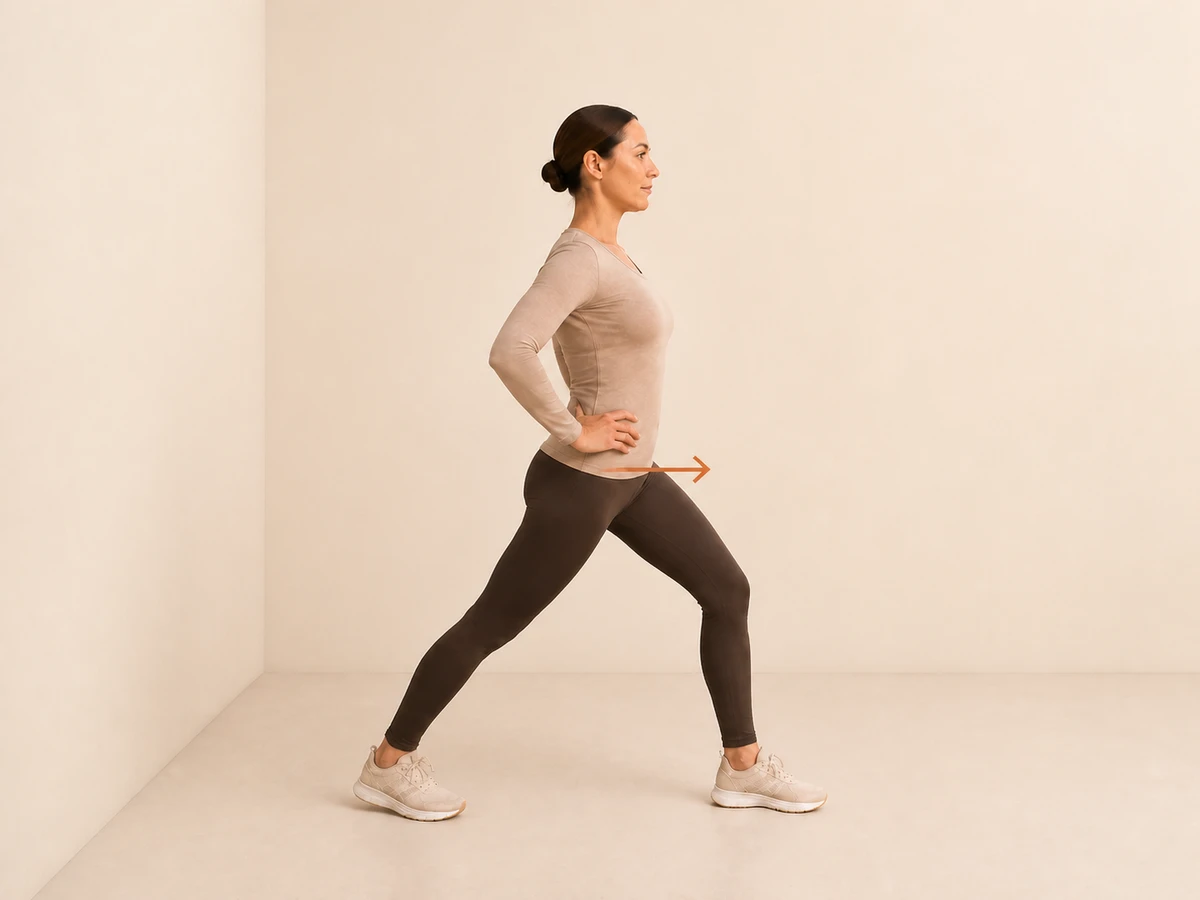
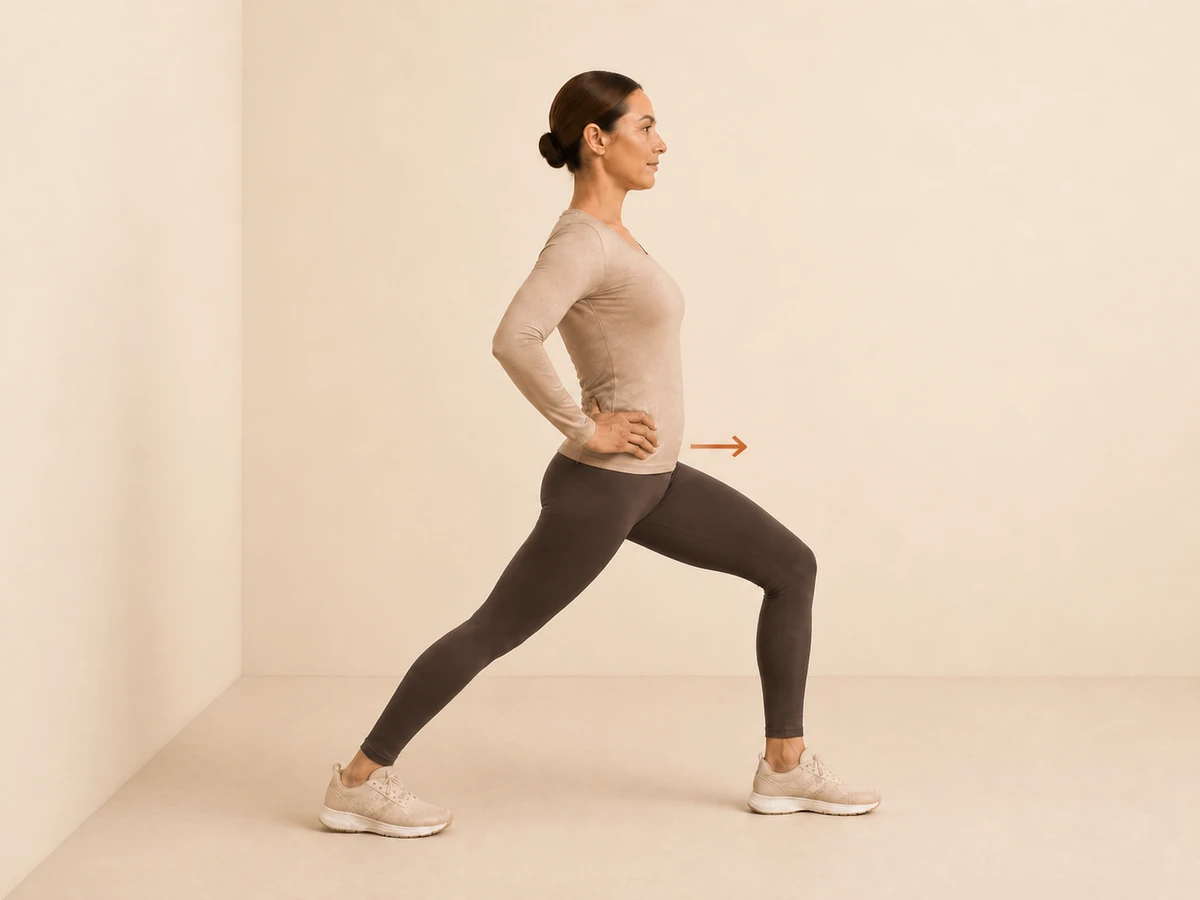
Step one foot back, tuck your tailbone under and shift your hips forward until you feel a gentle stretch across the front of the back hip. Tucking the pelvis first puts the stretch into the hip flexor instead of arching the low back.
30s each side/2 roundsGlute Bridge
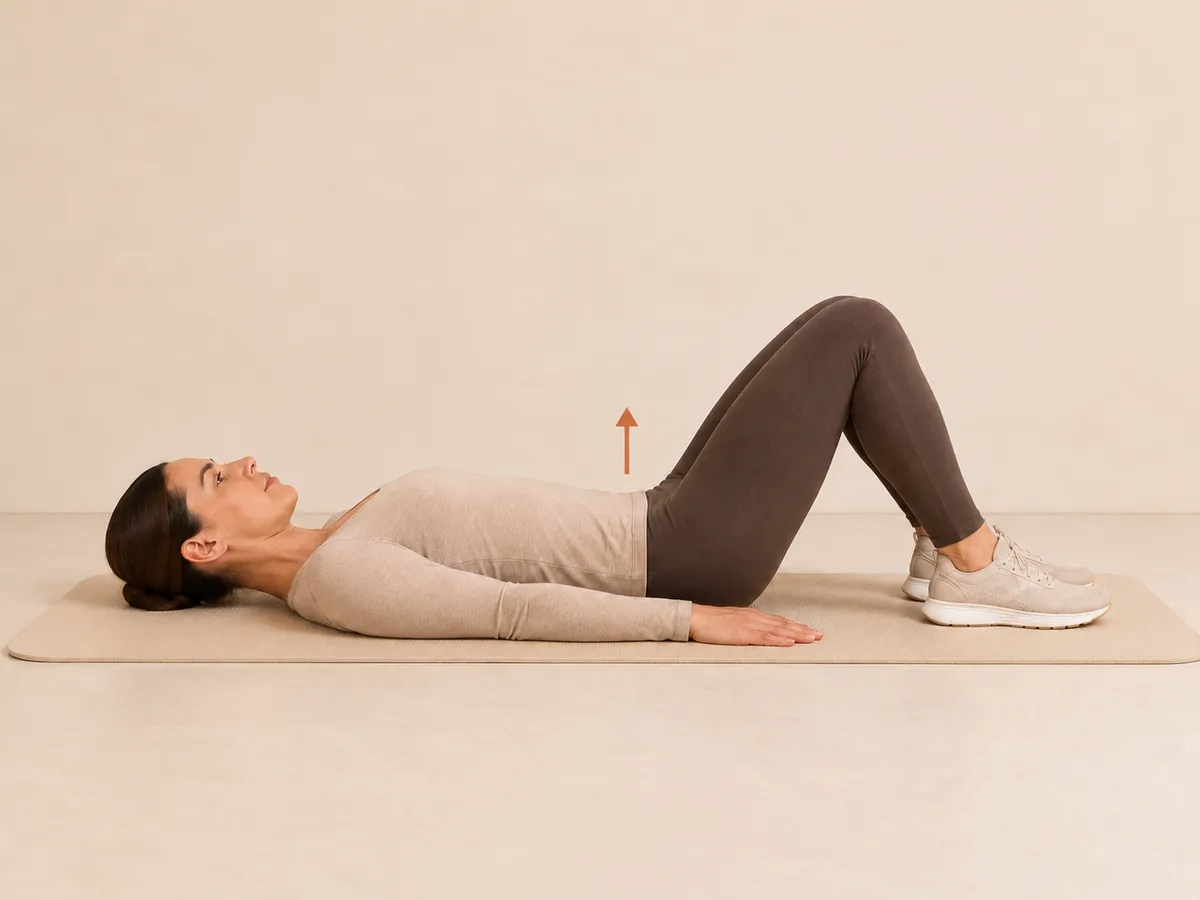
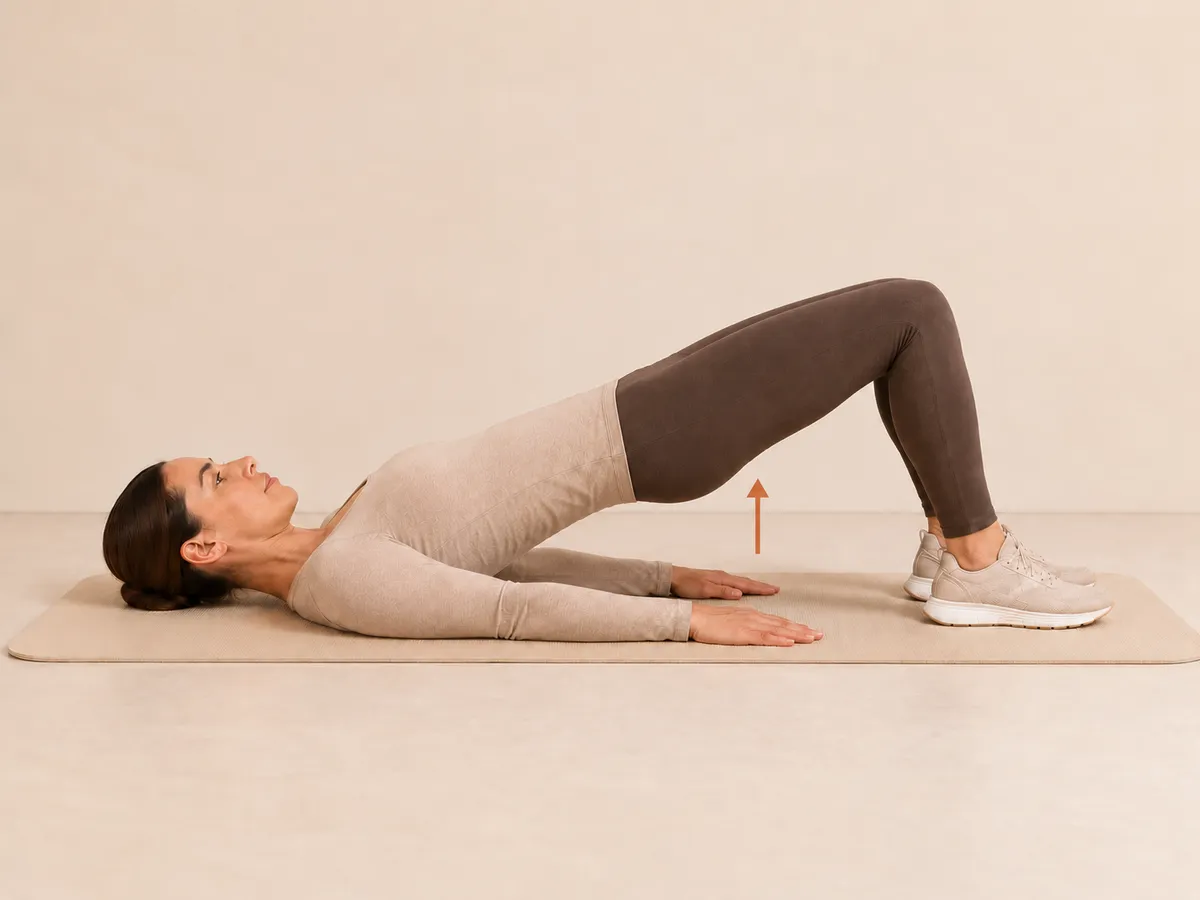
Lie on your back with knees bent and feet flat, then lift your hips to a straight line from shoulders to knees and lower slowly. The glutes do the opposite job to the hip flexors, and working them lets the front of the hip open without forcing it.
10 slow repsStraight-Leg Raise
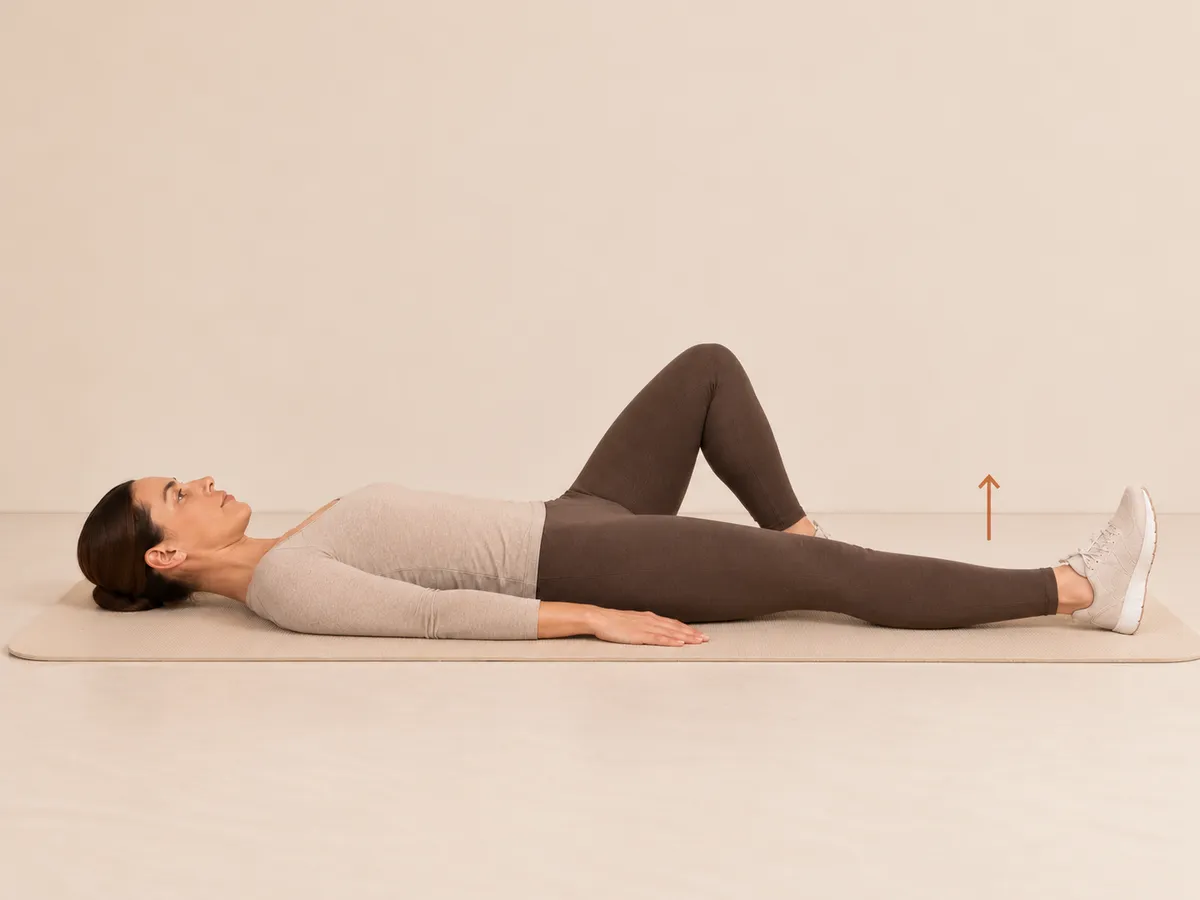
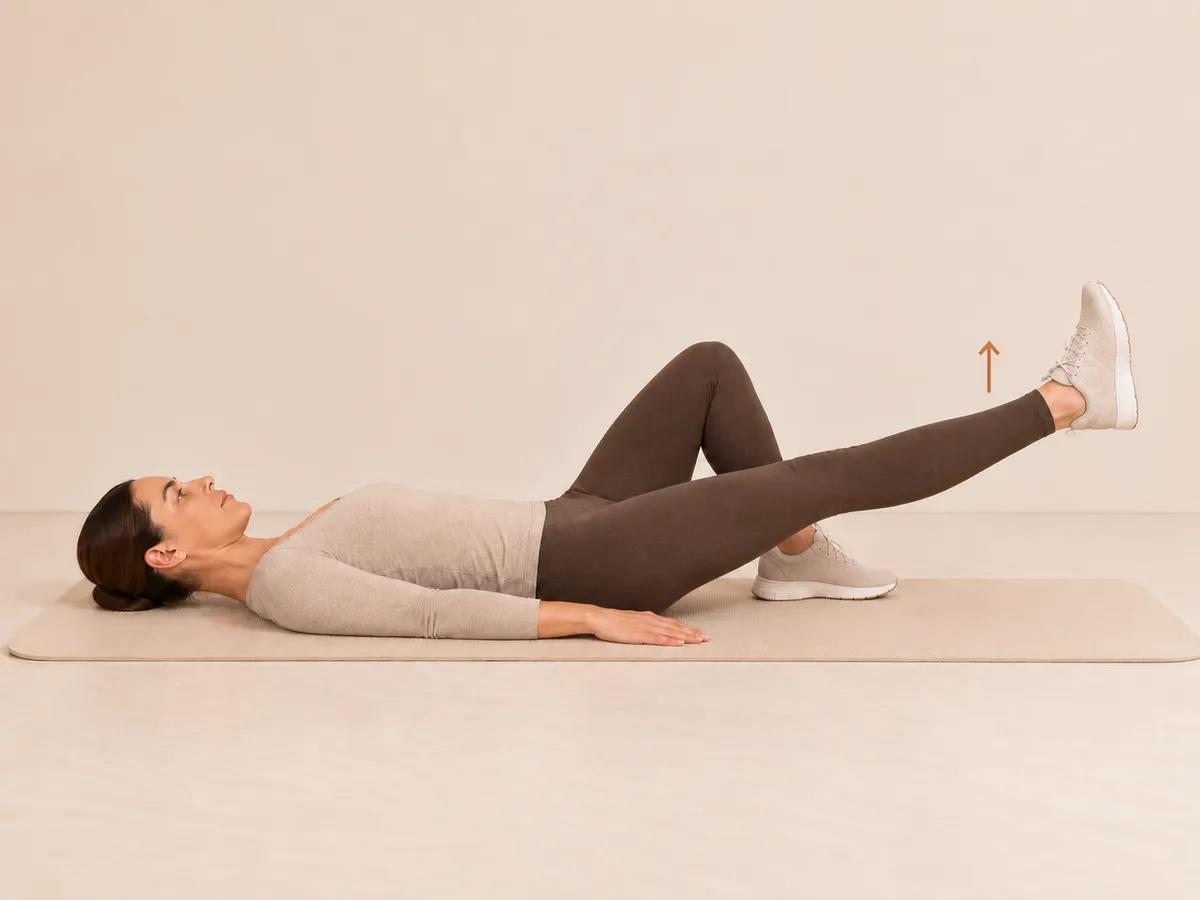
Lie on your back with one knee bent, tighten the other thigh and lift that straight leg a short distance, then lower it slowly without arching your back. It loads the hip flexors gently, which is how a strained one starts to rebuild strength.
8–10 reps each sideBird Dog
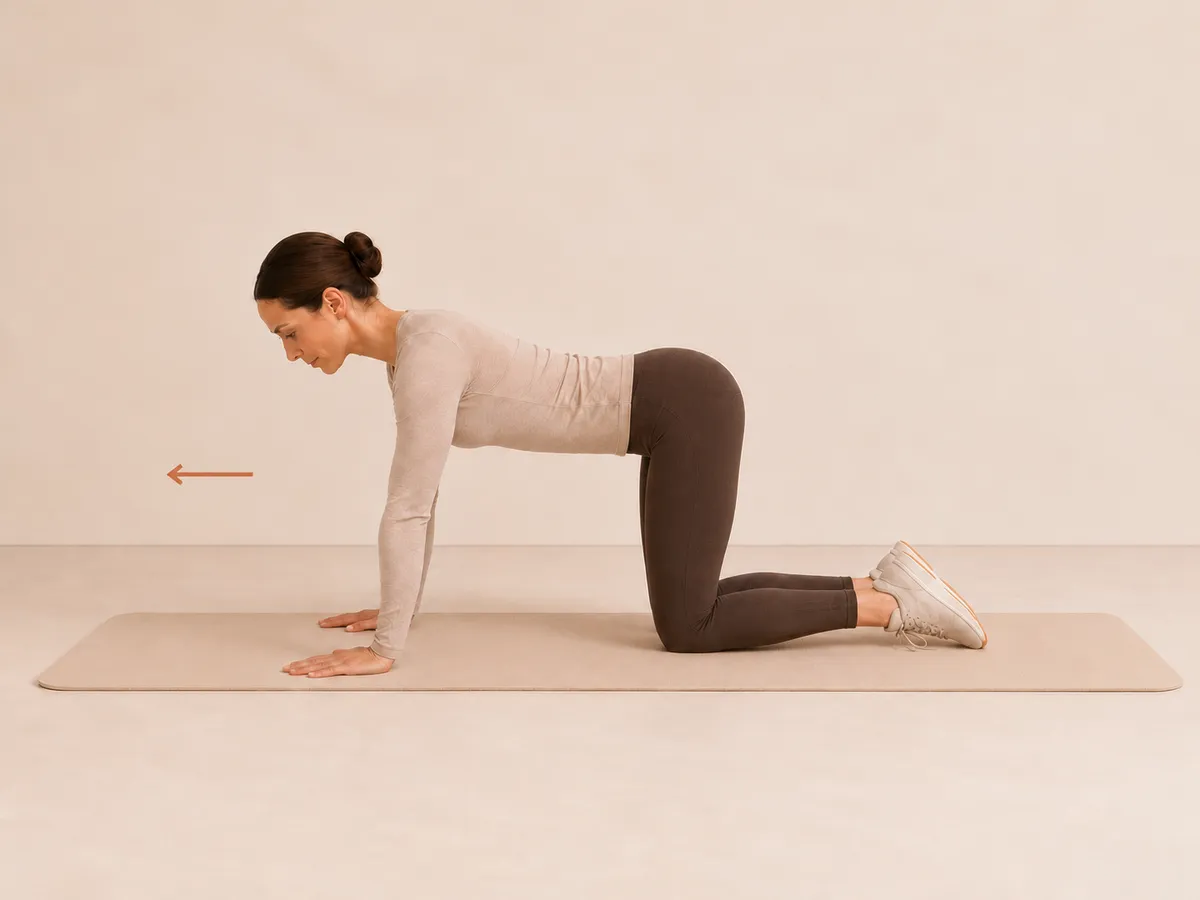
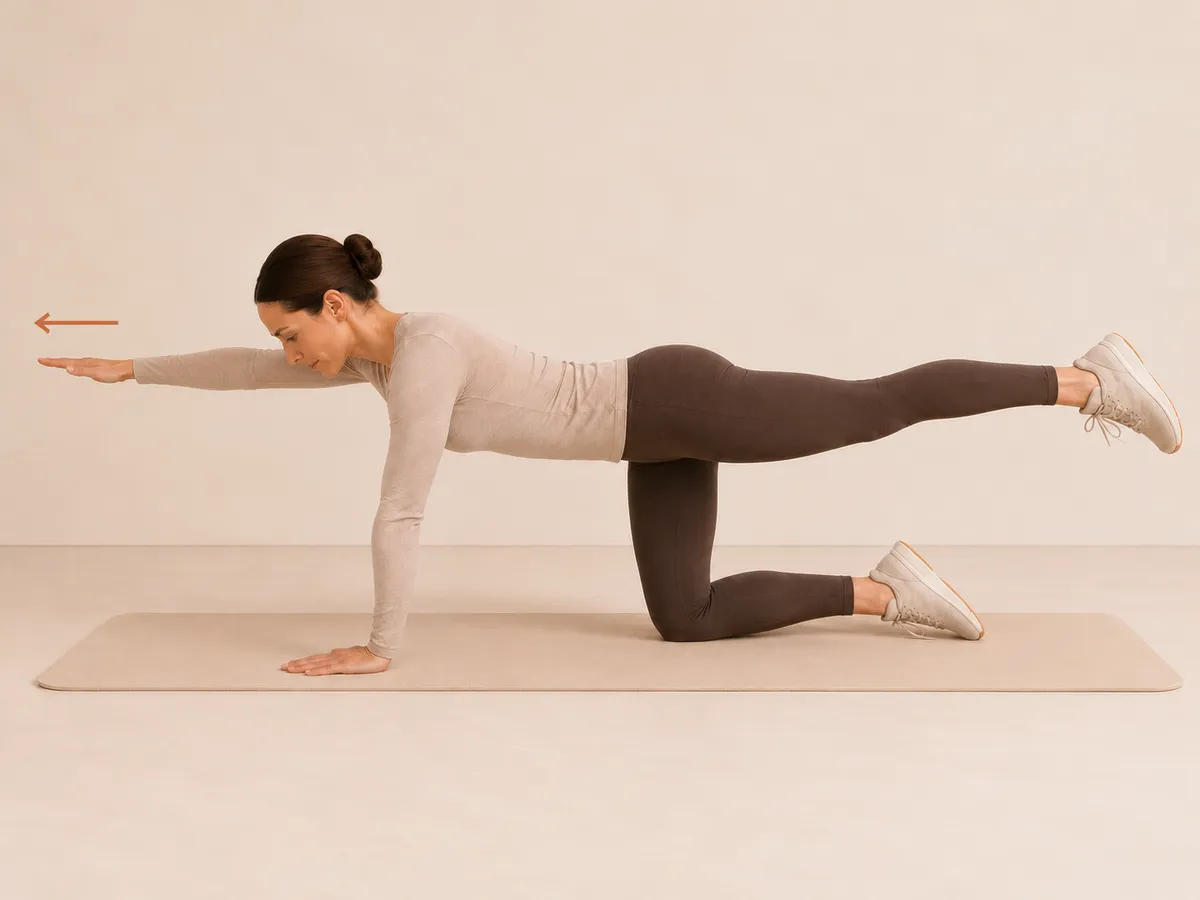
On hands and knees, reach one arm forward and the opposite leg back until both are level with your body, keeping your back still. It teaches the trunk to stay steady while the hip extends, so the psoas is not left holding the spine on its own.
6 each side/Hold 3sSupported Low Step-Up
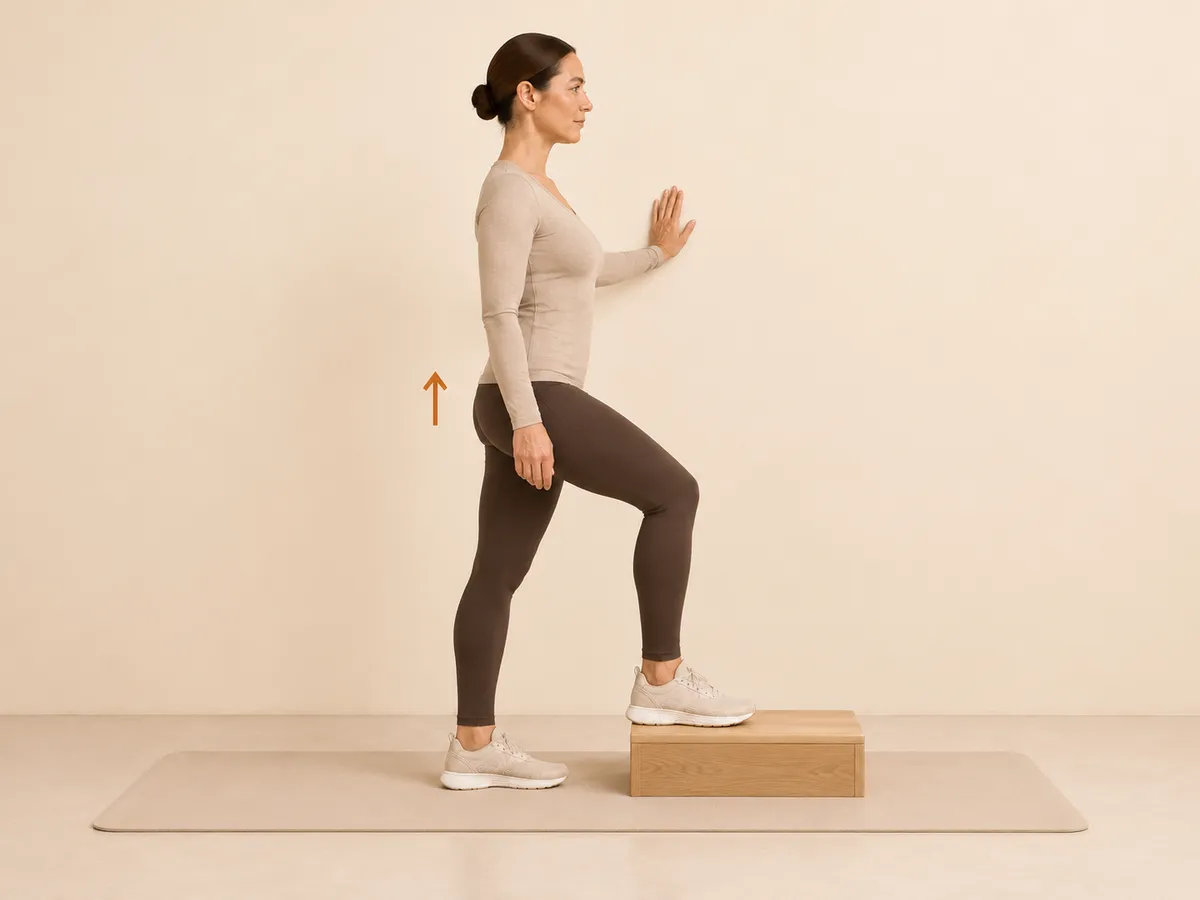
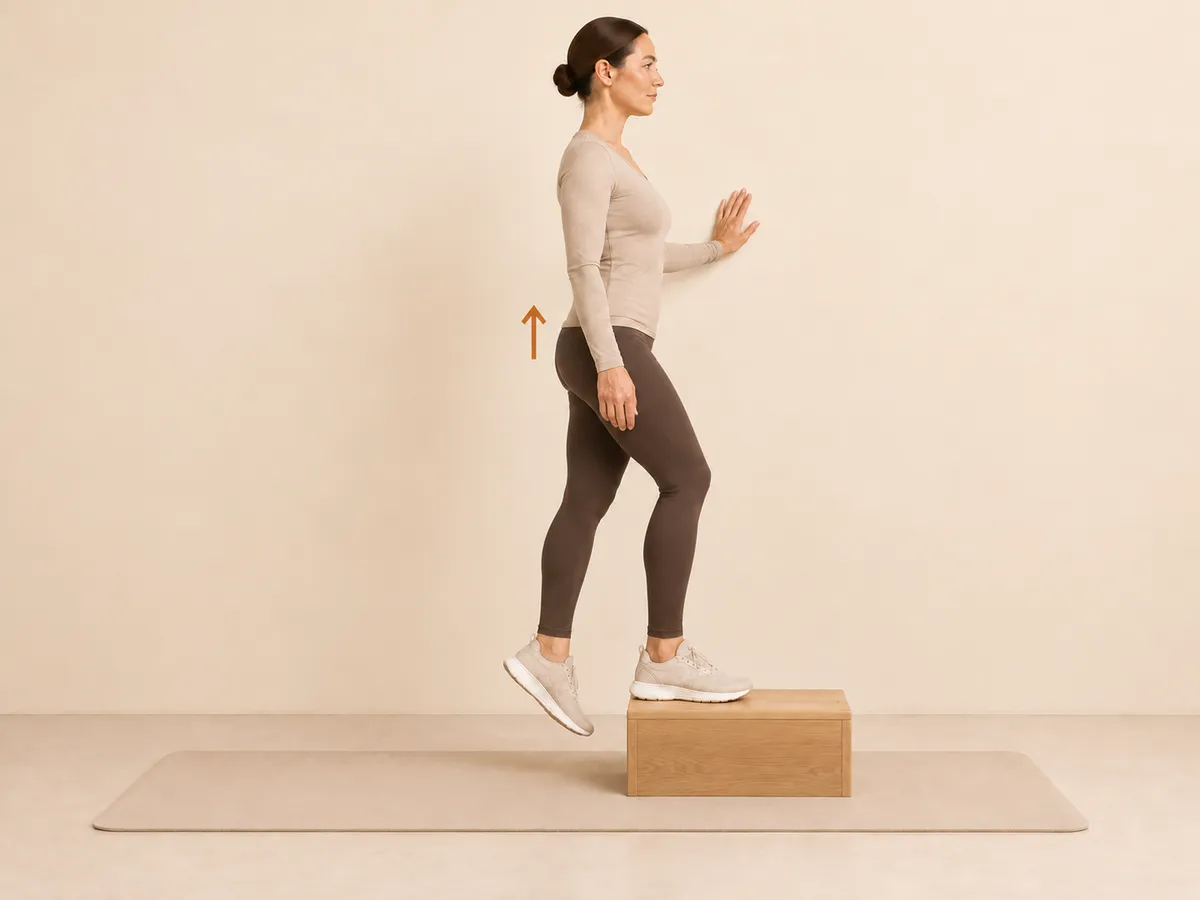
With a hand on a wall, place the whole working foot on a low step and press up, then lower slowly. Add it once the earlier moves are easy; it brings the hip flexors and glutes back into the stairs-and-hills work of a normal day.
8 each sidePair it with getting up from your chair every 30 to 45 minutes. A two-minute walk does more for a desk-tight hip than a single long stretch at the end of the day, a point we make in our article on office chairs and lower back pain.
Why stretching alone rarely fixes hip flexor pain
Most people with a sore front of hip stretch it, feel better for an hour, and find it tight again by morning. The stretch is not wrong; it is doing one job when the hip needs two: range of motion, and the strength to use it.
Weak glutes and an unsteady trunk leave the hip flexors doing extra work, which is why the routine is mostly strength. For a strain, stretching early is the bigger mistake, because it pulls on tissue that is trying to knit back together.
When to get hip flexor pain checked
It is worth an assessment if a strain is not clearly improving after a week or two, if you cannot lift your knee without pain, if it keeps coming back with each return to sport, or if the front of the hip catches, clicks or gives way.
See a physician promptly if you heard or felt a pop with immediate weakness and cannot lift the leg, which in teenage athletes can mean a piece of bone pulled off where the tendon attaches. The same goes for a hip you cannot put weight on, a bulge in the groin, or hip pain with fever.
What a visit here looks like
Dr. Andersen starts by working out which tissue is involved: the hip flexor itself, the hip joint, the groin muscles or the low back. That means resisted strength testing, checking how the hip moves in each direction, a look at how you walk, squat and lunge, and a screen of the lower spine.
Treatment is matched to what the exam finds. It can include Pin & Stretch and Cupping & Scraping for the hip flexors and the tissue around them, precision spinal adjustments where the low back or pelvis is stiff, and Corrective Exercise Programming that builds from the routine above toward running, kicking or lifting. For a hip flexor tendon that has stayed sore for months, Shockwave Therapy is one option we discuss. If the exam points to the hip joint, a hernia or a fracture, we send you to the right physician.
How long does a hip flexor strain take to heal?
A mild strain often feels much better within one to three weeks. Moderate strains usually take four to six weeks, and a complete tear can take several months and sometimes needs a surgeon's opinion. Tightness from sitting tends to ease within a few weeks of the routine. How quickly varies from person to person, and returning to sprinting before full-speed knee lifts feel normal is the most common reason it comes back.
If your hips feel locked every time you stand up from the desk or the car, bring that detail to your visit. We are at 5285 State Route N in Cottleville, with free parking at the door.
Find out whether your hip is strained, tight or something else.
Frequently asked questions
- How do I know if I pulled my hip flexor or it's just tight?
- A pulled hip flexor starts with a sudden sharp pain during a sprint, kick or quick change of direction, and afterward it hurts to lift your knee or climb stairs. Tightness has no moment of injury: the front of the hip feels stiff when you stand after sitting and eases as you walk. If lifting the knee against resistance hurts, treat it as a strain.
- How long does a hip flexor strain take to heal?
- A mild strain often feels much better within one to three weeks, and a moderate one usually takes four to six weeks. A complete tear can take several months. It varies from person to person, and going back to sprinting before full-speed knee lifts feel normal is the most common reason it recurs.
- What is the best stretch for tight hip flexors?
- A standing or half-kneeling hip flexor lunge with the tailbone tucked under is a good place to start, held for about 30 seconds a side. On its own it tends to wear off, so pair it with glute bridges and trunk work, and get up from your chair every 30 to 45 minutes. Skip the stretch for the first days after a fresh strain.
- Can tight hip flexors cause lower back pain?
- The psoas attaches to the lower spine, so the two are connected, but the link is weaker than it is often made out to be. Many people with back pain have normal hip flexors. Building hip and trunk strength and moving more often during long sitting days helps both, and an exam can show which one is actually driving the pain.